
FAQ
What is differential pressure in a dust collector?
INDUSTRIAL DUST COLLECTION
How to read the filter saturation indicator and what to do at each reading
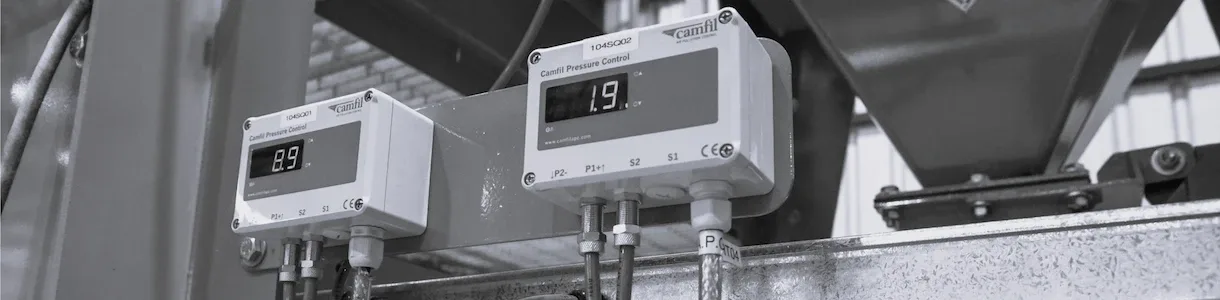
Differential pressure is the pressure difference between the inlet and the outlet of the filter: it measures how much resistance the filter media offers to the air passing through. In practice it is the indicator of how dirty the filter is: the more dust accumulated, the higher the differential pressure. Reading it correctly is what tells you whether the collector is working normally, whether the cleaning needs checking, or whether the filter has reached the end of its life.
How it is read
The unit has a differential pressure gauge —analog or digital— that shows the value in real time, usually in millimeters of water column (mmH₂O) or in pascals. What matters is not the isolated number, but how it evolves relative to the value of a clean filter under working conditions. That is why it is worth noting the normal reading of the freshly commissioned unit: it is the reference against which all later readings are compared.
What each reading means
A low, stable differential pressure indicates a clean filter and a correct extraction airflow: the unit is working well. If the differential pressure rises and does not come back down after the cleaning pulse, the filter is saturating and action is needed; if it is very low or drops suddenly, there may be a torn or poorly sealed filter letting dust through. Each zone of the scale corresponds to a different action, not just to a data point.
What to do in each case
If the differential pressure rises steadily, first check the pulse-jet cleaning system —compressed air pressure, sequence, valves— because often the filter is fine and it is the cleaning that fails. If, with the cleaning in order, the pressure still does not come down, the filter media has reached the end of its life and replacement is due. Differential pressure is therefore the signal that decides when to change the filter and when only to adjust the cleaning —not the calendar—.
CONCLUSION
The number that tells you how your collector is doing
Differential pressure is the vital sign of the collector: in a single reading it sums up the state of the filter and the health of the extraction system. Watching it and recording its evolution is the simplest and most cost-effective maintenance practice, because it anticipates the problem before airflow drops and the process loses capture. How often the filter is changed, and how the cleaning that keeps it low works, are developed in their own FAQs.
Published: July 2026
KEEP EXPLORING
Related equipment and content
FAQ
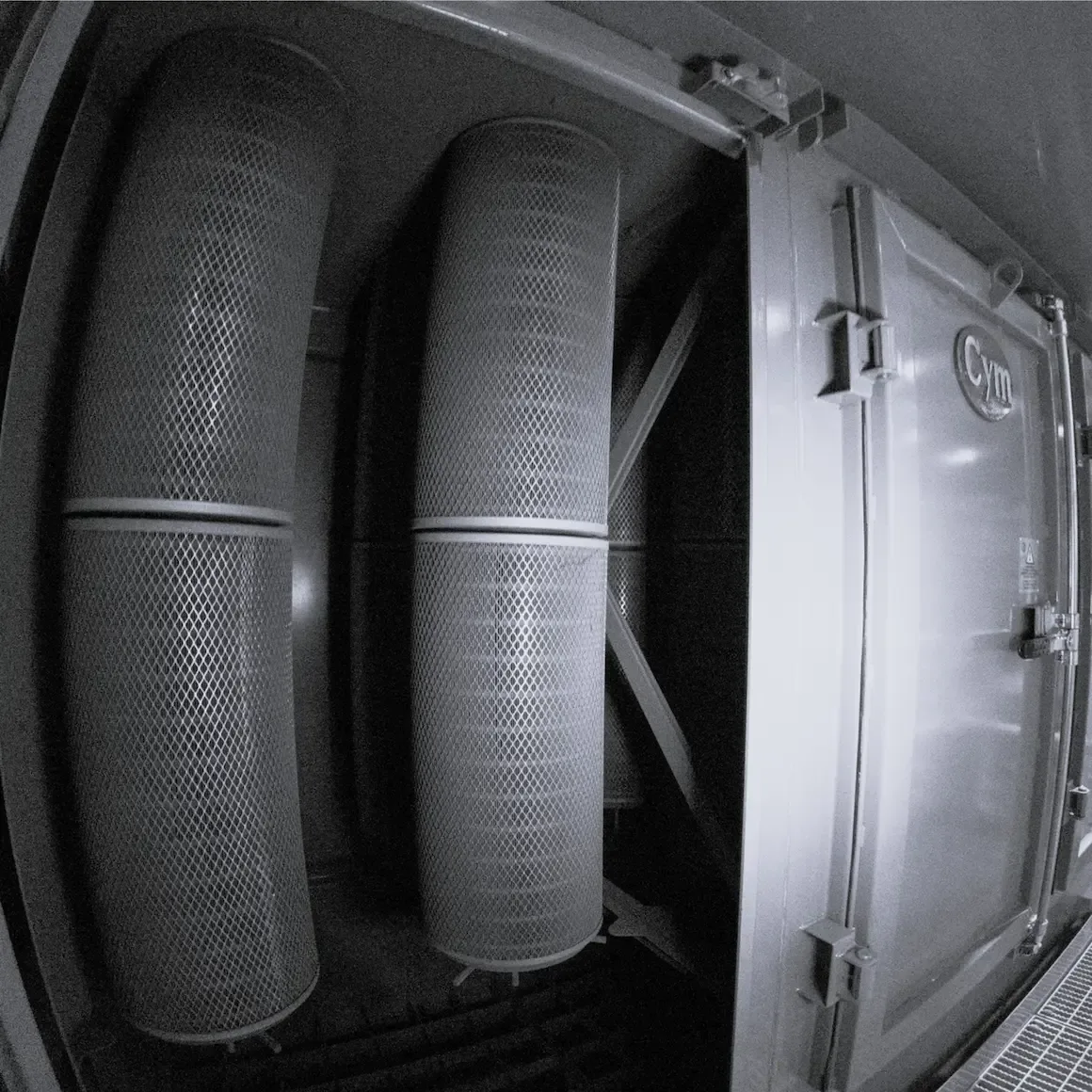
How often do you change a dust collector's filters?
What determines the service life of the filter media
Read more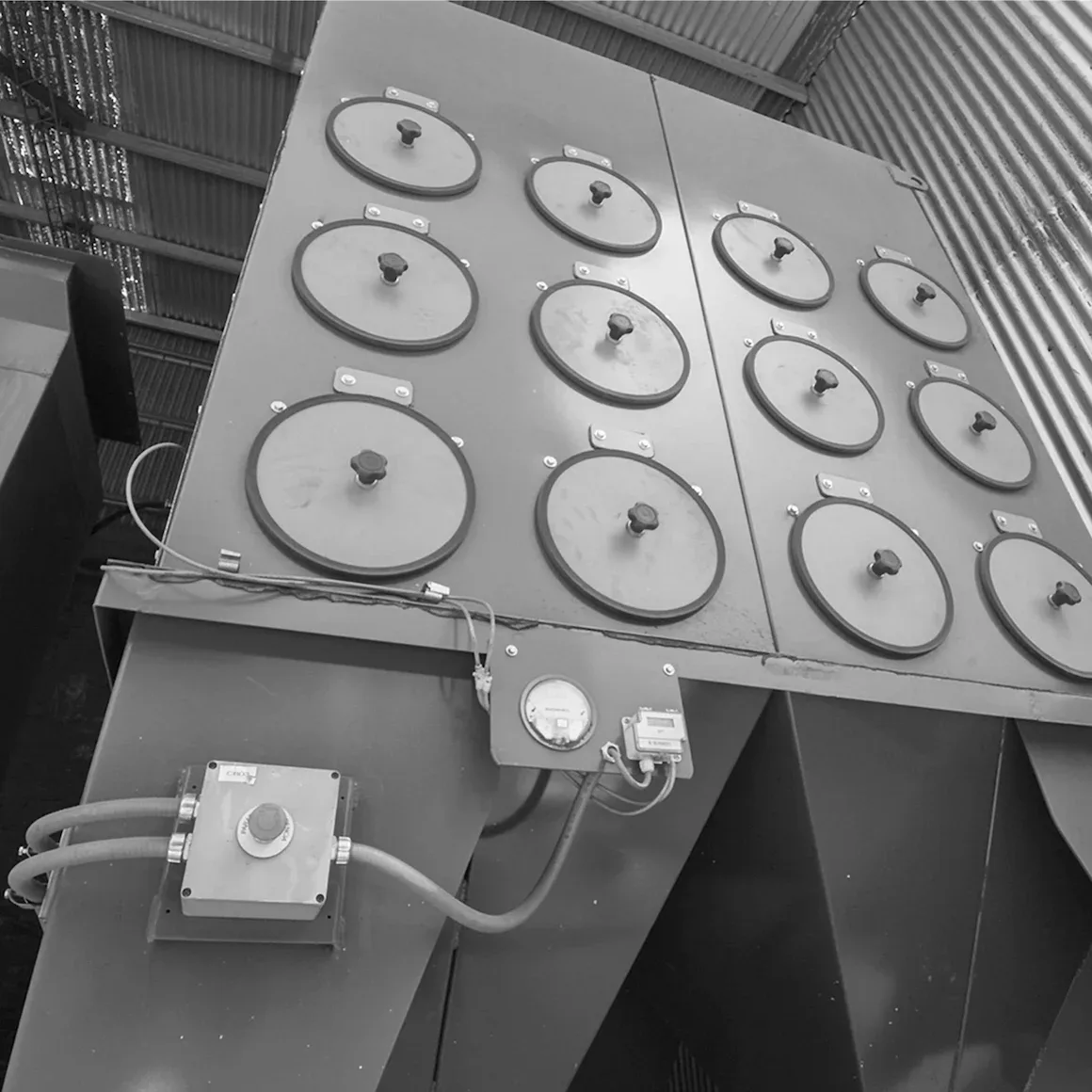
FAQ
How does pulse-jet cleaning work?
The system that regenerates the filter without stopping production
Read more
cart-h - cart-v line
Cartridge dust collectors
0.5 microns filtration at 99.9%, continuous pulse cleaning and horizontal or vertical configuration.
Read moreInstallations
Equipment in operation
Special Projects
Can't find the equipment you need?

CYM Materiales develops it.
Our Engineering and Sales team works alongside the client to design a custom solution, reducing operating costs and maximizing productivity. Every project starts with a detailed technical assessment and ends with a machine built and tested at our plant
REQUEST A CUSTOM PROJECT