
FAQ
In which orientation is a profile bent?
METAL FORMING
Why the same profile resists differently depending on how it faces the rolls
The same profile resists bending very differently depending on how it is oriented against the rolls. What rules is the axis about which it is bent: the axis of greater inertia resists far more than the weaker one, which is why the same profile can demand several times more force in one orientation than in another. Defining that orientation is not a detail: it is the first variable that determines whether the machine is enough for the job.
The bending axis rules
A profile's resistance to bending depends on the section modulus in the plane in which it is bent. Bending a beam or profile about its strong axis —the one of greater inertia— demands far more force than about its weak axis, even for the same part. It is the variable that does not exist in plate rolling, where the surface is flat and has no preferred axes, and the one that most confuses machine requests.
Leg in or leg out
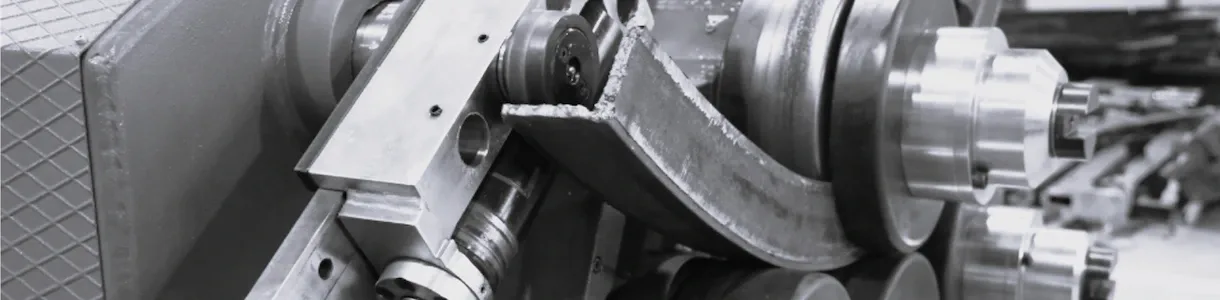
In profiles with legs —angles, channels, T-sections— orientation has a second effect: bending with the leg out of the radius is not the same as with the leg in. Each orientation changes how the section is compressed or stretched, and therefore the profile's tendency to distort, wrinkle the compressed leg or twist. The right orientation depends on the final part and the available tooling, and is best defined before choosing the equipment.
Why it matters when specifying
Because the required force changes so much with orientation, a machine can be more than enough for a profile on its weak axis and fall short for the same profile on its strong axis. That is why, when specifying a profile bending machine, saying which profile will be bent is not enough: you must say in which orientation. The rest of the variables —material, minimum radius and tooling— are developed in the article on how to specify a profile bending machine.
CONCLUSIÓN
Orientation first, then the machine
Orientation is the variable unique to profile bending, the one that does not appear with plate. Defining which axis each profile will be bent about is what avoids requesting a machine that is oversized in one case and falls short in the other. With orientation clear, the rest of the specification —material, radius and tooling— falls into place on its own.
Published: August 2026
KEEP EXPLORING
Related equipment and content
.webp?dpl=dpl_F66A7PtdJizoWBprUTvwNQ9c4U9S)
Technical article
How to specify a profile bending machine
Profile, orientation, radius and material: why bending a profile is not rolling a plate
Read more
FAQ
What minimum radius can I bend a profile to?
A profile's minimum radius depends on its height, its orientation and the material: below a certain value the section distorts, wrinkles or twists.
Read more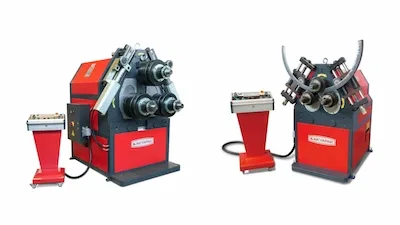
APK Line
Section bending machines
For angles, tubes, H/I beams and channels in structural steel. From 0.75 kW to 160 kW in three capacity ranges.
Read moreInstallations
Equipment in operation
videos
Equipment in action
Special Projects
Can't find the equipment you need?
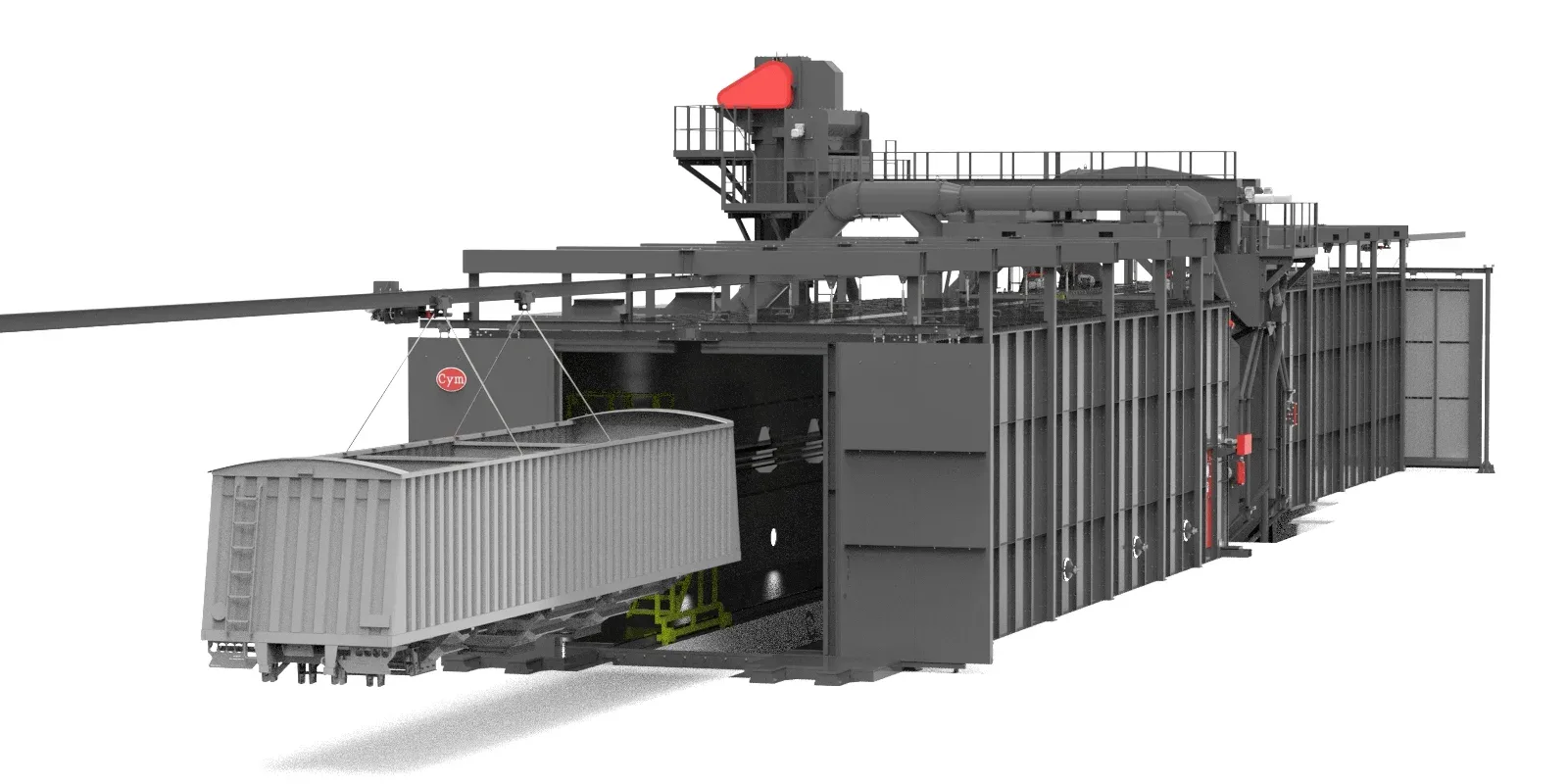
CYM Materiales develops it.
Our Engineering and Sales team works alongside the client to design a custom solution, reducing operating costs and maximizing productivity. Every project starts with a detailed technical assessment and ends with a machine built and tested at our plant
REQUEST A CUSTOM PROJECT