
Technical article
Blast wheel: monoblock vs. replaceable blades
Process fundamentals
Which one fits your production, spare-part cost and downtime
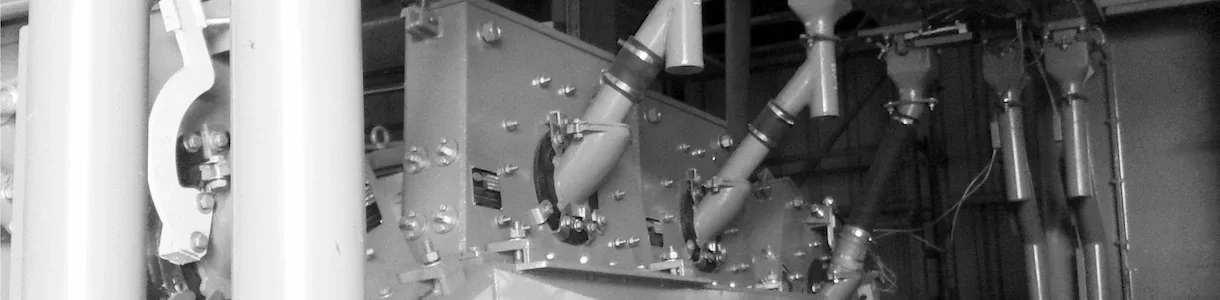
In a blast wheel, the rotating wheel is what throws the abrasive against the surface. CYM Materiales builds it in two constructions —one-piece cast (monoblock) and machined with replaceable blades—, and the choice affects performance, maintenance and cost over time. Below we compare the two to help you decide which suits your operation.
The two wheel constructions
Both options share bi-directional rotation, the control-box positioning system and the labyrinth shot seal; the difference lies in how the wheel is built and what that means for operating and maintaining the equipment.
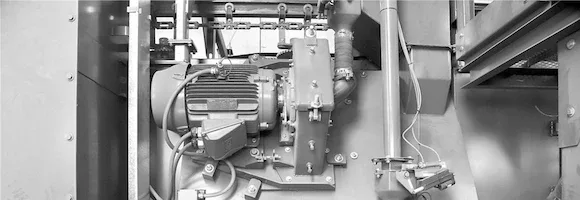
Replaceable blades (machined wheel)
- Blades replaced individually.
- Centering plate: can jam with shot during disassembly.
- The machined wheel must be replaced after a number of blade changes.
- Unbalances with wear → must be disassembled to rebalance.
- Longer maintenance time (15–20 min).
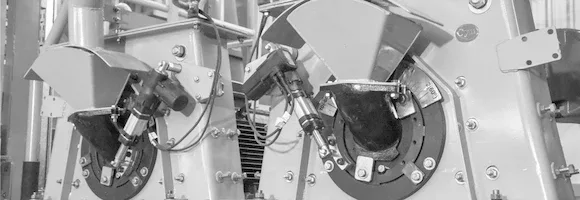
Monoblock wheel (one-piece cast)
- One-piece casting, lighter.
- Less power to spin → throws more shot at the same power.
- Less stress on motor bearings → longer service life.
- Very fast wheel change: a single bolt (6–10 min).
- Bi-directional rotation.
A general advantage of CYM blast wheels: direct drive
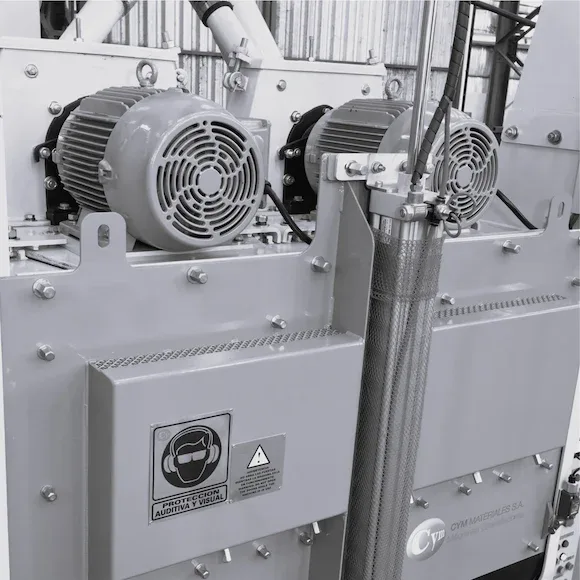
Beyond the wheel construction, all CYM Materiales blast wheels use direct drive to the motor. At the same installed power, direct drive throws 10 % to 20 % more abrasive than wheels coupled through a spindle, belts and pulleys. Both the monoblock and the replaceable-blade wheel benefit from this advantage.
Cost and how to choose
The initial investment for a monoblock-wheel set is slightly lower. On operating cost, although replacing a cast wheel costs more than a set of blades, you must consider that after a number of blade changes the machined wheel must also be replaced and rebalanced, so over time the cost tends to even out or favor the monoblock.
In short: the monoblock wheel offers higher shot throughput, longer service life and simpler maintenance, and is the more convenient option for most applications. Replaceable blades remain a valid alternative in specific cases. To define the model and power for your output, our engineering team can advise you.
Monoblock vs. bolt-on blades — comparison
| Criterion | Monoblock wheel (cast) | Bolt-on blades (machined) |
|---|---|---|
| Construction | One-piece cast wheel, lighter | Individually replaceable blades |
| Abrasive throughput | More shot at the same power | Standard |
| Motor service life | Longer — lower bearing load | Standard |
| Wheel change | 6–10 min, single bolt | 15–20 min |
| Rebalancing | Not required | Unbalances with wear; requires disassembly |
| Replacement | Full wheel | Blades; every so many blade changes, replace the wheel |
| Initial investment | Slightly lower | Slightly higher |
| Long-term operating cost | Tends to favor the monoblock | Evens out |
Note: Both constructions share bidirectional rotation, control-cage positioning and labyrinth-type shot seal. All CYM blast wheels use direct drive to the motor: 10–20% more abrasive than wheels driven by cartridge, belts and pulleys.
KEEP EXPLORING
Related equipment and content
TECHNICAL ARTICLES
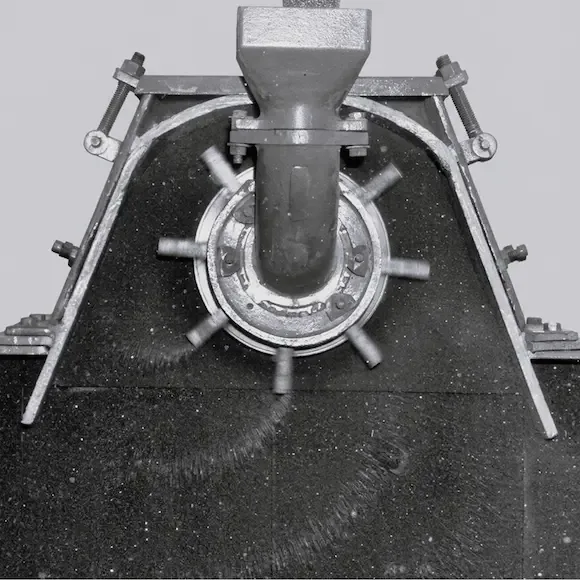
How a shot blast wheel works
How the shot stream is generated and directed
Read more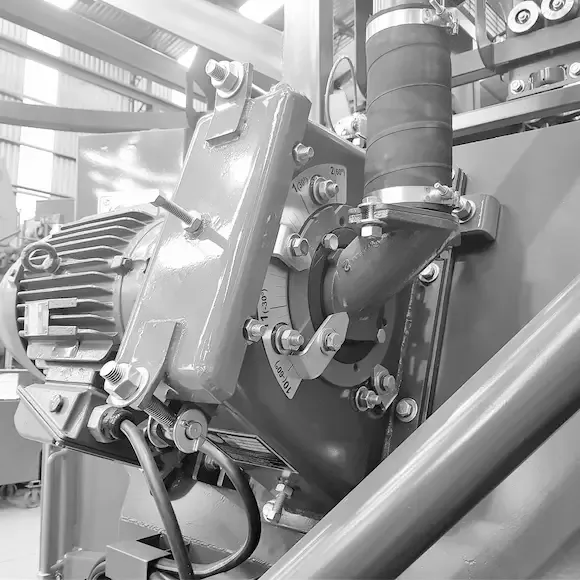
FAQ
Shot blast turbine maintenance
The centrifugal turbine — operation, wear and maintenance
Read more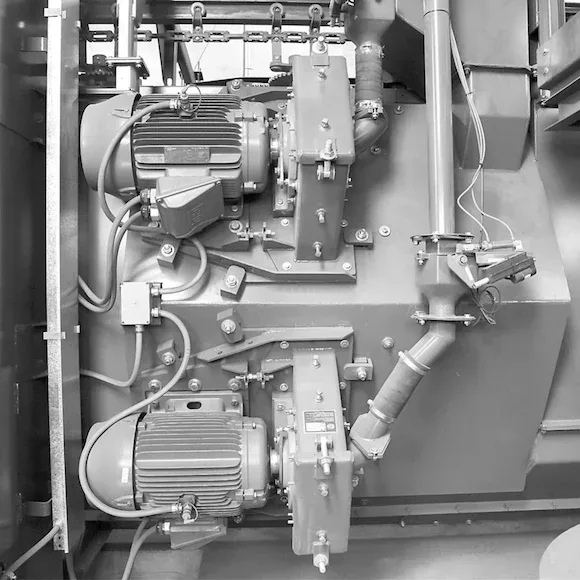
products
Centrifugal Shot Blast Turbines
4 to 150 HP — 40 to 1,500 kg/min at the heart of every blasting machine
Read moreInstallations
Equipment in operation
videos
Equipment in action
Special Projects
Can't find the equipment you need?
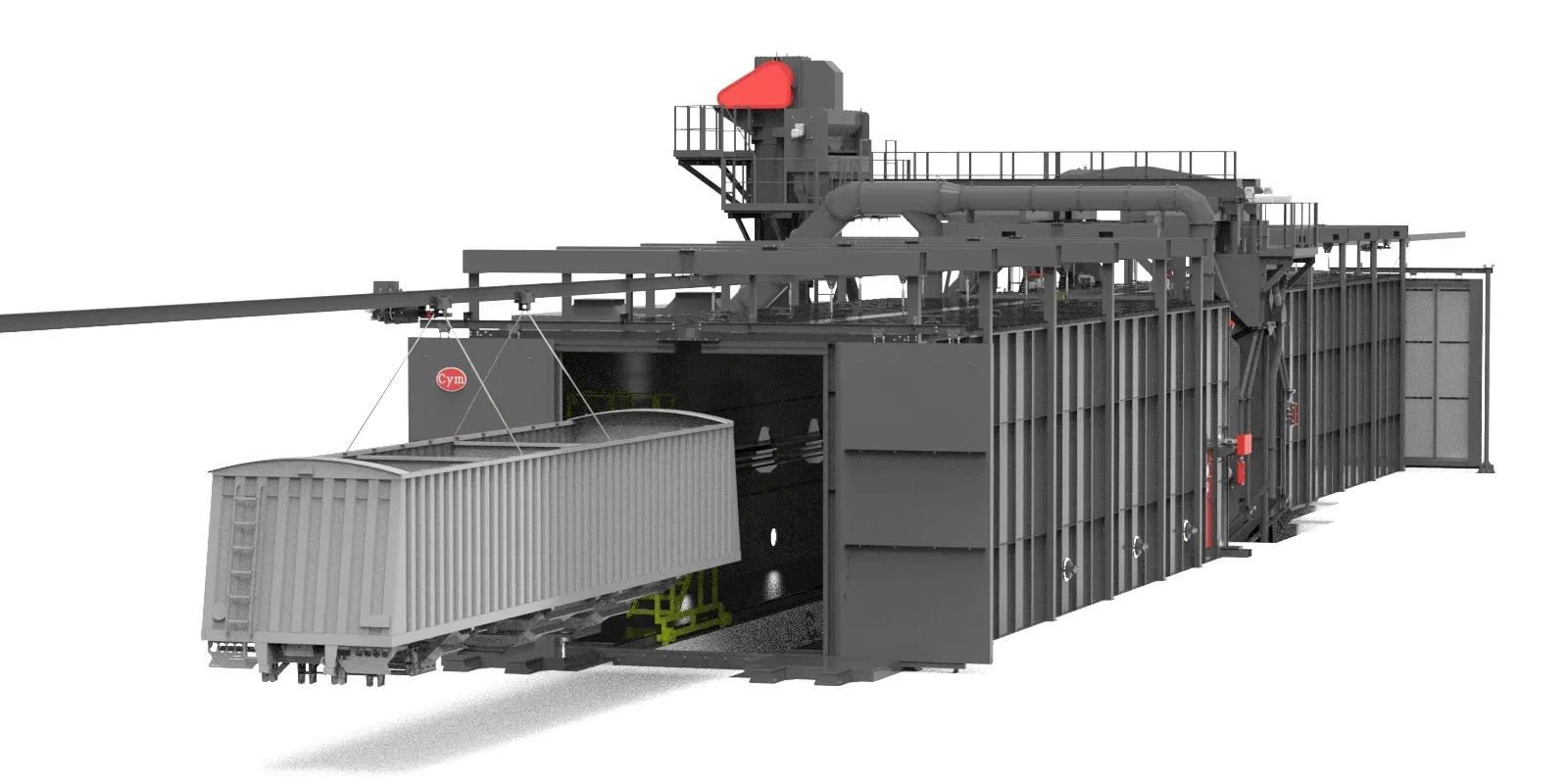
CYM Materiales develops it.
Our Engineering and Sales team works alongside the client to design a custom solution, reducing operating costs and maximizing productivity. Every project starts with a detailed technical assessment and ends with a machine built and tested at our plant
REQUEST A CUSTOM PROJECTPublished: June 2026 - Updated: July 2026