
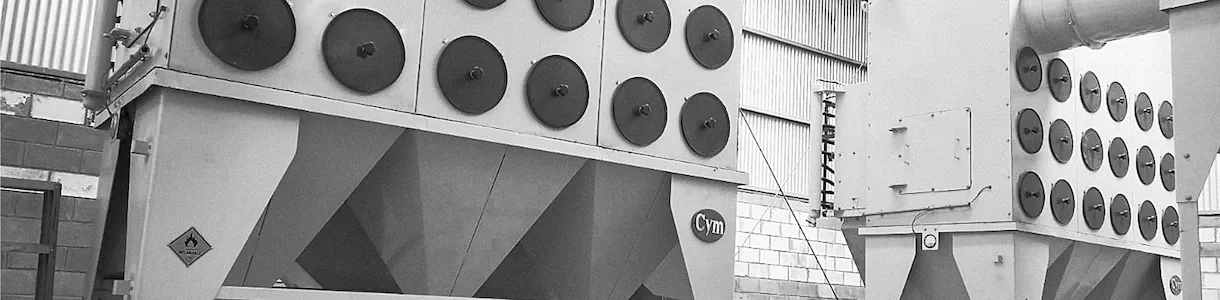
Technical article
Dust collection in foundries
FOUNDRY & METALWORKING
Silica, metal fumes and hot gases: a different source at each stage
In a foundry there is no single dust. Each stage of the process generates a different contaminant, with its own temperature, particle size and hazard: the metal fumes from melting have nothing to do with the silica from molding, or with the hot, abrasive dust from shakeout. This is why dust collection in a foundry is not solved with a single unit, but by designing a system stage by stage. Understanding which contaminant and which temperature each source has is the starting point of the whole extraction project.
The sources: each stage, its own dust
Walking through a foundry means walking through a succession of different dust sources. Melting generates metal fumes and hot gases. Molding and sand preparation release silica. Shakeout is the most aggressive point of all: when the mold is broken to extract the part, an abundant, hot and strongly abrasive dust is released. Sand reclamation generates silica dust again, and fettling and shot blasting produce a mix of metal oxide and fines. Each of these sources has its own airflow, temperature and particle size, and none is captured well with the criteria meant for another. That is why the first step is not choosing a collector, but mapping the sources.
The main hazard: crystalline silica
In a foundry the dominant health hazard is not explosion: it is crystalline silica. Molding sand is silica, and every time it fractures —in molding, in shakeout, in reclamation— it releases respirable particles. Inhaled over long periods, that fine fraction causes silicosis, an irreversible lung disease, and the admissible exposure limits are very low. The control hierarchy is clear: capture at the source is the primary engineering control, and respiratory protection equipment is the last barrier, not the first. The detail of operator PPE is developed in the operator protection article.
Hot gases: what limits the technology
The air extracted at melting and at shakeout does not arrive at room temperature: it arrives hot, and often carries sparks. That heat and those sparks condition the filter medium and, in practice, rule out a standard cartridge at those points. Before the gas reaches the collector its temperature must be lowered and the sparks separated, with a pre-separator, a cyclone or a spark arrester as the case may be. Ignoring the temperature of the source is the mistake that makes a collector fail —or catch fire— even when it is well sized in every other respect.
Which technology at each point
There is no single technology for the whole foundry: there is one for each source. Shakeout and sand reclamation, with their high load of coarse, hot dust, call for a bag filter with pre-separation. Shot blasting and fettling, with fine, dry dust, are better handled with a cartridge collector. And aluminum or magnesium foundry work adds a factor that changes everything: its dust is a combustible metal, and there capture moves into the territory of wet filtration and explosion risk. The choice between cartridge and bag is developed in its own article, and the explosion mechanism of metal dusts in the corresponding article.
The captured dust: sand that returns and emissions that stay in
In a foundry the material removed by the extraction system has two destinations, and neither is trivial. On one side, much of what is captured are degraded fines of molding sand: a well-designed capture system does not compete with the sand reclamation system, it complements it, removing the fines that no longer contribute to the mix and that, left in circulation, degrade mold quality and increase new-sand consumption. On the other, what reaches the collector must not end up in the atmosphere: many foundries operate close to neighbors and under particulate emission limits, and it is correct sizing and the condition of the filter medium that sustain that compliance over time. Defining capture well, then, affects both the cost of sand and the license to operate.
CONCLUSION
In a foundry you don't buy an extractor: you design a system
In a foundry you do not buy “an extractor”: you design a system stage by stage. Defining the contaminant and the temperature of each source —silica in molding, fumes and hot gases in melting, abrasive dust in shakeout— is what determines the right technology at each point. A collector chosen without that prior analysis may be well sized in airflow and still fail: blinded by temperature, letting silica through, or not supporting sand reclamation. The project begins with the map of sources, not with the equipment.
Published: July 2026
KEEP EXPLORING
Related equipment and content
TECHNICAL ARTICLES
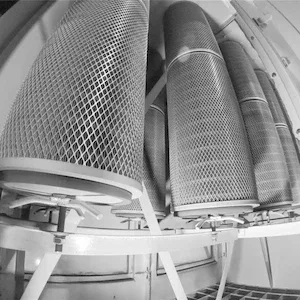
Cartridge or bag filter dust collector
How to choose based on the type of dust
Read more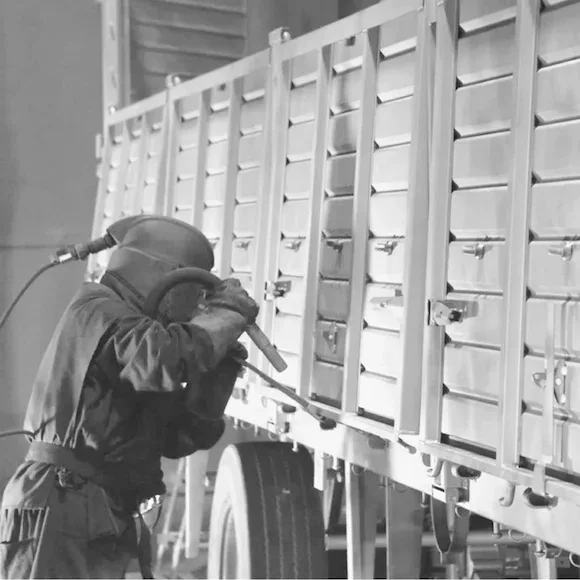
Technical article
Operator protection in abrasive blasting
Positive pressure helmet, breathable air and dust control
Read more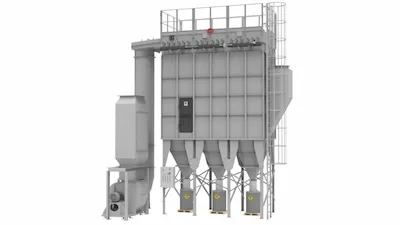
BAG FILTER - LINE
Bag filter dust collectors
High airflow capacity, low filter media cost and continuous operation for any industrial process.
Read moreProyectos Especiales
Do you need to solve dust capture in your foundry, source by source?
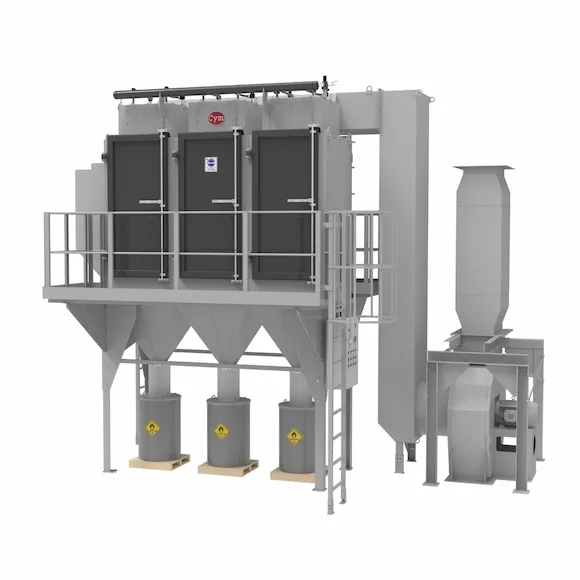
CYM Materials will develop it for you.
Our Engineering department can design the system taking into account the contaminant, the temperature and the real conditions of each stage of your process.
Talk to Engineering