
Technical article
How to specify a profile bending machine
METAL FORMING
Profile, orientation, radius and material: why bending a profile is not rolling a plate
Bending a profile is not the same as rolling a plate. In plate you curve a flat surface; in a profile you curve a structural section —an angle, a channel, a pipe, a rectangular tube— that resists very differently depending on how it is oriented. That is why specifying a profile bending machine is not defined only by the size of the profile, but by the profile, its orientation, the radius to achieve, the material and the tooling that keeps the section in shape. This article explains what each variable looks at and why, so you reach the enquiry knowing what to ask for.
The profile and its orientation: the variable plate does not have
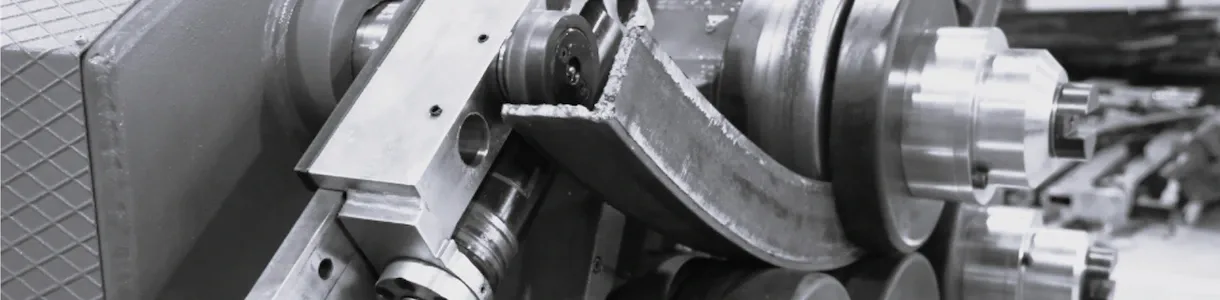
The same profile resists bending very differently depending on how it is oriented against the rolls. An angle with the leg out is not the same job as with the leg in, and a beam bent about its strong axis demands vastly more force than about its weak axis. What rules is the section modulus in the plane in which it is bent: that is why the first thing to define is not only which profile, but in which orientation it will be bent. It is the variable that does not exist in plate rolling, and the one that most confuses specification.
The minimum radius you need to achieve
In profiles the radius to achieve is a central specification, not a consequence. The tighter the radius relative to the profile height, the more severe the work. Below a certain radius the profile no longer bends clean: the section distorts, the compressed leg wrinkles, or the machine simply cannot reach it. Defining the real minimum radius —for the working profile and orientation— is what separates a part that comes out round and even from one that has to be scrapped.
Preserving the section: the challenge unique to the profile
Unlike plate, a profile tends to deform its own section as it bends: a tube ovalizes, an angle twists, a channel's flanges open or buckle. In profiles the limit is often not the available force, but keeping the section undistorted, and that depends on the tooling —rolls matched to the profile— and on the guides that stop the part from twisting. A profile bending machine is judged not only by its power, but by its ability to deliver the curve without ruining the section.
The material
As with plate, the material's yield strength and tensile strength define how much force is needed and how much the part springs back when released. In profiles the effect is amplified, because the section geometry concentrates the stresses: a high-strength profile may require several passes and over-bending to compensate for springback. That is why catalog capacities are stated for a reference material, and it is worth verifying them against the real working material.
Tooling makes the machine
A profile bending machine usually works with three rolls —one upper and two lower— on which the tooling matched to each profile is mounted. In profiles, the machine's versatility lies as much in its tooling as in its tonnage. Each type and size of profile, and each orientation, requires appropriate rolls and guides; one machine covers a wide range of work only if it has the right tooling set. When specifying, it is worth looking not only at the maximum capacity, but at which profiles and orientations the available tooling resolves. Models and their configurations are detailed on the product page.
CONCLUSION
The profile and its orientation rule; the tooling decides
Specifying a profile bending machine means describing well the most demanding profile you will bend: its type, its orientation against the rolls, the radius to achieve and the material. With that defined, the conversation stops being about tonnage in the abstract and becomes about the machine and tooling that deliver that radius on that profile without distorting the section. As the representative of AKYAPAK profile bending machines, CYM Materiales supports that definition so the equipment matches the real work.
Published: July 2026
KEEP EXPLORING
Related equipment and content
.webp?dpl=dpl_EpfssZki41Hq8BMdPV7ygP5Yzj9T)
FAQ
In which orientation is a profile bent?
The profile's orientation against the rolls defines how much force bending demands: the strong axis resists far more than the weak axis. Define it first.
Read more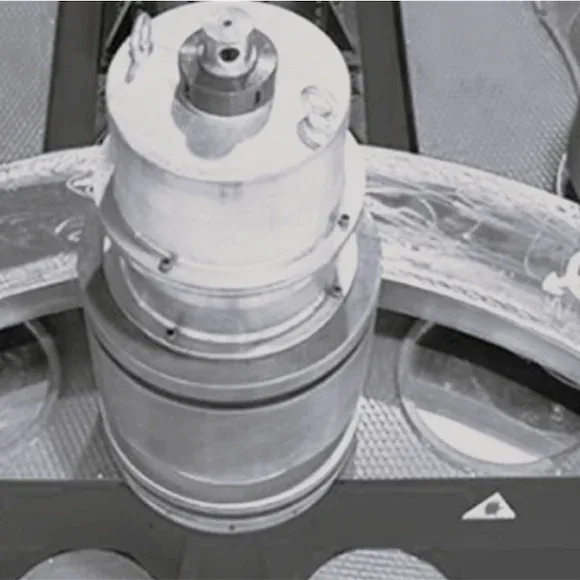
FAQ
What minimum radius can I bend a profile to?
A profile's minimum radius depends on its height, its orientation and the material: below a certain value the section distorts, wrinkles or twists.
Read more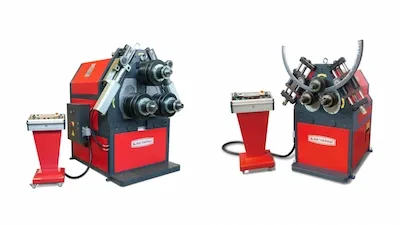
APK Line
Section bending machines
For angles, tubes, H/I beams and channels in structural steel. From 0.75 kW to 160 kW in three capacity ranges.
Read moreInstallations
Equipment in operation
Special Projects
Can't find the equipment you need?

CYM Materiales develops it.
Our Engineering and Sales team works alongside the client to design a custom solution, reducing operating costs and maximizing productivity. Every project starts with a detailed technical assessment and ends with a machine built and tested at our plant
REQUEST A CUSTOM PROJECT