
Technical article
Shot blasting aluminum castings
NON-FERROUS FOUNDRY
Why the abrasive decides the result on non-ferrous parts?
A part coming out of a die casting machine or a sand mould arrives with adhered residue, fine flash along the parting lines and an uneven surface between areas. Shot blasting solves all three in a single operation: it releases residual material, removes fine flash and evens out the appearance of the whole part. What comes next —anodizing, painting, machining or direct assembly— determines which abrasive can be used, and that is the decision that most conditions the result.
The problem you cannot see: ferrous contamination
When aluminum is blasted with steel shot, the impact leaves iron particles embedded in the surface of the part. They are not visible and the part comes out clean and uniform, but those particles stay embedded in the aluminum. On a part going straight to assembly there may be no consequence; on a part that receives a later surface treatment there is, and it only shows up once the process is finished.
If the part is going to be anodized: never steel
Anodizing is an electrochemical process that attacks the aluminum surface to build the oxide layer. Embedded iron particles dissolve during the bath and produce dark stains, run marks and areas where the anodic layer does not grow evenly. The defect is irreversible: the part is scrapped or fully reworked. For parts destined for anodizing the abrasive must be non-ferrous or stainless steel: glass beads, ceramic shot or stainless steel shot or grit.
Unify the criterion: stainless steel for all aluminum
Even though a part destined for painting tolerates iron traces —the coating covers them—, keeping two different abrasives in the same plant creates cross-contamination, because the recovery circuit retains ferrous particles even after the abrasive is changed. On top of that, the final destination of a batch can change at the customer's request. Always working with stainless steel shot removes the variable: the part is suitable for anodizing, painting or direct assembly, it does not stain during storage and the circuit needs no purging protocol. The longer service life of stainless steel compared with carbon steel also narrows the cost gap per kilo processed.
There is also a safety reason that reinforces the criterion. Steel shot generates dust containing iron oxide that mixes in the dust collector with the aluminum dust from the process. That mixture can trigger a thermite reaction, extremely exothermic and requiring very little energy to initiate. NFPA 484 expressly warns about combining aluminum fines with metal oxides and requires dust collection systems to be dedicated to the metal they were designed to collect. Working with stainless steel abrasive removes the iron oxide contribution to the circuit.
Intensity changes too
Aluminum is softer than steel, so the same machine that treats a grey iron casting must work with less energy on an aluminum one. The recommended projection speed for non-ferrous parts is significantly lower than the usual figure for steel, and it is set through the blast wheel speed. With excessive energy the part deforms, is over-marked or loses dimensional accuracy in thin-wall areas; with insufficient energy adhered material is left behind.
Which machine for which part
The abrasive criterion does not change with the machine, but the way the part is handled does. In aluminum casting the choice depends on the size, weight and fragility of the part.
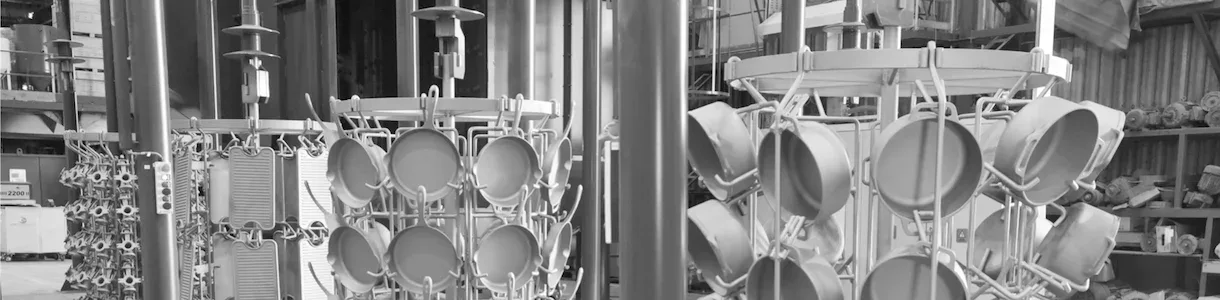
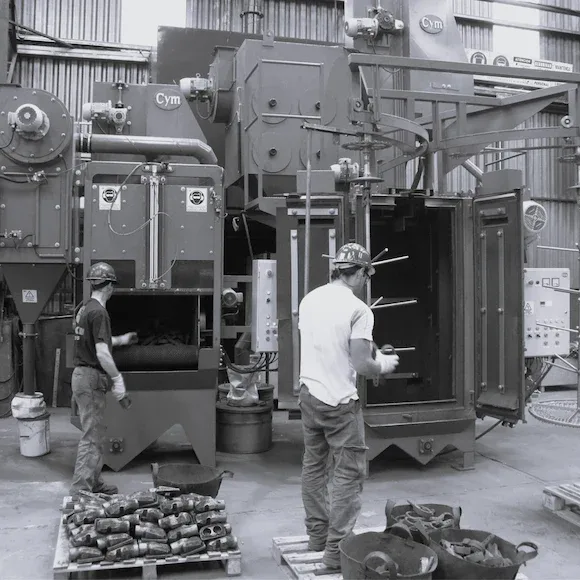
Small, robust parts that tolerate contact with each other are processed in bulk in tumble belt machines, where continuous tumbling exposes every face with no handling. Flat parts in series production are handled on a continuous mesh belt, with blast wheels above and below treating both faces in a single pass. Parts with complex geometry or that cannot knock against each other go on a rotary table with satellites, where each part rotates on its own axis. And large or delicate parts are hung on spinner hanger machines, which allow positioning without contact.
In every case the rule is the same: lower projection energy than on steel, and stainless steel shot in the circuit.
Published: July 2026
KEEP EXPLORING
Related equipment and content
TECHNICAL ARTICLES
Spinner hanger, rotary table or tumble belt machine
How to choose the machine by the type of part
Read more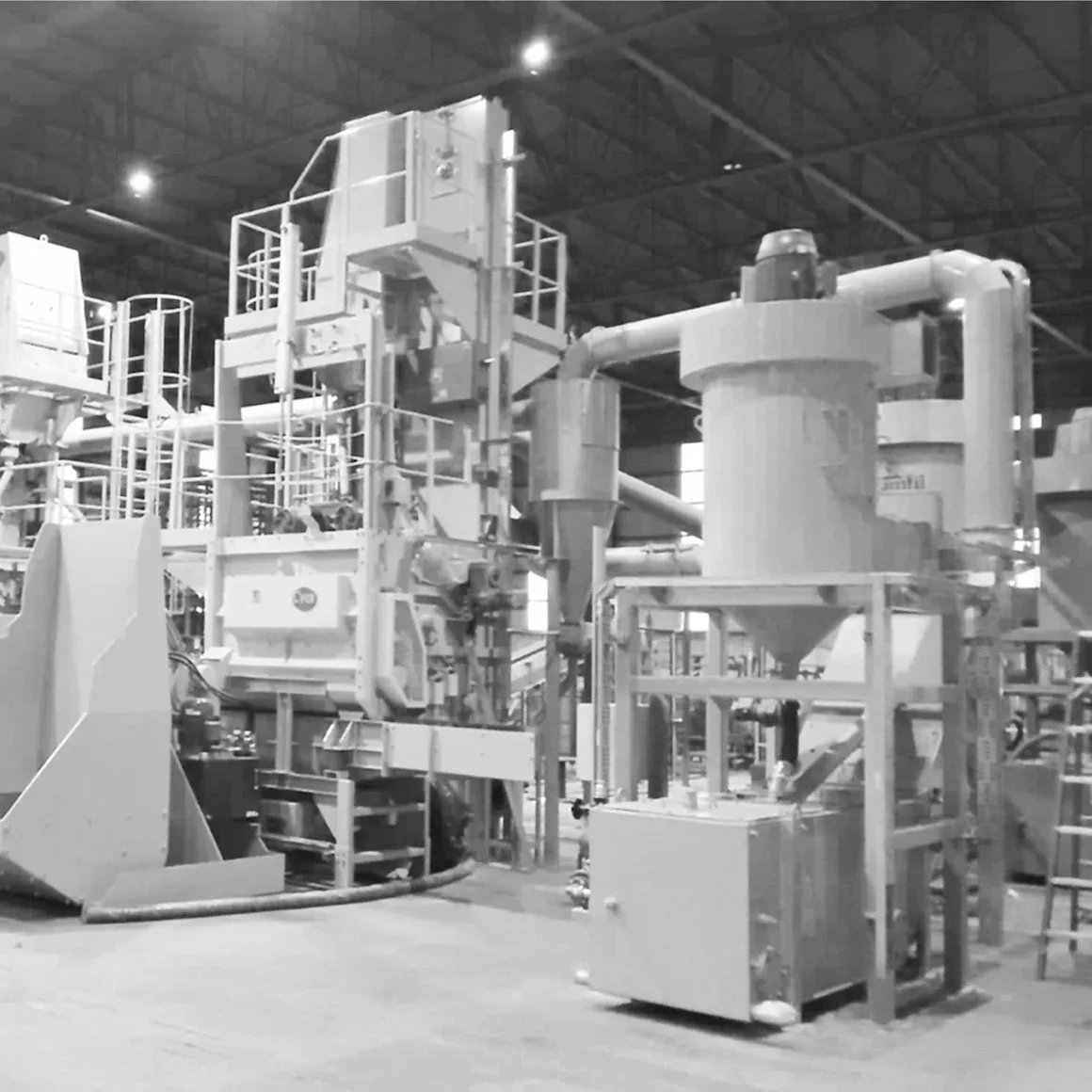
TECHNICAL ARTICLE
Aluminum dust explosion and thermite risk
The thermite reaction and why abrasive and dust collector must be dedicated
Read more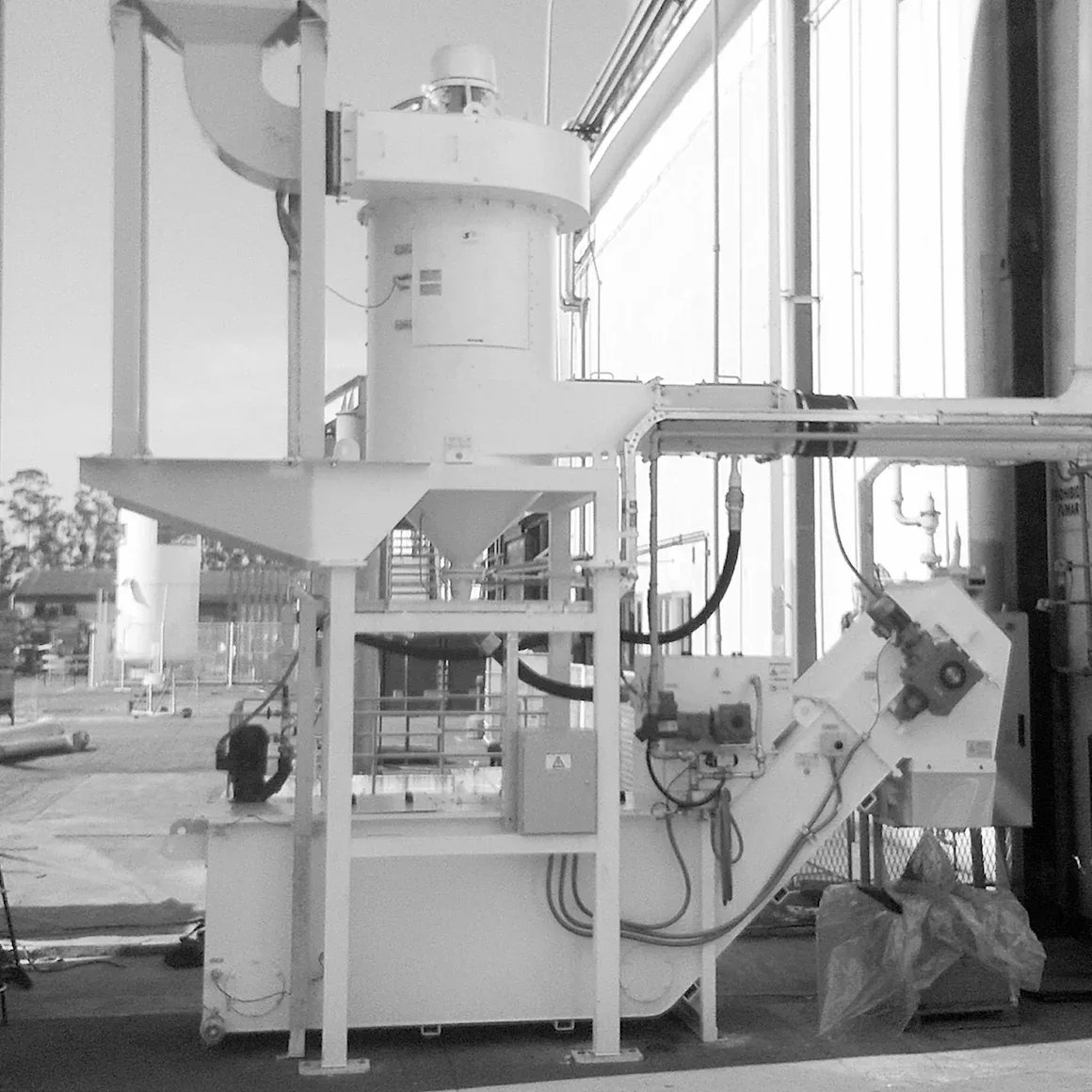
TECHNICAL ARTICLES
When to use a wet scrubber?
Explosive, sticky or spark-prone dust — when dry filtration is not enough
Read moreInstallations
Equipment in operation
Videos
Equipment in action
Special Projects
Can't find the equipment you need?
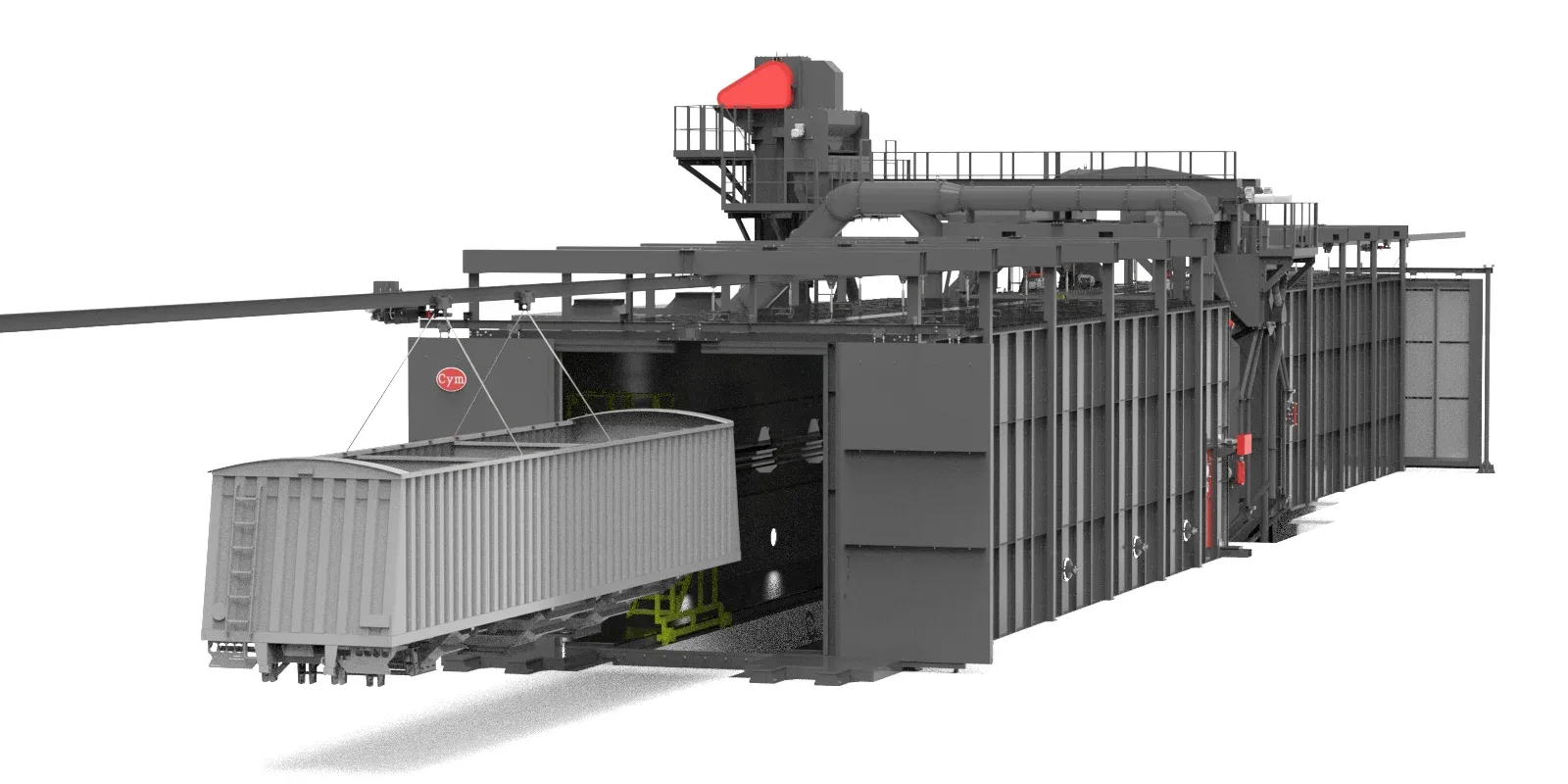
CYM Materiales develops it.
Our Engineering and Sales team works alongside the client to design a custom solution, reducing operating costs and maximizing productivity. Every project starts with a detailed technical assessment and ends with a machine built and tested at our plant
REQUEST A CUSTOM PROJECT