
Technical article
Suction or pressure blasting: which one suits the job
ABRASIVE DELIVERY SYSTEMS
How productivity, investment and air consumption change
Two ways of feeding abrasive to the nozzle
In a suction system the gun has two hoses: one carries compressed air and the other draws abrasive from the bottom of the cabinet or from a vessel at atmospheric pressure. The air jet passing through the gun creates the vacuum that pulls the abrasive and projects it. In a pressure system the abrasive sits inside a pressurised vessel: compressed air pushes and meters it into a single hose, where the particle accelerates along its whole length before leaving the nozzle.
Why pressure delivers more
A pressure system delivers abrasive at roughly twice the speed of a suction system, and cleans three to four times faster. The reason is mechanical: in suction, part of the air energy is spent drawing the abrasive, while in pressure all the energy goes into accelerating the particle. That higher velocity produces a deeper anchor profile and removes thick coatings and adhered contaminants that a suction system cannot lift.
Which abrasives each system takes
This is the most concrete limit. Heavy abrasives — coarser steel shot and grit — cannot be drawn by the air stream of a suction system.
On CYM Materiales equipment, the abrasives recommended for suction are:
- Glass beads: up to Super Coarse
- Aluminum oxide: up to mesh 36
- Carbon steel: shot S170 or grit G80
- Stainless steel: shot S10/S20 or grit G10/G20
Above those sizes, a pressure system is the only alternative.
Air consumption and investment
With a comparable nozzle size, a suction system consumes less air than a pressure system, which makes it viable in workshops with limited compressor capacity. The initial investment is also significantly lower: fewer components and no pressurised vessel. A pressure system demands more air and more equipment, but the cost per part processed drops once volume justifies it.
Both systems can run continuously
Both systems allow uninterrupted operation, although they get there by different routes. Suction is continuous by nature: it takes abrasive from the bottom of the cabinet with no vessel to pressurise. Pressure resolves it through the vessel configuration.
In manual work the single-chamber vessel is the standard: it depressurises to refill, but that pause fits the operator's rhythm, who stops during the shift anyway. On automatic equipment that must sustain the process without interruption, double-chamber vessels are used: the upper chamber fills at atmospheric pressure while the lower one keeps blasting, so the transfer does not break the cycle.
The suction blast pattern is wider than the pressure pattern at the same air flow, which helps cover surface on low-demand work.
When each one is the right choice
Suction: low or intermittent production, touch-up and general cleaning, delicate parts, light abrasives, limited budget, low-capacity compressor, continuous-cycle automatic processes.
Pressure: intensive or multi-shift production, removal of thick coatings and adhered rust, anchor profile required by standard, coarse metallic abrasives, shot peening with specified Almen intensity.
The same decision runs through all the equipment
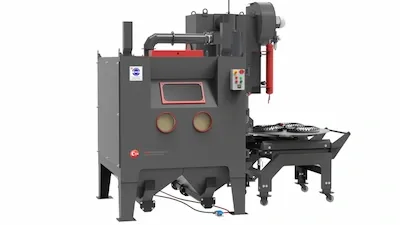
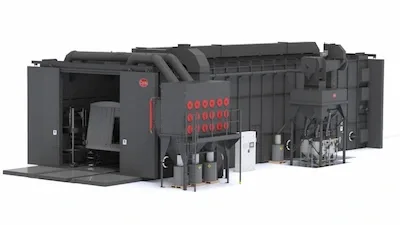
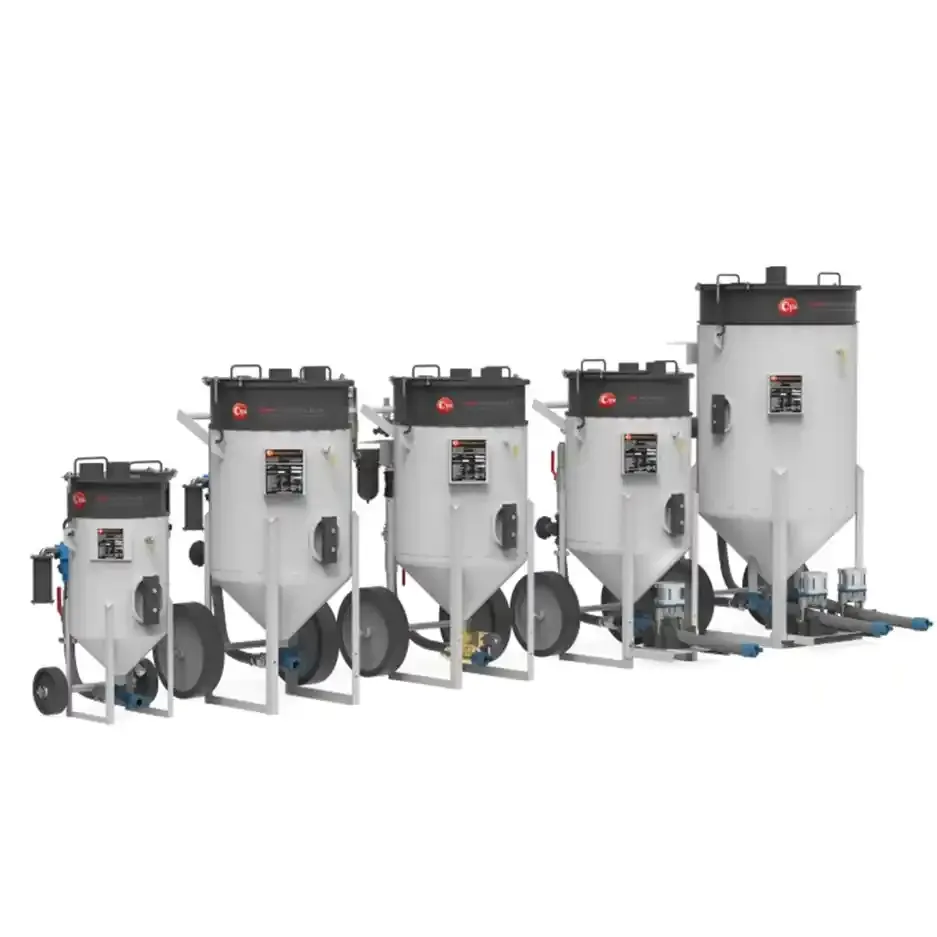
This choice is not exclusive to cabinets: it appears the same way in blast pots, blast rooms and portable equipment. In blast rooms pressure prevails because of part size and job demands, but suction has its place in automatic cleaning or light shot peening installations.
Equipment lines
Select the equipment for your application
KEEP EXPLORING
Related equipment and content
FAQ
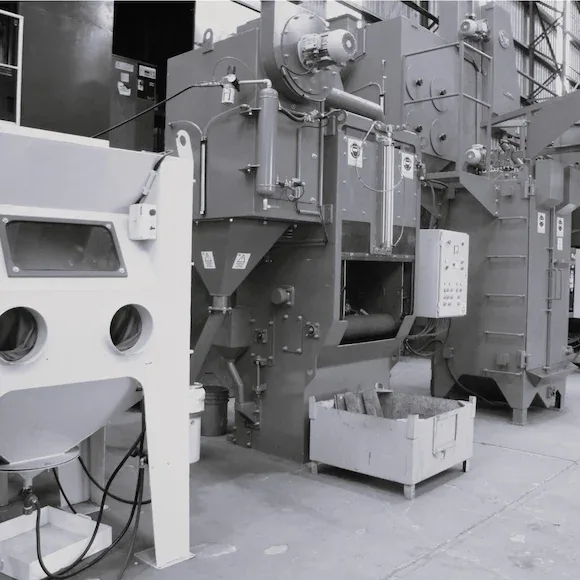
Turbine or compressed air what is the difference?
How to choose the right system for your process?
Read more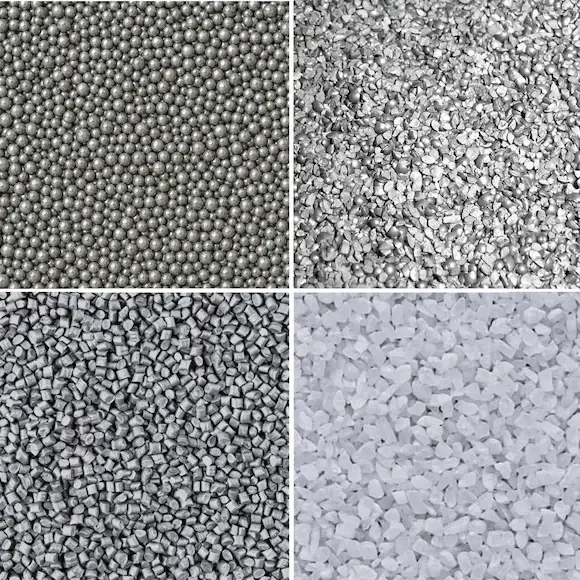
FAQ
How to choose the best blasting abrasive
Which abrasive to use by material and process
Read more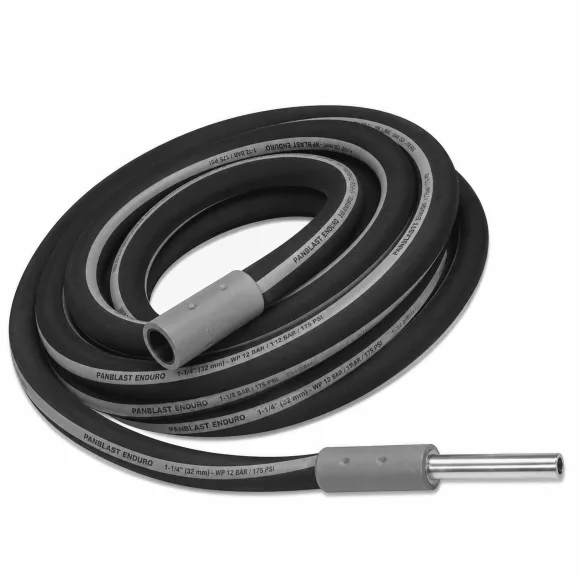
FAQ
How to select the right blast hose diameter?
The three-times-the-nozzle rule and pressure drop by length
Read moreInstallations
Equipment in operation
videos
Equipment in action
Special Projects
Can't find the equipment you need?
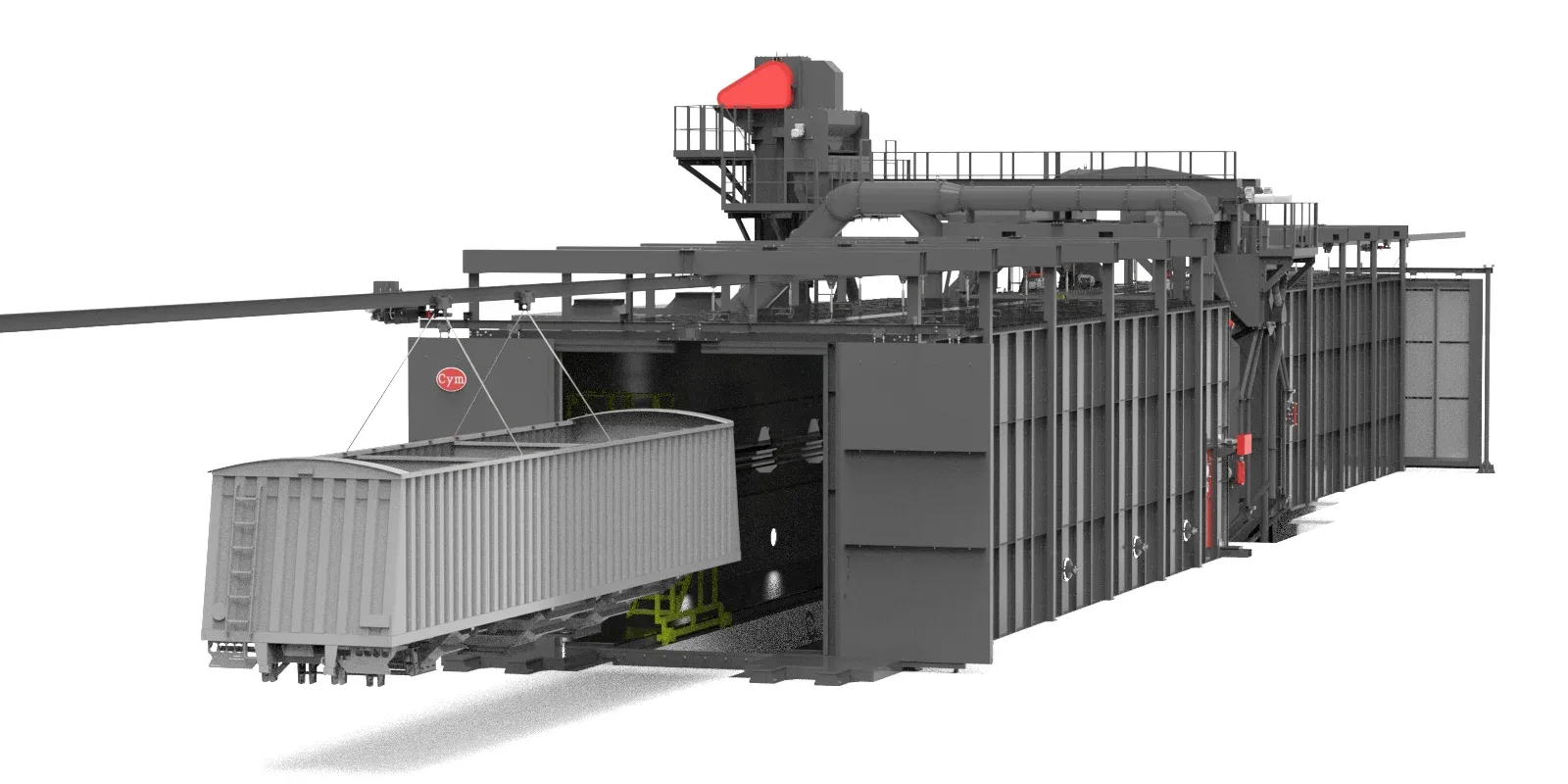
CYM Materiales develops it.
Our Engineering and Sales team works alongside the client to design a custom solution, reducing operating costs and maximizing productivity. Every project starts with a detailed technical assessment and ends with a machine built and tested at our plant
REQUEST A CUSTOM PROJECTPublished: July 2026