
TECHNICAL ARTICLES
Steel plate shot blasting with a portable wheel machine
AN ECONOMICAL OPTION FOR PLATE
Lower investment and less space to remove mill scale and prepare plate
Shot blasting is the best method to remove mill scale and prepare steel plate before painting, but dedicated plate blasting machines —horizontal or vertical— require an investment and permanent floor space that many small metalworking shops cannot afford. There is a far more accessible alternative: the portable floor wheel blasting machine. The same self-propelled equipment that treats concrete floors also processes steel plate laid on the ground, at a fraction of the investment of a dedicated line and without taking up permanent space. This article explains how it works, when it makes sense and what its limits are compared with a fixed plate blasting machine.
The problem: blasting plate without a dedicated line
Every shop that cuts, bends or welds steel plate faces the same issue: plate comes with rolling mill scale, and that layer must be removed before painting or coating, or the paint peels prematurely. Shot blasting is the most effective way to do it, but dedicated plate blasting machines —horizontal or vertical— are production lines: they demand a significant investment and permanent fixed space in the plant. For the small or mid-sized shop that processes plate occasionally or in moderate volumes, that investment is hard to justify, and many end up outsourcing the blasting or preparing the plate with less effective methods, such as grinding or wire brushing, which do not fully remove the mill scale.
The solution: the floor machine on plate
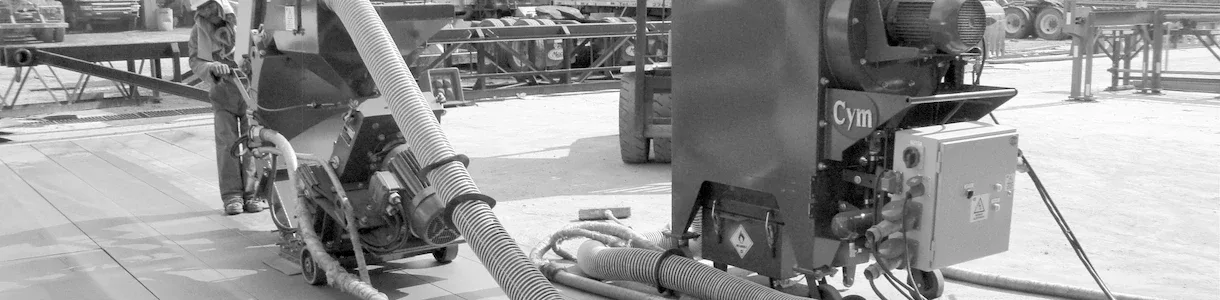
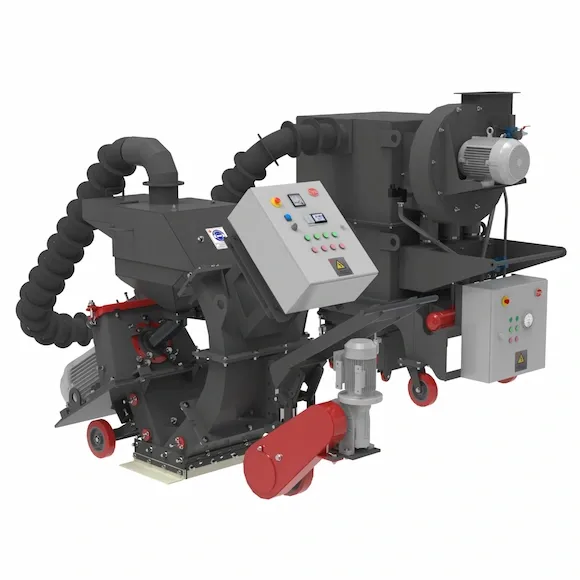
The portable floor wheel blasting machine —the GPP line— solves that problem from a different angle. It is a self-propelled unit that travels over horizontal surfaces projecting abrasive by centrifugal blast wheel, in a closed circuit: it recovers the abrasive by rebound and filters the dust while blasting, with no dispersion into the environment. It was conceived to treat large flat surfaces —concrete floors, ship decks, oil tank floors and roofs, airport runways—, but that same capability enables it to process steel plate laid on the floor. The plate is placed flat on the ground —one or several sheets together forming a continuous surface— and the machine travels over it, delivering the treated face clean, dry and with a roughness profile, ready to coat.
The process, face by face
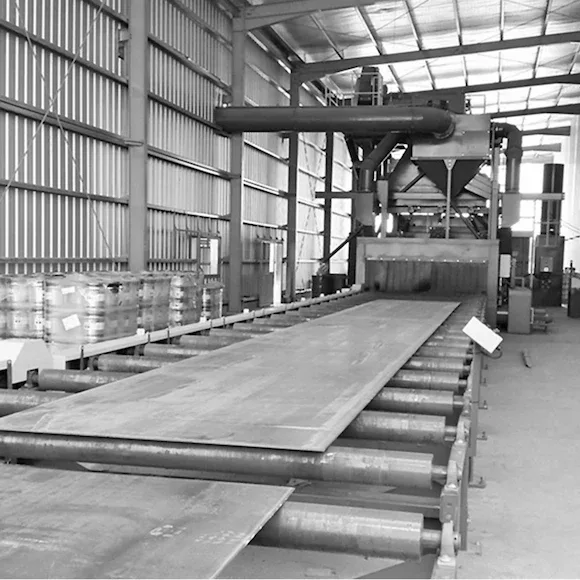
There is one point that sets this method apart from a dedicated plate blasting machine and it is worth being clear about. The portable machine treats the upper face of the plate, the one exposed toward the blast wheel. To blast the other face, the plate must be turned over and processed in a second pass. A fixed plate blasting machine, by contrast, treats both faces in a single pass through the machine. That is why the portable machine does not compete on productivity with a dedicated line: its advantage is not speed or volume, but accessibility. It is the difference between being able to blast plate with a minimal investment or not being able to do it at all.
When to choose the portable machine and when the fixed line
The choice is not which one is “better”, but which one fits the scale of the shop.
The portable floor machine is the right choice when plate volume is low or intermittent, when there is no space to install a fixed line, when the available investment is limited, or when the equipment will also serve other functions (floors, decks, structures). It is the entry door to plate shot blasting for those who do not do it today.
The fixed plate blasting machine (horizontal or vertical) is the right choice when volume is high and sustained, when both faces are processed continuously, when cycle time is critical and when plate is central to the production process. The full analysis of those two configurations is developed in the horizontal or vertical steel plate blasting machine article.
Advantages for the small metalworking shop
For the shop that does not blast plate today, the portable floor machine offers a set of advantages hard to match:
Minimal investment: it represents a fraction of the cost of a dedicated plate blasting machine, even the most economical ones.
No fixed space: it requires no permanent installation or civil works; it is stored away when not in use and takes up no productive floor area.
Multipurpose: the same machine that blasts plate treats concrete floors, decks, runways and other flat surfaces, spreading the investment across several uses.
Location flexibility: working in a closed circuit with no dispersion, in good weather it can be operated in the yard, on an apron or on any available flat surface, with no need for a booth.
As a reference, and without accounting for setup or turning times, the GPP5 processes on the order of 0.4 to 0.5 m² per minute and the GPP25 between 1.2 and 1.8 m² per minute. These figures are indicative: actual output varies significantly with the blasting quality sought, the hardness and thickness of the mill scale, and the required finish grade.
CONCLUSION
The entry door to plate shot blasting
Plate shot blasting is no longer exclusive to plants with dedicated lines. The portable floor wheel blasting machine lets any metalworking shop remove mill scale and prepare plate for painting with minimal investment and space, while also putting the equipment to use on other surfaces. It does not replace a plate line where volume justifies it, but it opens quality shot blasting to those who previously had no way to access it.
KEEP EXPLORING
Related equipment and content
faq
Why shot blast steel plate before cutting or welding?
A sounder weld bead, a cleaner cut and better paint adhesion
Read more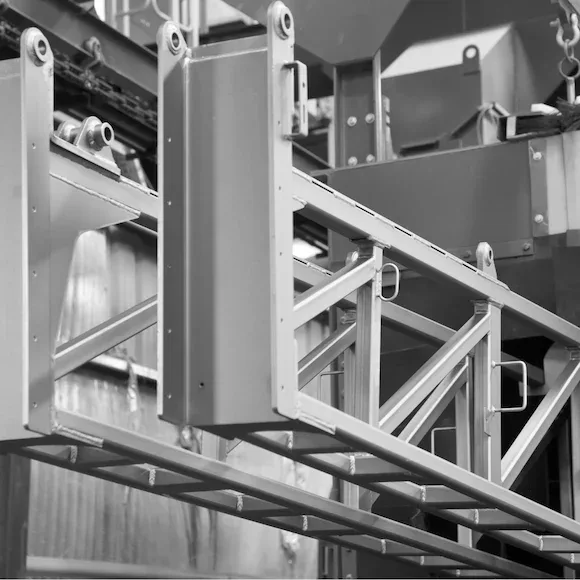
TECHNICAL ARTICLE
Shot blasting of steel profiles and welded structures
Two process stages: raw material before fabrication and finished structure before painting
Read more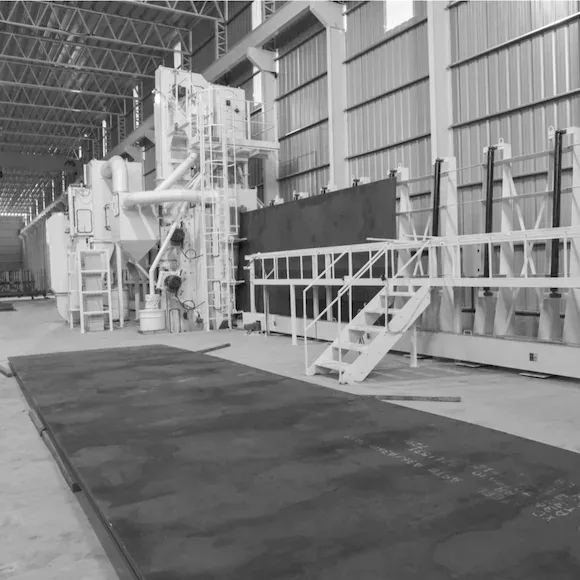
Technical article
Horizontal or vertical steel plate shot blasting
Process fundamentals — selection guide
Read moreInstallations
Equipment in operation
videos
Equipment in action
Special Projects
Can't find the equipment you need?
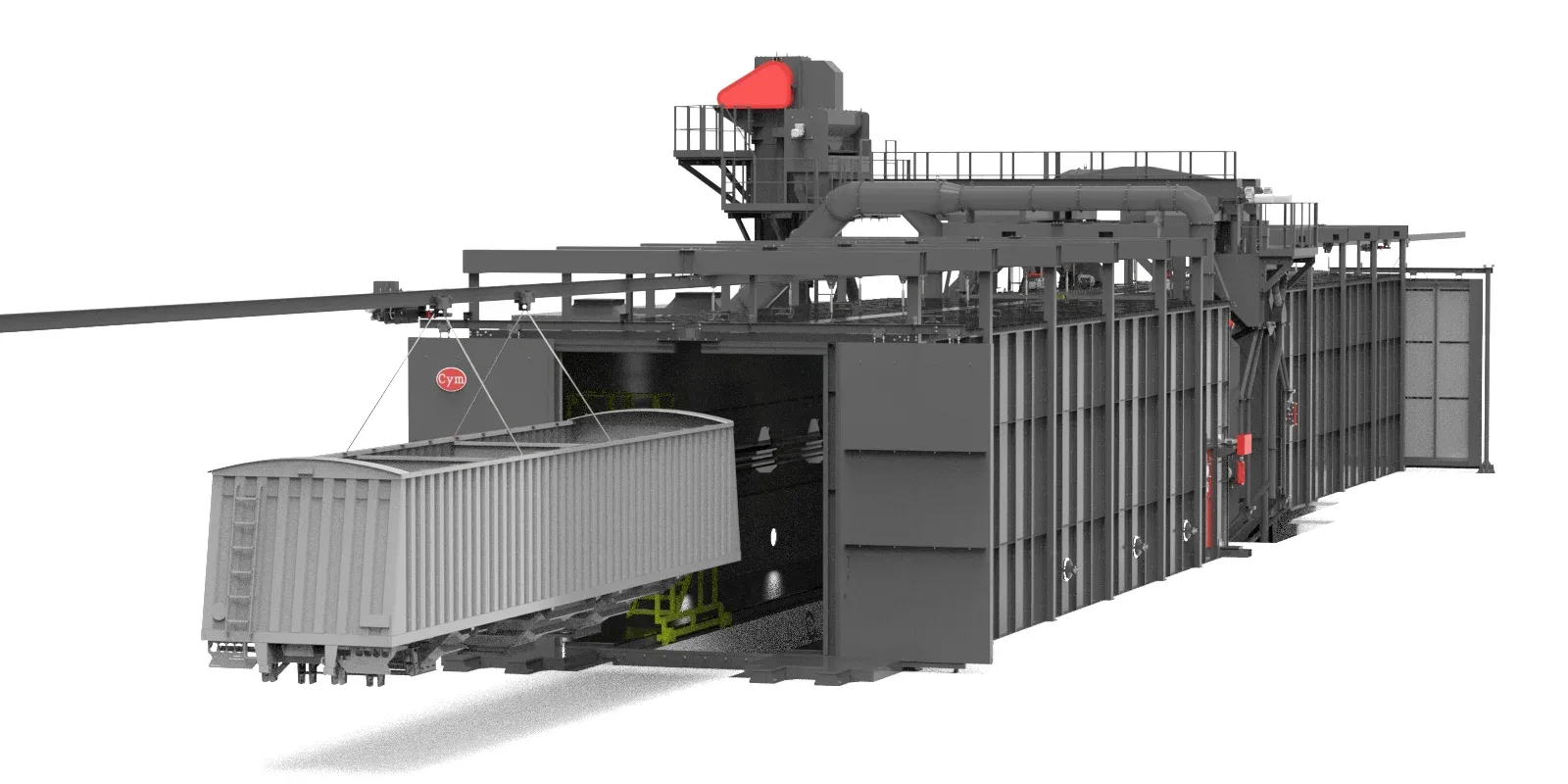
CYM Materiales develops it.
Our Engineering and Sales team works alongside the client to design a custom solution, reducing operating costs and maximizing productivity. Every project starts with a detailed technical assessment and ends with a machine built and tested at our plant
REQUEST A CUSTOM PROJECTPublished: July 2026