
TECHNICAL ARTICLE
Shot blasting of steel profiles and welded structures
RAW MATERIAL · WELDING · SHOP PRIMER
Two process stages: raw material before fabrication and finished structure before painting
Shot blasting of steel profiles and structures is not a single process: depending on when it is applied in the production cycle and the type of material being treated, the objectives, equipment and results are completely different. This report explains the two main process stages, the contaminants generated by welding, the role of shop primer in integrated lines and why centrifugal blast wheels are the reference method for these applications.
What blasting achieves at each stage of the cycle
Shot blasting in this segment is applied at two different points in the production cycle, each with different objectives:
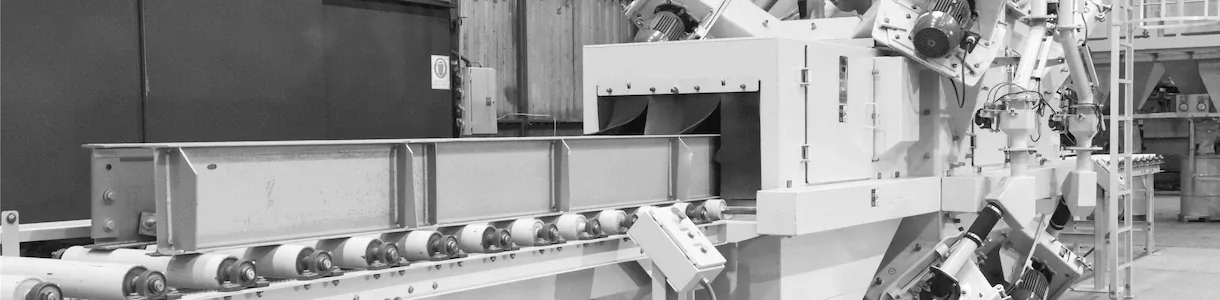
• Raw material blasting (before fabrication): H, I, U, wide-flange sections, bars, tubes, plates and flat rolled products are blast cleaned before cutting, drilling and welding. The objective is to remove mill scale and original rust from the hot-rolling process, leaving a clean surface with the roughness profile needed to receive the shop primer. Blasting before fabrication achieves maximum finish uniformity because part geometry is simple and regular; PER-R, PER-I and CH lines were designed specifically for this purpose.
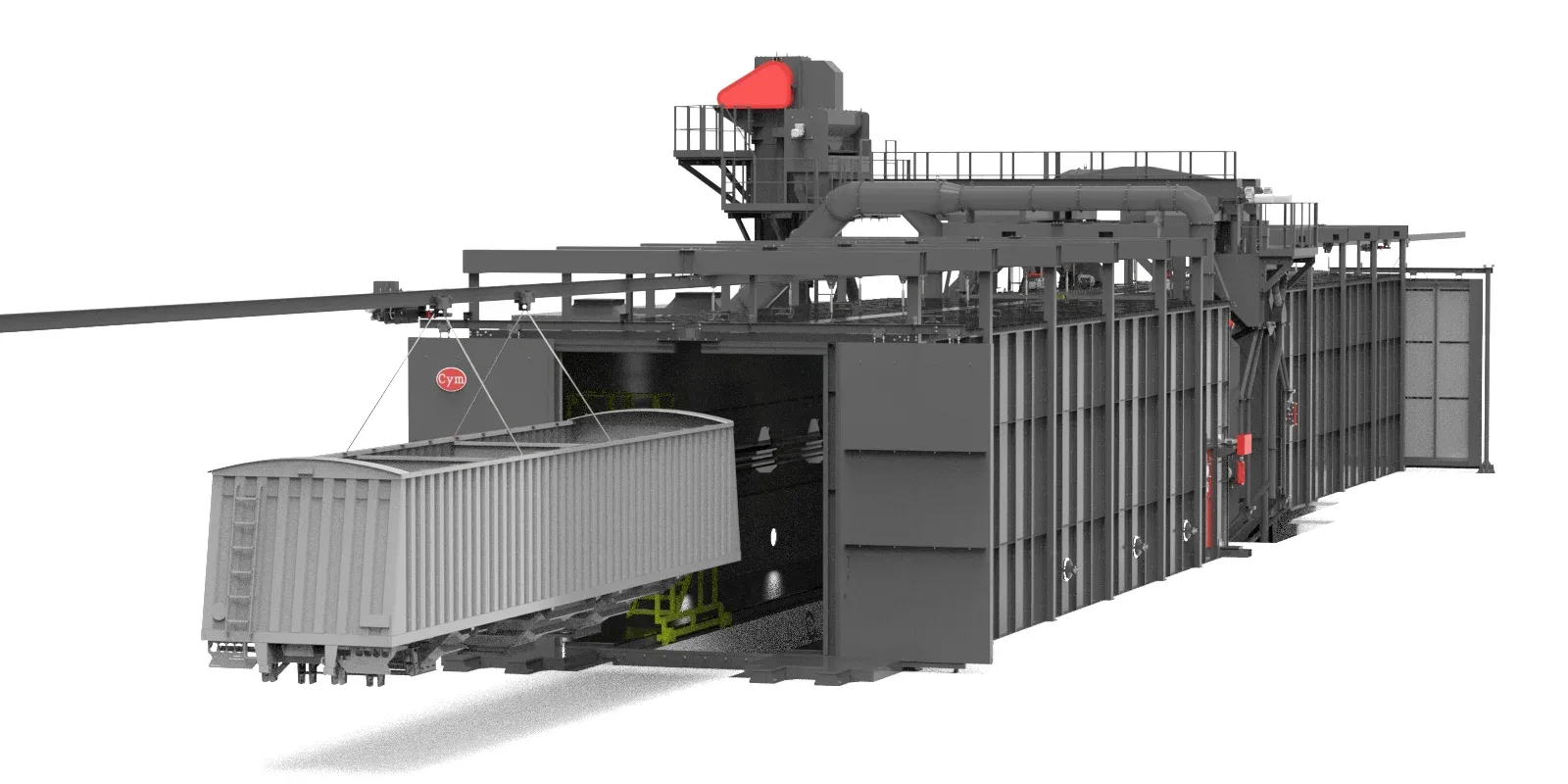
• Blasting of finished welded structures (before painting): fabricated assemblies, frames, trusses, built-up beams and complex structures are blast cleaned after the welding process. The objective is to remove weld contaminants (slag, spatter, heat-affected zone oxide) and prepare the surface for the final paint system. Complex geometry requires machines with multiple blast wheels at variable angles — EST lines — to guarantee total coverage with no shadow zones.
In many high-production installations both stages coexist: raw material enters blast cleaned and shop primed, and the finished structure receives a second blast cleaning to remove weld contaminants before the topcoat system.
Weld contaminants: why they must be removed before coating
The welding process deposits a series of contaminants on the structure that prevent correct adhesion of any protective coating:
• Weld slag: a glassy layer that forms on the weld bead during MIG/MAG or stick electrode processes. If not completely removed, paint applied over it peels together with the slag at the first thermal cycle or impact.
• Spatter: droplets of molten metal that impact the base surface. They have low mechanical adhesion and create points of different electrochemical potential, accelerating localized galvanic corrosion under the paint film.
• Heat-affected zone (HAZ): welding heat oxidises the base metal surface adjacent to the weld bead. That oxide has a different potential from the base steel and acts as a corrosion initiation point under the coating.
• Handling contaminants: grease marks, cutting oil or contact contaminants that prevent paint from wetting the metal surface.
Abrasive blast cleaning is the only method that simultaneously removes all these contaminants and generates the roughness profile the paint needs to anchor. SSPC grades SP 6 to SP 10 define the required cleanliness level according to the coating system and expected environmental exposure.
Shop primer: why integrate it with the blast cleaning line
Shop primer (shop coat or prefabrication primer) is a temporary protective coating applied immediately after blast cleaning of raw material. Its function is not definitive protection: it protects the blasted surface during fabrication — months of storage, handling, cutting, drilling and welding — until the final paint system is applied.
• Controlled temporary protection: shop primer protects blast-cleaned steel during the fabrication period, preventing the clean surface from rusting before it receives the final paint. Its formulation allows direct welding without prior removal in the joint area.
• Integration with the blast cleaning line: the integrated line — blasting → shop primer booth → drying oven — processes raw material in a continuous flow. Blasting and applying shop primer in the same pass eliminates the re-oxidation window of bare steel, which can be just a few hours in high-humidity environments.
• Compatibility with the final paint system: shop primer must be compatible with the topcoat system. The most widely used are zinc-based (epoxy zinc, inorganic zinc) or wash primer. Shop primer selection is part of the total paint system specification.
• Reduced preparation costs: the second blast cleaning of the finished structure is faster and more economical when raw material was treated with shop primer, because the only contaminants to remove are from welding, not original base metal rust.
Why centrifugal blast wheels and not manual blasting for these processes
• Total coverage with no shadow zones: EST machines use 8 to 16 blast wheels at variable angles around the blast chamber. This arrangement ensures abrasive reaches all faces of the part simultaneously, including hard-to-access zones in complex structures, without depending on operator skill.
• Uniformity and repeatability: manual blasting produces variations in coverage and intensity between parts and between operators. Centrifugal blast wheels work with fixed parameters (pass speed, wheel power, abrasive type), guaranteeing the same result for every part in the production run.
• Productivity and operating cost: automatic lines process profiles and structures in continuous pass with minimum operating cost. For the same cleanliness result, the cost per tonne processed by blast wheels is significantly lower than manual blasting, especially in high-volume production.
• No environmental contamination: the enclosed system of automatic lines prevents abrasive and dust pollution in the work environment. The abrasive is recovered, cleaned and recirculated in a closed circuit.
Manual blasting with a blast room remains indispensable as a complement: for oversized or exceptionally complex parts that do not pass through automatic machines, or for spot touch-ups after welding.
KEEP EXPLORING
Related equipment and content
TECHNICAL ARTICLE
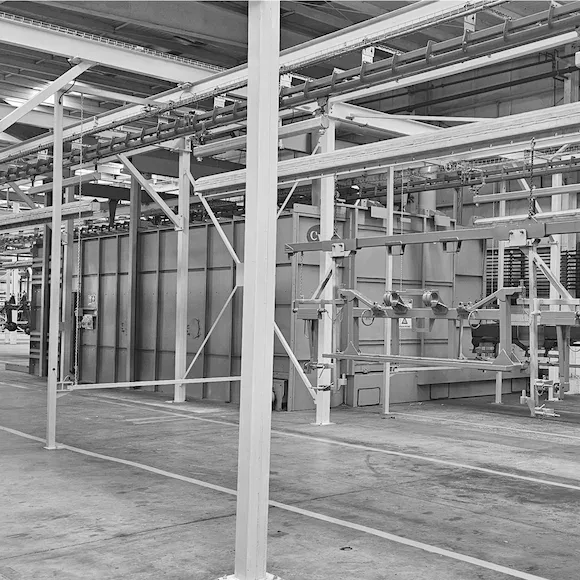
Integrated blasting and painting line
Advantages and criteria for structural steel fabricators
Read more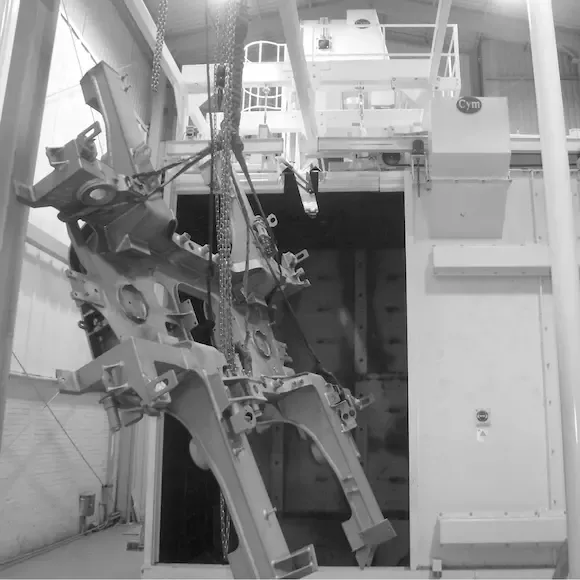
TECHNICAL ARTICLE
Surface preparation before coating
How to do it right for each coating
Read more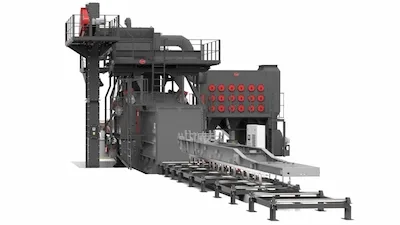
PER, EST & CH LINES
Shot blast machine for profiles and welded structures
Automatic shot blasting machines for profiles, tubes, spools and welded structures.
Read moreInstallations
Equipment in operation
VIDEOS
Equipos en acción
Special Projects
Need to define the right equipment and process for your profile or structure line?
CYM Materiales develops it.
Our Engineering and Sales team works alongside the client to design a custom solution, reducing operating costs and maximizing productivity. Every project starts with a detailed technical assessment and ends with a machine built and tested at our plant
Talk to a specialistPublished: July 2026