
FAQ
How long does an abrasion resistant plate last in ports and grain terminals?
STEEL CASTING · ABRASION RESISTANCE
What determines its service life and when to replace it
The short answer: a properly specified cast abrasion-resistant steel plate withstands the passage of more than 100 million tons of grain or pellet before it wears out. But the real service life is not a fixed number — it depends on the working conditions of each installation.
Three variables define the service life: the abrasiveness of the cargo (a compacted pellet is more aggressive than a whole grain), the angle at which the material strikes the surface, and the speed at which it moves. The greater the impact and speed, the greater the wear. That is why the same plate can last far longer in a smooth-flow chute than in an elevator head under constant impact.
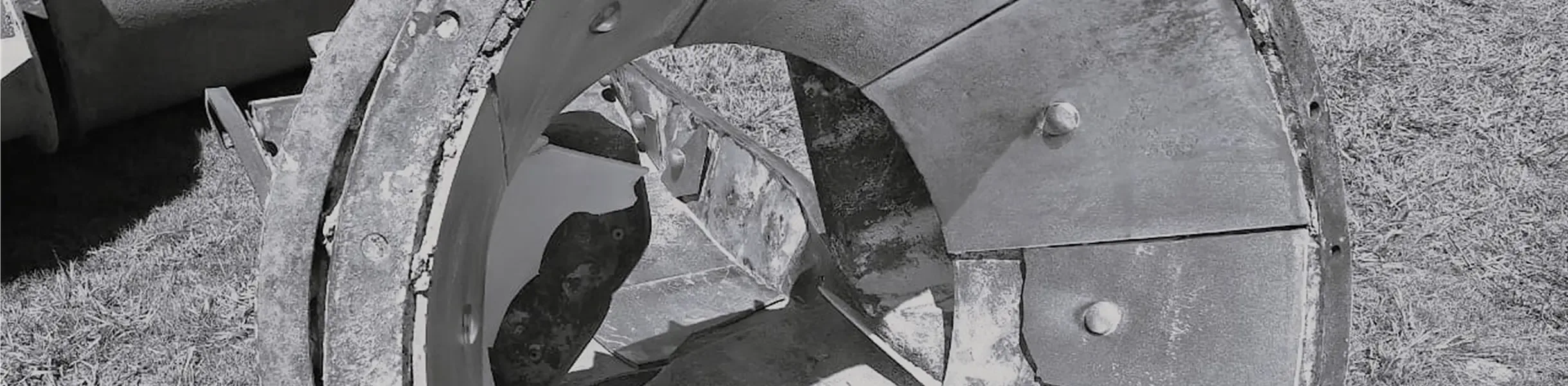
Wear is gradual: the plate loses thickness evenly until, near its limit, it loses mechanical strength and can break through fatigue or bending. The important thing is to replace it before that point — and because the system is modular and bolted, only the worn plate is changed, without touching the structure.
MORE THAN A NUMBER
Service life is designed
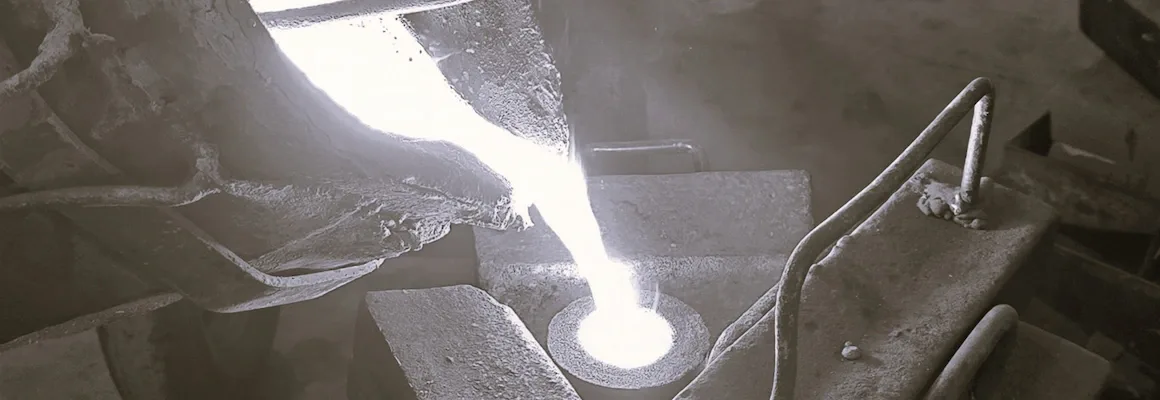
Service life starts with the specification: the hardness of the alloy (above 61 HRC), the thickness, and the geometry are chosen for each wear point. CYM Materiales casts these plates in the same abrasion-resistant alloy it uses for the wear parts of its own shot blasting equipment, with composition and hardness control on every heat.
Special Projects
Need a custom part not listed in our catalog?
CYM Materials will develop it for you.
Our technical team analyzes each requirement and develops the most suitable solution: from alloy selection and pattern design to the finished part, ready for installation. Contact us for a free consultation.
REQUEST ADVICEPublished: July 2026