
TECHNICAL ARTICLES
Abrasion resistant plates
STEEL CASTING · ABRASION RESISTANCE
How to protect wear points in ports and grain terminals
A grain port or an edible-oil plant moves millions of tons of grain and pellet every year, and at every point where the material changes direction or falls, the metal wears away. That unplanned wear forces the plant to stop, drives up maintenance hours, and causes grain loss. Protecting the critical points with a lining harder than the grain itself is the way to extend the life of the installation. This report explains how cast abrasion-resistant plates work and where they are worth applying.
1. Where and why a grain installation wears
Wear concentrates at transfer points: wherever grain or pellet impacts, rubs, or changes direction at high speed. Weighing scales, elevator heads, conveyor transitions, chutes, and elbows take the repeated blow of millions of tons. Two factors govern the intensity: the angle of attack —the more perpendicular the impact, the greater the damage— and the speed of the material. Added to that is the abrasiveness of the cargo: a compacted pellet is far more aggressive than a whole grain. On ordinary structural steel, that wear advances quickly and ends in breakage and downtime.
2. The solution: high-hardness cast steel plates
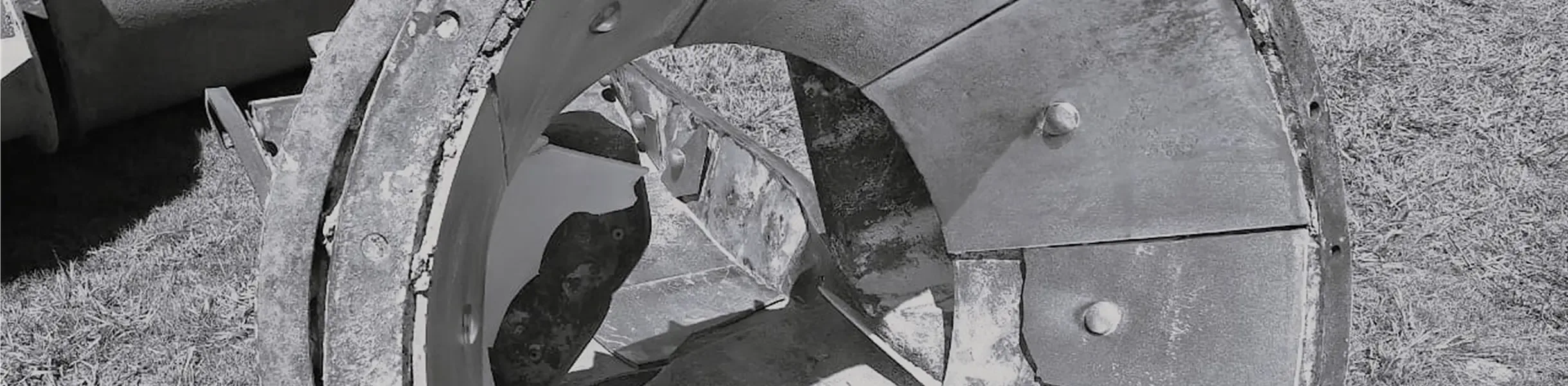
The rule of abrasive wear is simple: the surface that is harder than the material attacking it survives. CYM Materiales abrasion-resistant plates are cast in a special high-chromium steel and quench-hardened above 61 HRC, well beyond the hardness of grain and pellet. They are cast —not cut from plate stock— because casting achieves that hardness throughout the whole body of the part and gives it the exact geometry of the point to be protected. The plate is sacrificed slowly instead of the structure, which stays intact.
3. Modular mounting system
The lining is built from pieces that cover any geometry: flat plates for straight surfaces, corner pieces for edges, and curved plates for chutes and transitions. Each plate comes with holes and is fastened with countersunk-head bolts and nuts cast in the same abrasion-resistant material, so that no fastener becomes the weak point. Plates can be cut on site to fit, and when one wears out only that piece is replaced, without touching the structure or stopping the line longer than necessary.
4. Where they are applied
The critical points of a port or grain plant are well known and repeatable. Abrasion-resistant plates are commonly applied on: weighing scales; the boot and head of bucket elevators; the buckets themselves; conveyor transitions and heads; pneumatic conveyors; expanders and screw conveyors; knife gate valves that open and close chutes; grabs and cones on ship-loading booms; and chutes, elbows, and branches of suction or transport lines. For other points, the technical team assesses each case individually.
5. Service life and what determines it
A properly specified plate withstands the passage of more than 100 million tons of grain or pellet. But service life is not a fixed figure: it depends on the abrasiveness of the cargo, the angle of attack, and the speed of the grain —variables that change from one point to another within the same plant. Wear advances gradually, reducing the plate's thickness; near its limit, the part loses mechanical strength and can break through fatigue or bending, so it is best to replace it before reaching that point. In field measurements on ship-loading scales, the projected service life reached the order of 130 million tons.
6. Why custom-made and cast in-house
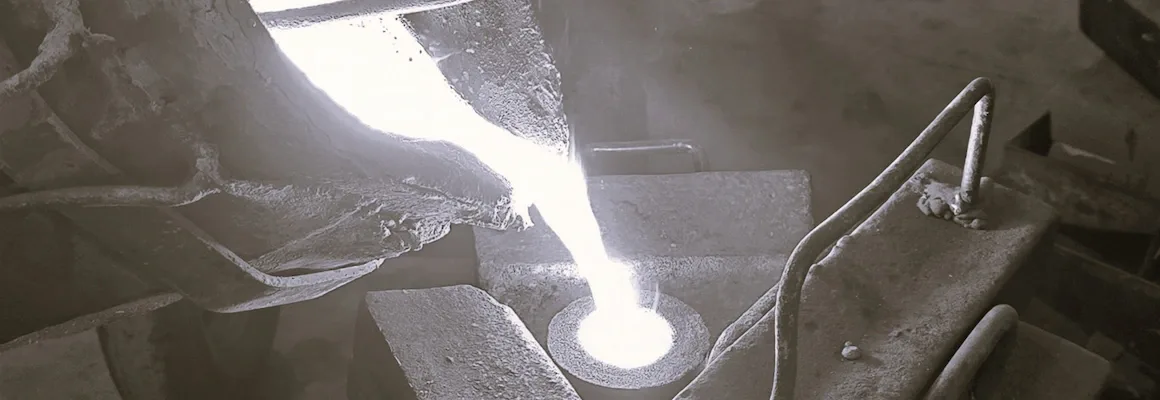
No two wear points are alike, which is why the plates are made to measure: dimensions, thicknesses, and geometries are defined for each application, with the option to develop special parts when the point demands it. CYM Materiales casts these plates in the same abrasion-resistant alloy it uses for the wear parts of its own shot blasting equipment —blades, liners, and internal components—, a command of the process backed by chemical composition and hardness control on every heat under ISO 9001:2015. The customer receives a solution matched to their installation, not a catalog plate.
CONCLUSION
From the wear point to the custom plate
Protecting the critical points of a port or grain plant with high-hardness cast steel plates reduces downtime, maintenance, and grain loss, and prolongs the life of the installation. The key lies in correct specification —hardness, thickness, and geometry for each point— and in a modular mounting that lets you replace only the worn plate. CYM Materiales covers the complete process, from analyzing the wear point to the cast, machined, and ready-to-install plate.
GALLERY
See our facilities
Special Projects
Do you need a custom part that's not in our catalog?
CYM Materials will develop it for you.
Our technical team analyzes each requirement and develops the most suitable solution: from alloy selection and model design to the finished part, ready for installation. Contact us for a free consultation.
REQUEST ADVICEPublished: July 2026