

TECHNICAL ARTICLE
Surface preparation before coating
METHODS · OPERATION · ROUGHNESS
How to do it right for each coating
The success of any coating — paint, rubber, metallizing, enamel — depends almost entirely on the preparation of the surface it is applied to. A high percentage of premature coating failures are directly caused by insufficient or incorrect preparation. This report covers the variables that condition preparation, the available methods and their differences, how to operate correctly, and the roughness parameters that define coating adhesion.
Variables that determine correct preparation
• Substrate: carbon steel, stainless steel, aluminum or other alloys. Each requires a different abrasive and aggressiveness level. On hot-rolled steel, the presence of mill scale makes complete mechanical removal mandatory before coating — for its specific treatment on industrial equipment, see the shot blasting of mobile equipment report.
• Coating type: origin, thickness and hardness of the coating determine the required Sa cleanliness grade and the Ra/Rz roughness range the paint needs to wet and adhere correctly.
• Available equipment: centrifugal blast wheels (automatic enclosed) vs. compressed-air (flexible, manual or portable). The choice conditions the type of abrasive possible.
• Abrasive type: spherical shot, angular grit, mineral abrasives. Each generates a different roughness profile. The abrasive/equipment combination defines the final Ra and Rz.
Preparation methods: comparison
• Centrifugal blast wheels: the most economical method for high-volume fixed installations. Enclosed, automatic, no dust pollution. Only applicable in fixed plant. Cannot use aluminum oxide, sand or mineral abrasives — metallic shot/grit only.
• Compressed-air blasting (manual nozzle): flexible, projects in any direction. Ideal for complex structures, site work and large parts. Higher operating cost per unit area than blast wheels, but irreplaceable for portable applications.
• Waterjetting: same flexibility advantages as compressed air, with real dust control and anti-spark effect in explosive atmospheres. Requires corrosion inhibitors post-treatment. Does not generate a roughness profile — requires prior or subsequent blast cleaning to create the mechanical anchor for the coating.
• Hand and power tools (SSPC SP 2, SP 3): for localized areas or where blasting is not accessible. Do not achieve comparable cleanliness or uniform roughness. Acceptable only under low-demand conditions.
• Chemical pickling (SSPC SP 8): removes mill scale by acid reaction but generates no anchor profile, carries hydrogen embrittlement risk on high-strength steels and produces toxic waste.
Surface preparation methods
| Method | Advantage | Limitation |
|---|---|---|
| Centrifugal wheels | Most economical at high volume; enclosed, automatic, no pollution | Fixed installations only; metallic shot only (no mineral abrasives) |
| Air blasting (manual) | Flexible, projects in any direction; ideal for field work, complex structures, large parts | Higher operating cost per area unit |
| Waterjetting | Pollution control; anti-spark effect in explosive atmospheres | No profile of its own; needs corrosion inhibitors |
| Hand/power tools (SSPC SP 2 / SP 3) | For spot areas or where blasting cannot reach | Does not reach uniform cleanliness or roughness; low-demand only |
| Acid pickling (SSPC SP 8) | Removes mill scale by acid reaction | No profile; hydrogen-embrittlement risk; toxic waste |
How to operate correctly: key parameters
• Interpret the specification: define work criteria (Sa grade, target Ra/Rz, abrasive type) before starting production.
• Blasting parameters: abrasive type, particle size, projection speed and number of passes must be defined to achieve the optimum roughness for the specified coating.
• Stabilised operating mix: the abrasive circuit must reach particle size equilibrium before production begins. An unstable mix generates variable roughness from part to part.
• Wear parts in good condition: worn blades, internal liners and control cage produce uneven coverage and imbalance. See the blast wheel maintenance report.
• Separation system control: the presence of just 1% sand or dust in the mix reduces component life by up to 50% and degrades the roughness profile.
• Blast direction (hot spot): on blast wheel equipment, verify the control cage position to ensure uniform projection onto the part.
• Apply coating immediately: bare steel is highly reactive. Depending on ambient humidity, it can re-rust within hours. The application window must be planned accordingly.
Sa cleanliness grades — basic criteria
Sa cleanliness grades (ISO 8501-1) define the required level of contaminant removal. The most commonly used: Sa 2½ (near-white metal, the industry standard — removes at least 95% of original contamination) · Sa 3 (white metal, total removal, for extreme conditions) · Sa 2 (commercial grade, low-demand areas only). For the complete guide to Sa grades and their SSPC/AMPP/NACE equivalences, see the standards reports.
Roughness: Ra, Rmax, Rz and Pc
The roughness profile defines the quality of the mechanical anchor for the coating. Four parameters characterise it:
• Ra (microns or mils): arithmetic mean of all peaks and valleys in the profile. The most widely used parameter in specifications. Represents the roughness average.
• Rmax (microns or mils): maximum height between the deepest valley and the highest peak in a measurement segment. Defines the coating thickness required to cover the profile without leaving pores. The parameter with the greatest impact on paint consumption.
• Rz (microns or mils): arithmetic mean of the five maximum heights in consecutive segments. Comparing Rz / Rmax evaluates profile homogeneity: if Rmax >> Rz, individual anomalous peaks exist.
• Pc (peaks per cm or per inch): number of peaks exceeding a reference line per unit length. Evaluates the density of mechanical anchor points — the higher the Pc, the greater the contact surface between metal and coating.
The practical objective is to maximise the quantity and density of evenly distributed peaks and valleys, provided the coating can wet 100% of the generated surface. A very high profile with low peak density is less efficient than a moderate profile with high anchor density.
Surface roughness parameters
| Parameter | What it measures | What it is for |
|---|---|---|
| Ra | Arithmetic mean of all peaks and valleys | Most used parameter in specifications |
| Rmax | Max peak-to-valley height in a segment | Defines coating thickness; the biggest driver of paint consumption |
| Rz | Mean of the five maximum heights | Rz vs Rmax assesses profile homogeneity |
| Pc | Peaks per cm (or per inch) | Anchor density: higher Pc, more metal-coating contact |
Published: June 2026 - Updated: July 2026
KEEP EXPLORING
Related equipment and content
Technical article
Surface preparation standards
Fundamentals of the process - Blast cleaning grades
Read more
TECHNICAL ARTICLE
Corrosion in steel and the role of shot blasting
How surface preparation extends the service life of steel
Read more
FAQ
What surface preparation grade do I need?
How to choose the grade by coating and environment
Read moreSpecial Projects
Can't find the equipment you need?
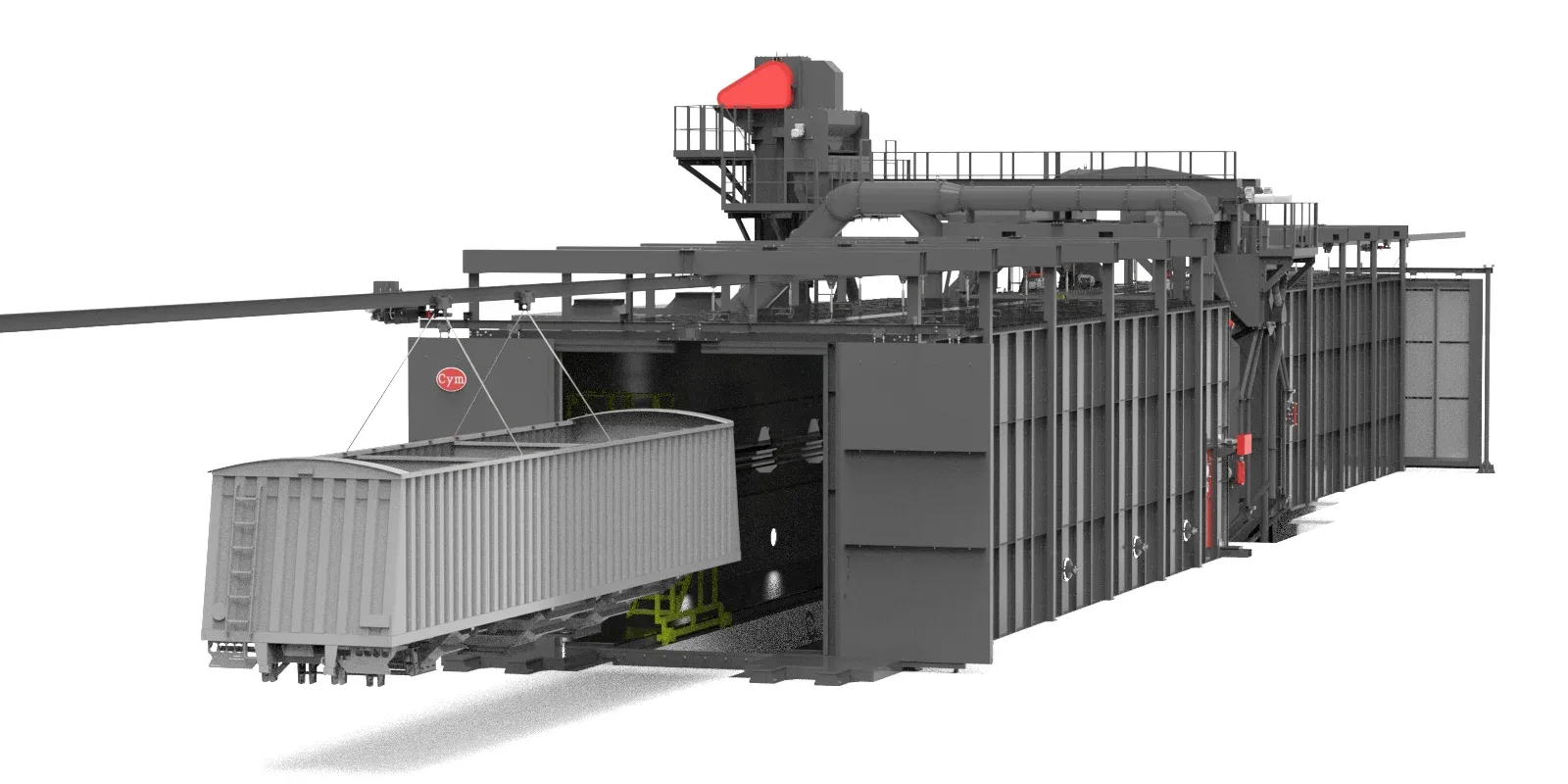
CYM Materiales develops it.
Our Engineering and Sales team works alongside the client to design a custom solution, reducing operating costs and maximizing productivity. Every project starts with a detailed technical assessment and ends with a machine built and tested at our plant
REQUEST A CUSTOM PROJECT