
FAQ
What is roll crown radius in a plate bending machine?
METAL FORMING
How it compensates for roll deflection under load
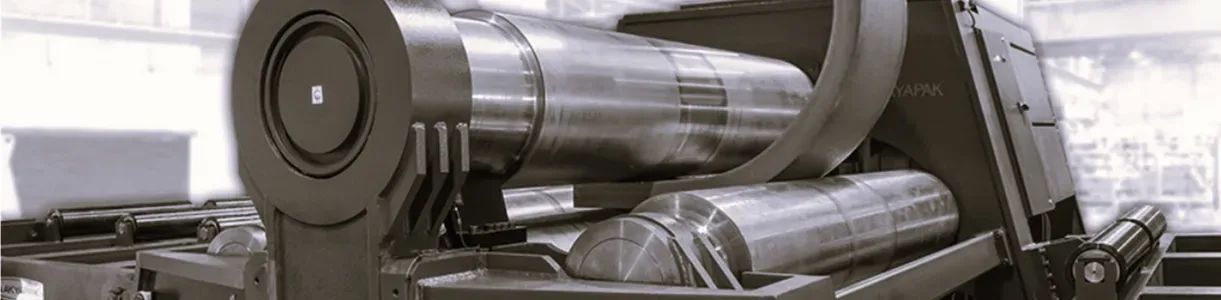
The crown radius — also called camber or crowning — is the transverse curvature machined into the rolls of a plate bending machine. Rather than being perfectly cylindrical, the rolls have a slightly larger diameter at the center than at the ends. This difference, calculated in tenths of a millimeter, has a fundamental purpose: to compensate for the elastic deflection that occurs in the roll when working under bending load.
When a long roll applies force on a plate, it deflects — bends — at the center. Without crown, that deflection causes greater pressure at the roll ends than at the center, producing a cylinder with greater thickness at the edges and less at the center. The crown compensates exactly for that deflection: by having more material at the center, when the roll is loaded and deflects, the active surface remains perfectly flat and applies uniform pressure along the entire plate length.
The correct crown radius calculation depends on several factors: roll length, roll diameter, material modulus of elasticity, maximum bending force and the type of parts most frequently processed. There is no single crown radius valid for all applications — each machine is designed with the optimal crown for its working range.
In high-precision rolling machines for pressure vessels and thick-wall tubes, the crown radius is calculated and verified with millimeter precision. An incorrect crown produces cylinders with variable thickness that do not meet the dimensional requirements of pressure vessel manufacturing standards (ASME, EN 13445).
Published: June 2026
KEEP EXPLORING
Related equipment and content
.webp?dpl=dpl_F2qkM6mUsSWa421zSuLAqV9uxoy4)
Technical article
How to specify a plate rolling machine
Material, thickness, width and minimum diameter: the four variables that define the machine
Read more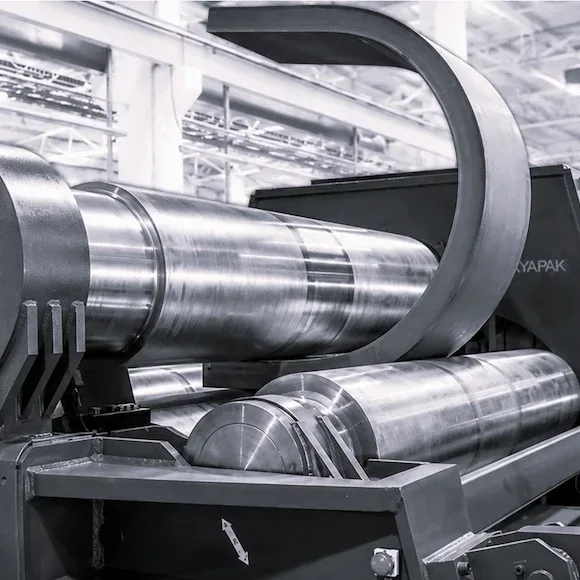
FAQ
3-roll or 4-roll plate rolling machine?
Pre-bending, precision and repeatability: what each configuration gains and gives up
Read more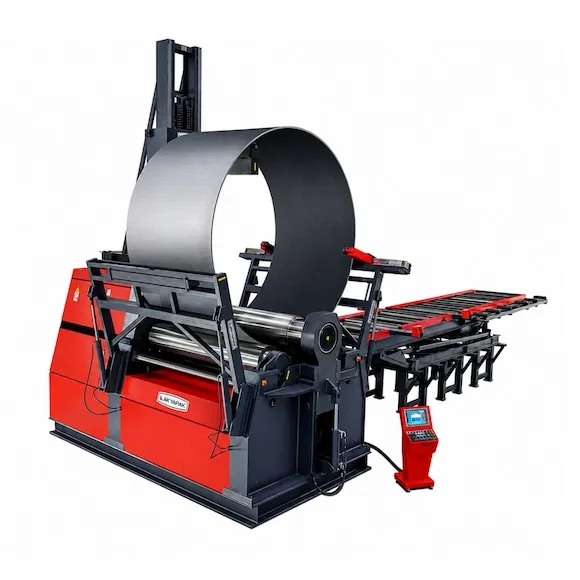
3-Roll and 4-Roll
CNC plate rolling machine
For bending shells, cylinders and cones in steel, 2 to 200 mm thick. Three-roll and four-roll versions with prebending.
Read moreInstallations
Equipment in operation
videos
Equipment in action
Special Projects
Can't find the equipment you need?
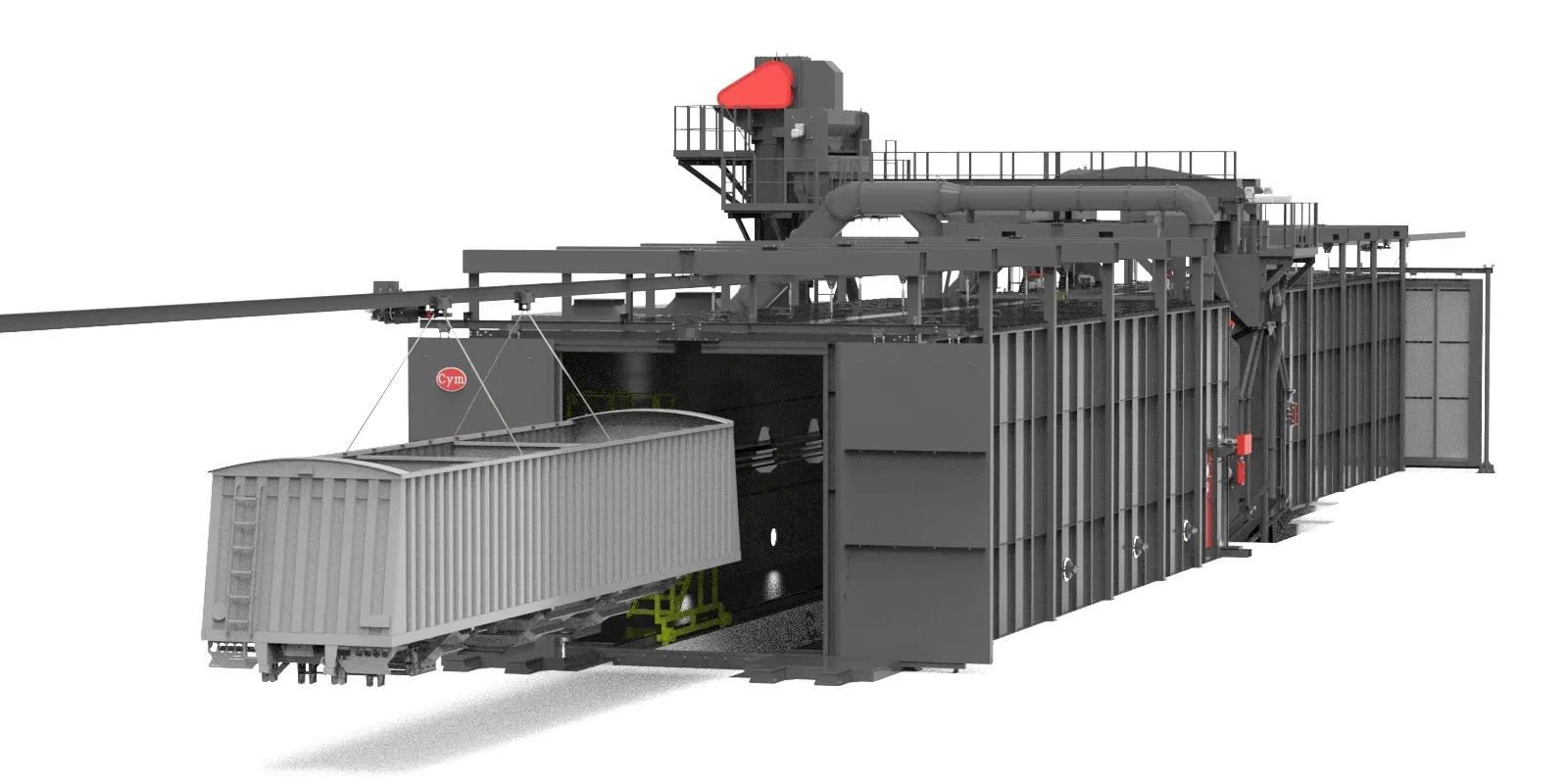
CYM Materiales develops it.
Our Engineering and Sales team works alongside the client to design a custom solution, reducing operating costs and maximizing productivity. Every project starts with a detailed technical assessment and ends with a machine built and tested at our plant
REQUEST A CUSTOM PROJECT