
FAQ
What is double shot peening?
SHOT PEENING
Double shot peening — higher residual compression in the surface layer
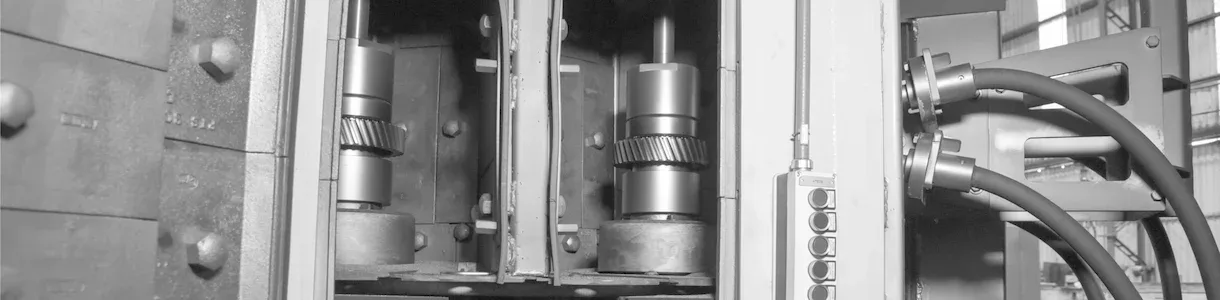
Double shot peening is a variant of the shot peening process that applies two successive blasting operations on the same component, with abrasives of different sizes and different parameters. The objective is to maximize residual compressive stresses in the surface layer of the material — the most critical zone for fatigue crack initiation.
In the single process, a single spherical abrasive is projected at the Almen intensity defined by the specification. In the double process, a second pass is added with a smaller diameter abrasive, which impacts at lower intensity than the first process. This second impact generates additional compressive stresses of the order of 40 to 50% in the layer closest to the surface — exactly where fatigue cracks initiate.
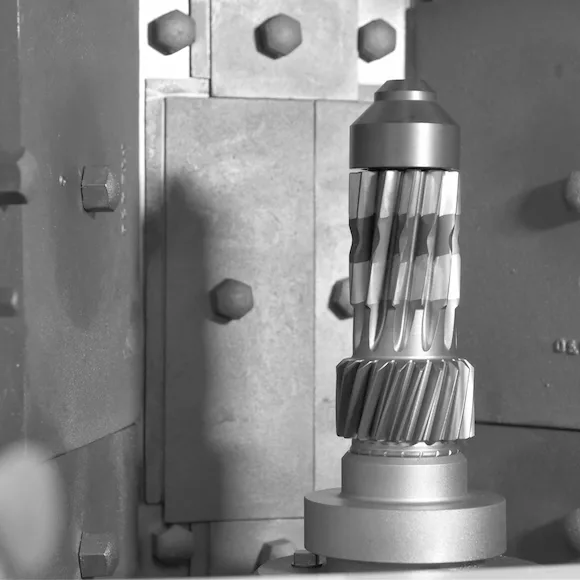
As an additional effect, the finer abrasive of the second process rounds the peaks generated by the first process, improving the surface finish. In gears and ring gears, this better surface finish reduces localized contact stresses on tooth faces, increasing service life.
Double shot peening processes typically use metallic abrasives of different granulometries. In some applications — especially in case-hardened or carburized gears — the second process may use glass beads or ceramic shot, which being harder than the treated surface generate an additional compression effect in the narrower surface layer.
Double shot peening is the standard specification for high-demand components: competition and premium transmission gears, high-fatigue springs and critical aeronautical components.
Published: June 2026
KEEP EXPLORING
Related equipment and content
TECHNICAL ARTICLE
When to specify double shot peening
Selection criteria, the two treatment stages and how the process is controlled
Read more
Technical article
Introduction to the shot peening process
Introduction to
the shot peening process
Productos
Shot Peening machines
Equipment to increase fatigue resistance
Read moreInstallations
Equipment in operation
videos
Equipment in action
Special Projects
Can't find the equipment you need?
CYM Materiales develops it.
Our Engineering and Sales team works alongside the client to design a custom solution, reducing operating costs and maximizing productivity. Every project starts with a detailed technical assessment and ends with a machine built and tested at our plant
REQUEST A CUSTOM PROJECT