
TECHNICAL ARTICLES
Cartridge or bag filter dust collector
INDUSTRIAL FILTRATION
How to choose based on the type of dust
Choosing between a cartridge dust collector and a bag filter is not a matter of brand or budget. Both are dry collectors that filter the air and clean themselves with compressed-air pulses; the real difference lies in the filter media and the type of dust each one can handle. Characterizing that dust before buying prevents the most common mistake: installing a unit that blinds, loses airflow or demands filter replacements far sooner than expected.
Two dry technologies, one goal
A cartridge collector uses pleated filter elements that pack a large filtration area into a compact body. A bag filter uses tubular fabric bags suspended inside the housing, with greater mechanical and thermal tolerance. Both share the same operating principle —dry filtration and compressed-air pulse cleaning that regenerates the media without stopping production—, so the decision is not about how they clean, but about which dust they can handle without degrading.
The dust decides: the five variables that matter
Dust is described by five variables that together define the right technology: particle size (how fine it is), load or concentration (how much dust per cubic meter of air), abrasiveness, moisture or stickiness, and the temperature of the air to be filtered. No collector is better in the abstract: it is better or worse against a specific dust. A single process may call for different solutions if just one of these variables changes.
The five variables that define the selection
| Dust variable | What it measures |
|---|---|
| Particle size | How fine the dust is |
| Load / concentration | How much dust per m³ of air |
| Abrasiveness | How much it wears the filter media |
| Moisture / stickiness | Whether it tends to cake and blind the filter |
| Temperature | Of the air to be filtered |
Cartridge or bag filter: the comparison that decides
With the five variables on the table, the comparison becomes straightforward. In shot blasting, cutting and machining the standard is the cartridge, which today also covers large airflows in modular configurations; the bag filter is reserved for fibrous, light or moist dust, for coarse material and for temperatures beyond what a cartridge tolerates —the typical case of grain and bulk handling, cement or foundry sand reclamation.
Below, what sets each technology apart when it comes to choosing.
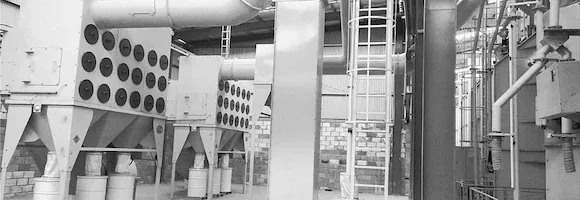
CARTRIDGE COLLECTOR
- Fine, dry dust
- Low to medium loads
- High sub-micron efficiency
- Compact design: large filtration area in little space
- Limit: sticky, moist or fibrous dust blinds the pleats
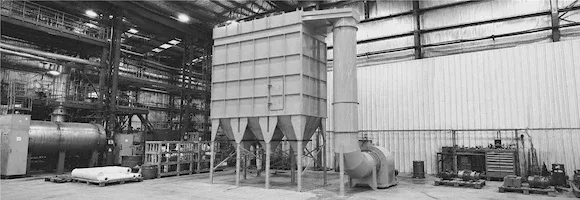
BAG FILTER
- Fibrous, light or moist dust
- Coarse and abrasive dust
- Greater tolerance to temperature
- Low filter-media cost
- Needs more space; lower efficiency on fine particles
Cartridge, bag filter and wet scrubber: when to use each one
| Technology | Ideal dust | Main advantage | Limitation |
|---|---|---|---|
| Cartridge collector | Fine and dry; low to medium loads | High efficiency on sub-micron particles; compact design | Blinds with sticky, damp or fibrous dust |
| Bag collector | Fibrous, light, damp, coarse or abrasive | Higher temperature tolerance; low filter-media cost | Needs more space; lower efficiency on fines |
| Wet scrubber (FH) | Explosive, flammable, sticky or spark-generating | Uses water: removes the ignition risk | For when dry filtration is not viable |
Note: all three share the goal of filtering the process air; cartridge and bag are dry, self-cleaning collectors using compressed-air pulse. The dust defines the choice, not the brand or the budget.
When dust rules out dry filtration
Some dusts do not allow dry filtration in either form. Sticky dust saturates any filter media, and explosive or spark-generating dust turns a dry collector into a hazard: in those cases the solution is a wet scrubber, which uses water as the capture medium and removes the ignition risk. If your process generates dust with explosion risk, review the specific safety criteria first.
CONCLUSION
Characterize the dust first, then choose the collector
The practical rule is simple: you don't pick the collector and then see what dust it can handle —it works the other way around. Define particle size, load, abrasiveness, moisture and temperature, and the right technology becomes obvious. Both the cartridge and the bag filter also share the same sizing criterion —the air-to-cloth ratio— which determines the final size of the unit.
KEEP EXPLORING
Related equipment and content
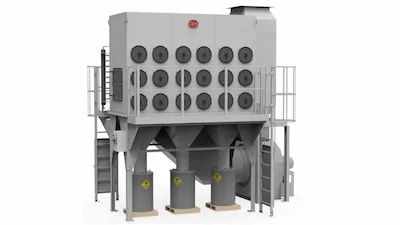
cart-h - cart-v line
Cartridge dust collectors
0.5 microns filtration at 99.9%, continuous pulse cleaning and horizontal or vertical configuration.
Read more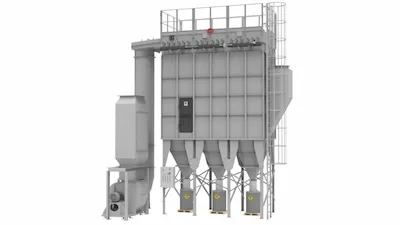
BAG FILTER - LINE
Bag filter dust collectors
High airflow capacity, low filter media cost and continuous operation for any industrial process.
Read more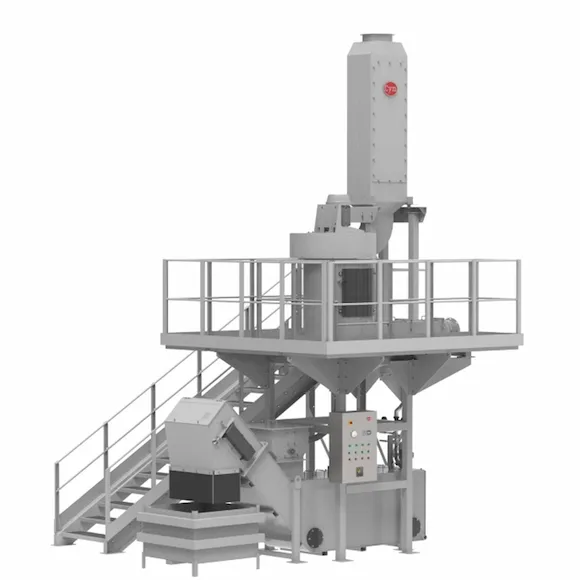
FH line
Wet scrubbers
The solution when dry filtration is not viable. Explosive, flammable, sticky dust and mixed emissions.
Read more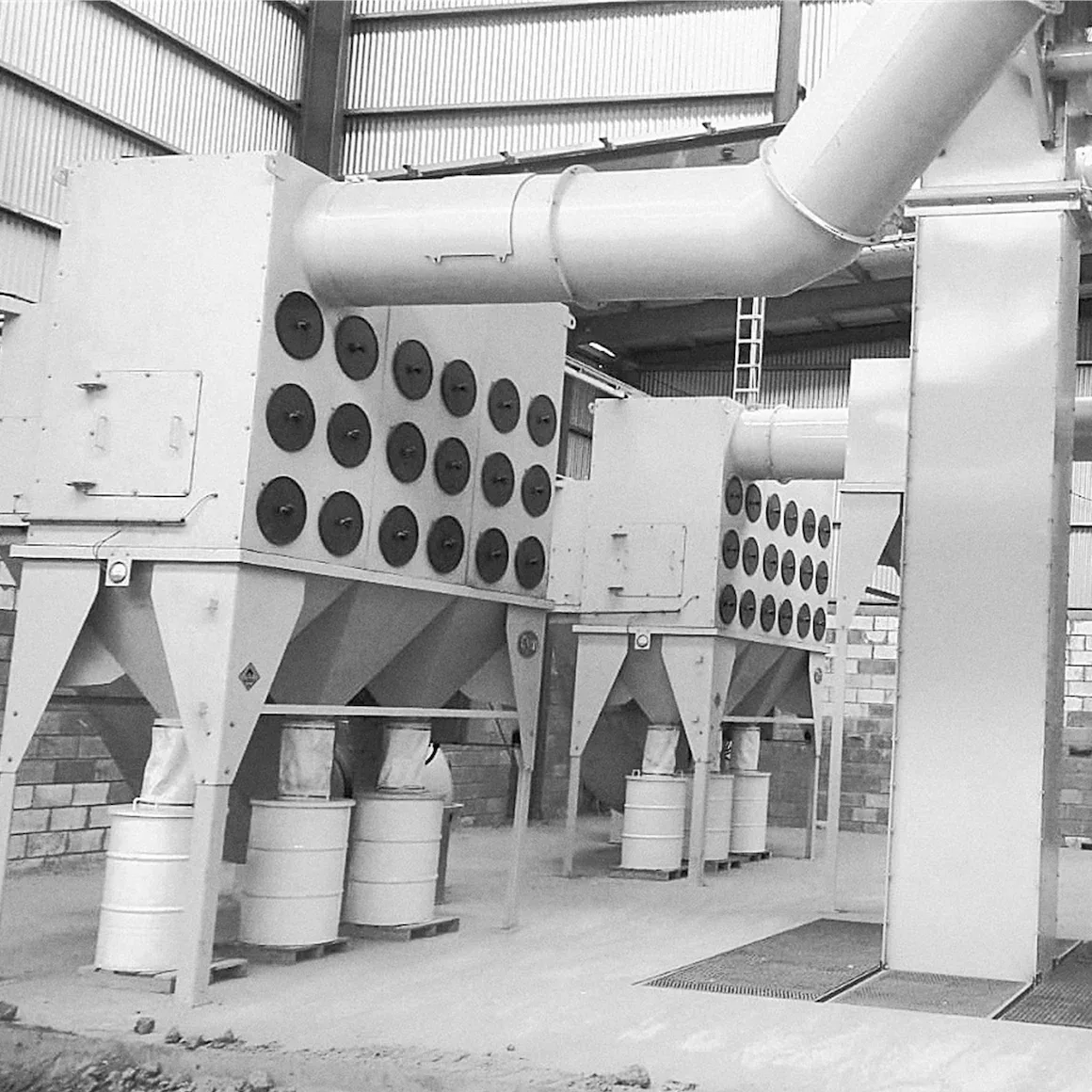
FAQ
Why choose a good dust collection system
Dust — Why it is a process decision, not an accessory
Read more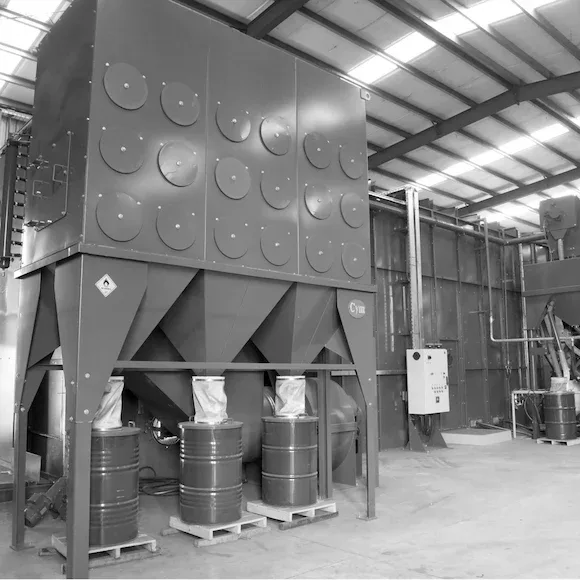
TECHNICAL ARTICLES
Airflow and filtration velocity
What determines the size of a dust collection system
Read moreInstallations
Equipos en funcionamiento
Special Projects
Can't find the equipment you need?
CYM Materiales develops it.
Our Engineering and Sales team works alongside the client to design a custom solution, reducing operating costs and maximizing productivity. Every project starts with a detailed technical assessment and ends with a machine built and tested at our plant
REQUEST A CUSTOM PROJECTPublished: July 2026 - Updated: July 2026