
TECHNICAL ARTICLES
Dead man control in blasting
SAFETY · CONVERSION KIT
Why it is mandatory and how to fit it to your existing equipment
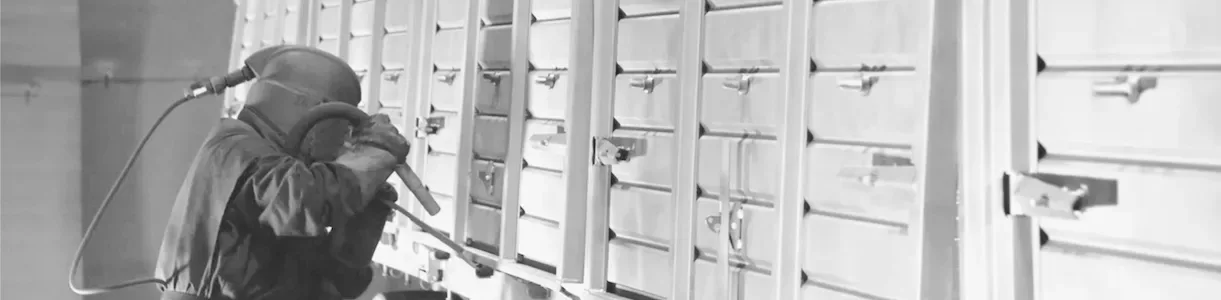
In manual compressed-air blasting, the abrasive leaves the nozzle at over 300 km/h. If the operator loses control of the hose, that projection becomes a serious risk. The dead man control —or Dead Man system— is the safety device that solves that risk: it automatically cuts the projection if the operator releases the trigger. This report explains why it is an essential accessory, what additional advantages it provides, and how to convert a standard unit into a remote control system.
1. What the dead man control is?
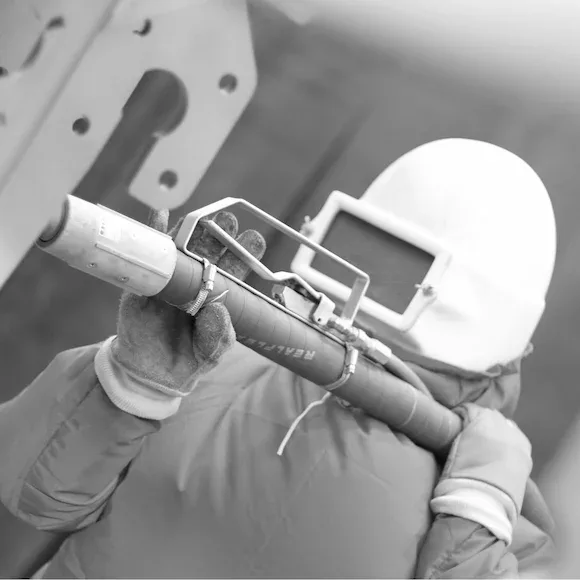
The dead man control is a remote command system that controls the abrasive flow from the end of the hose, next to the blast nozzle. It consists of a trigger or lever that the operator activates while working: while held pressed, the equipment projects abrasive; when released, the projection stops immediately. Its name —"dead man"— describes exactly its principle: the system only works while the operator actively holds it.
2. Why it is a critical safety matter
The foundation of the dead man control is operator safety. In equipment without this system, if the operator drops the hose due to an accident, a stumble or a loss of control, the hose keeps projecting abrasive freely, whipping uncontrollably. At the working speeds of blasting —over 300 km/h— an abrasive burst can cause serious injuries. The dead man control eliminates that risk at the root: the instant the operator stops holding the trigger, the projection stops. That is why it is an essential accessory for any safe and reliable manual blasting process.
3. Beyond safety: the other advantages
Although safety is its main function, the remote control provides concrete operational advantages. It reduces support labor: the operator controls the start and stop without needing a third party to operate the pressurization and depressurization of the tank. In rooms with automatic abrasive recovery, by commanding the depressurization of the pot it allows automatic abrasive reloading. And it minimizes consumption: the operator cuts the projection during the moments of repositioning the part or moving, avoiding wasting abrasive when not blasting.
4. The dual system: blasting and air-blow-off with a single hose
The dual control adds a second function to the remote control: it allows selecting, from the same end of the hose, between projecting abrasive or projecting only compressed air for blow-off. With a single hose and without changing equipment, the operator alternates between blasting and blowing off the abrasive accumulated on the part or work area. This significantly speeds up the process: cleaning loose abrasive, which normally requires stopping work and switching tools, is done on the spot from the same station.
5. Conversion kit: electric or pneumatic control
A standard blasting unit is converted into a remote control system through an easy-to-mount transformation kit, without replacing the pot. There are two types of control depending on the need. The low-voltage electric control offers a practically instantaneous cut-off speed, which makes it suitable for working with long hoses, over 20 meters; it usually incorporates a ball-and-chain actuation that reduces operator fatigue. The pneumatic control is a simpler and lower-cost solution, with a manual selection valve, but due to its longer reaction time it is not recommended for hoses over 20 meters, and it requires the operator to carry somewhat more weight. The choice between one and the other depends on the hose length and the working conditions.
6. How to choose the control system
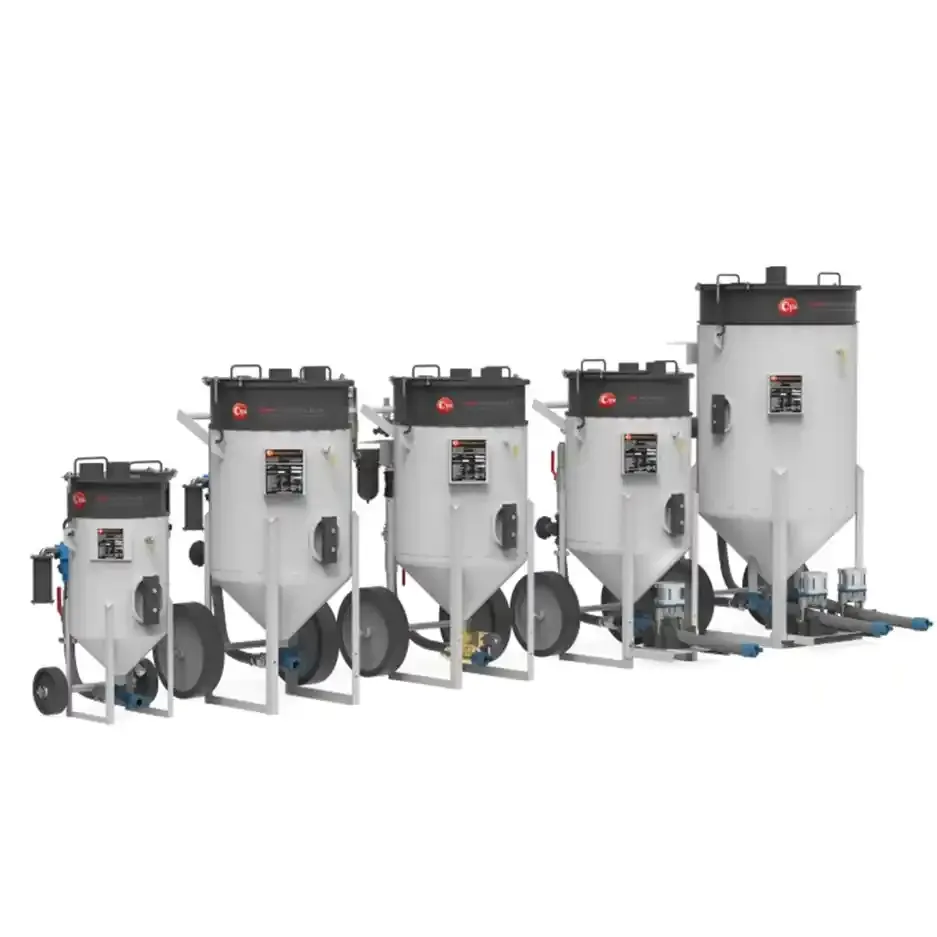
The system selection depends on three factors: the distance between the operator and the pot (which defines the hose length and, with it, whether electric or pneumatic control is preferable), the need to alternate between blasting and blow-off (which points toward the dual system), and the operation frequency (which may justify systems that minimize wear on the cut-off hose). CYM Materiales manufactures its blasting pots in four control variants —manual, remote, dual and pinch— and provides the kits to transform existing equipment. The complete comparative table of the four systems is available on the blasting pots page.
CONCLUSION
Safety first, productivity as a result
The dead man control is, first and foremost, a safety system that protects the operator from the high-speed projections of blasting. But it also reduces labor, saves abrasive and —in its dual version— speeds up the process by combining blasting and blow-off. And it requires no new equipment: a conversion kit transforms the pot you already own into a remote control system.
KEEP EXPLORING
Related equipment and content
Installations
Equipment in operation
videos
Equipment in action
Special Projects
Can't find the equipment you need?
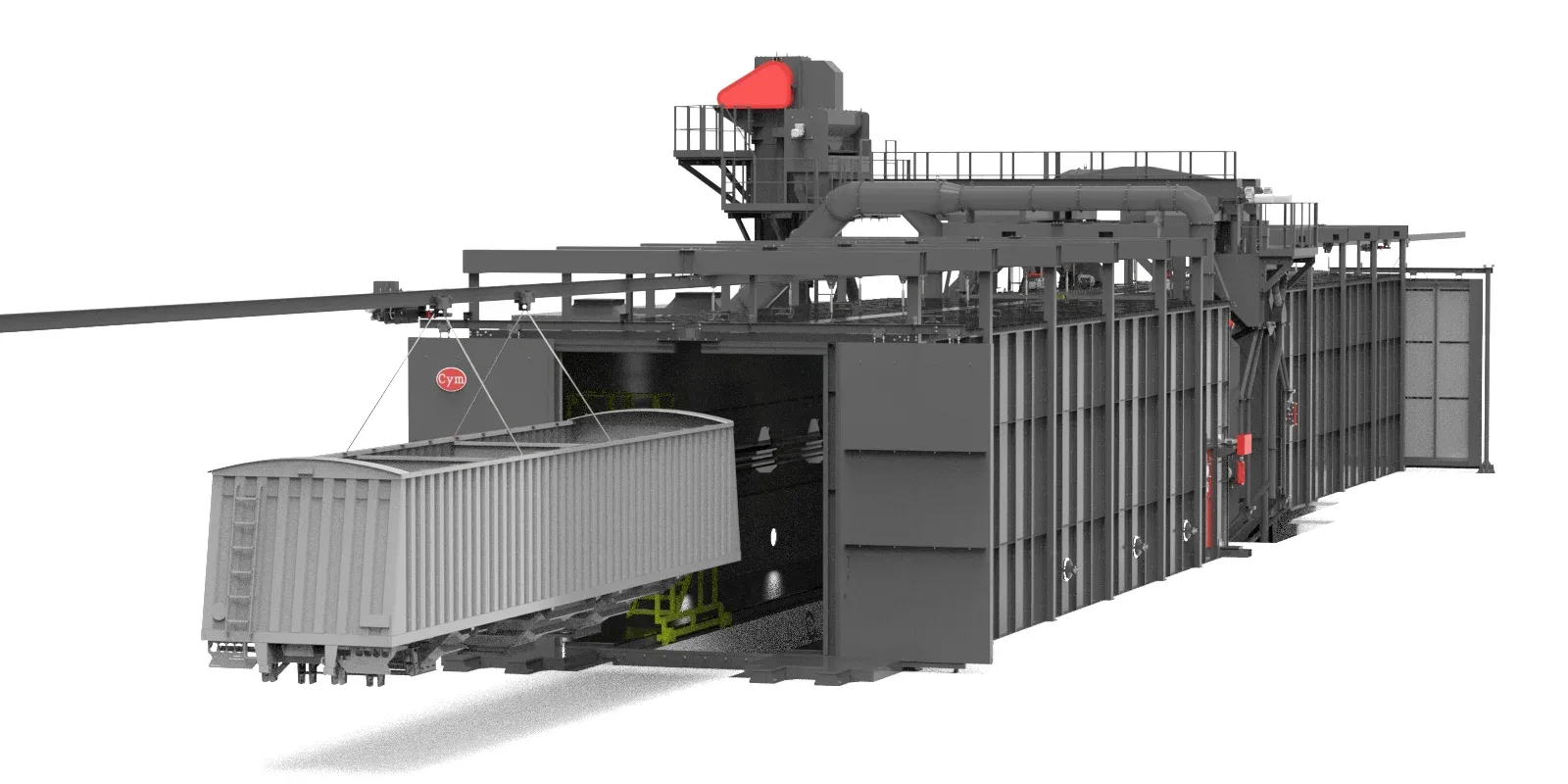
CYM Materiales develops it.
Our Engineering and Sales team works alongside the client to design a custom solution, reducing operating costs and maximizing productivity. Every project starts with a detailed technical assessment and ends with a machine built and tested at our plant
REQUEST A CUSTOM PROJECTPublished: July 2026