
TECHNICAL ARTICLES
How a shot blast wheel works
CENTRIFUGAL BLASTING
How the shot stream is generated and directed
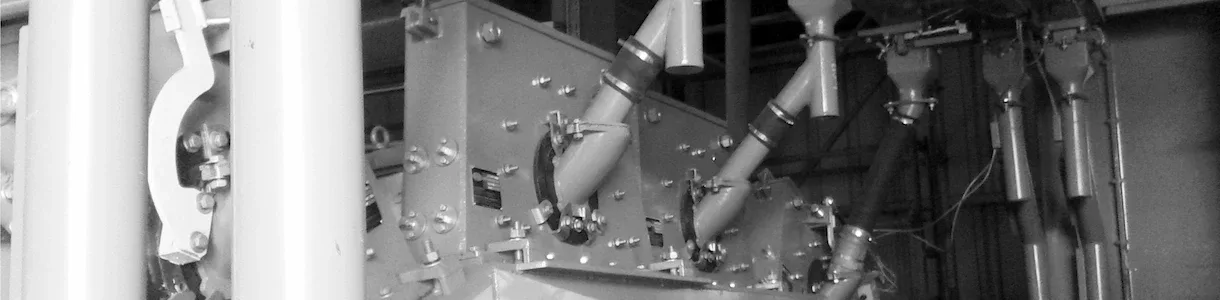
The blast wheel is the heart of every wheelblast machine: the component that turns energy into cleaning. Almost everything depends on how that wheel propels the abrasive —the surface quality, the productivity of the machine, the energy consumption and the maintenance cost. Understanding how it works helps to understand why blasting turns out efficient… or expensive.
1. What the blast wheel does and why it is the heart of the machine
Centrifugal wheel blasting is one of the most efficient and economical methods to clean and prepare metal surfaces. The process is based on transferring kinetic energy: the shot is propelled at high speed against the part and, on impact, strips off mill scale, oxide, laminations and other contaminants. The wheel is the component that generates that energy, and that is why it directly influences the final surface quality, productivity, energy consumption and maintenance costs. In short, it defines the profitability of the process.
2. How it works: the path of the abrasive
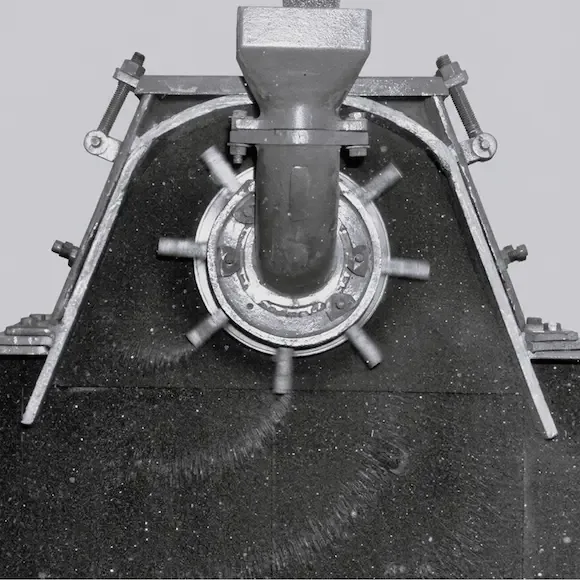
A blast wheel works much like a centrifugal fan or pump. The abrasive enters through the feed spout, coming from the silo or the recovery system. From there, the rotor (or impeller) carries it toward the opening of the control cage, which sets the exact moment and position at which the shot is released. Only then do the blades of the wheel pick up the abrasive and, by centrifugal force, propel it against the part in a directed stream. The precise interaction between rotor, wheel and blades is what ensures a stable flow and a uniform blast pattern.
3. The blast pattern: directing the stream at the part
It is not enough to propel the shot: it has to be aimed. The blast pattern is the shape in which the shot leaves the wheel, and its efficiency drops sharply if it is not well oriented on the part. Incorrect adjustment brings concrete consequences: lower performance, longer process time, premature wear of the internal liners and needless damage to the cabinet. The orientation of the pattern is set by the angular position of the control cage —which is why that adjustment matters so much.
4. The hot spot test: how it is set
How do you know the pattern is aimed correctly? With the hot spot test, which identifies the area of maximum impact concentration. The procedure is simple: a thin steel plate (≤ 1 mm) is placed on a rigid frame, in the actual working position of the part; it is blasted for about 30 seconds; the area of greatest impact is identified; and the control cage is adjusted to the optimal position and firmly fixed. It should be rechecked whenever blades are replaced, the type or size of abrasive changes, or the type of part changes. An irregular pattern usually reveals wear on the blades, control cage or rotor.
5. The operating mix: the abrasive in circulation
The wheel does not propel new shot, but the abrasive circulating inside the system, a blend of particles of different sizes. That real particle-size distribution is called the operating mix, and keeping it balanced is key: a stable mix gives a uniform pattern, constant performance, less premature wear and controlled abrasive consumption. If too many fine or coarse particles build up, the orientation and stability of the pattern change. That is why periodic addition of new abrasive is recommended, compensating for the natural wear of the shot and keeping the system in regime.
6. How many wheels and with what power
Not every machine carries the same number of wheels. The number and arrangement depend on the geometry, size and complexity of the parts: the more faces and hard-to-reach areas, the more wheels and the better distributed. The installed power must be enough to reach the required finish in a single pass, keeping an adequate production speed. And in heavy-duty service, keeping a complete spare wheel is recommended to minimize downtime in the event of unplanned maintenance.
THE WHEEL DEFINES THE RESULT
A well-tuned wheel is what pays off
A well-understood, well-adjusted blast wheel is the difference between efficient blasting and expensive blasting. The path of the abrasive, the direction of the pattern, the hot spot and the operating mix are not details: they determine the quality and cost of every part treated. CYM Materiales builds its own wheels and complete blast machines, and tunes each one to perform from the first pass.
KEEP EXPLORING
Related equipment and content
products
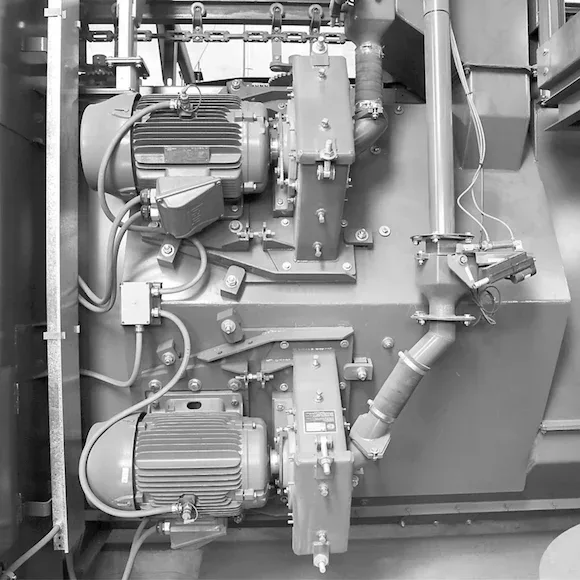
Centrifugal Shot Blast Turbines
4 to 150 HP — 40 to 1,500 kg/min at the heart of every blasting machine
Read moreTechnical article
Blast wheel: monoblock vs. replaceable blades
Which one fits your production, spare-part cost and downtime
Read more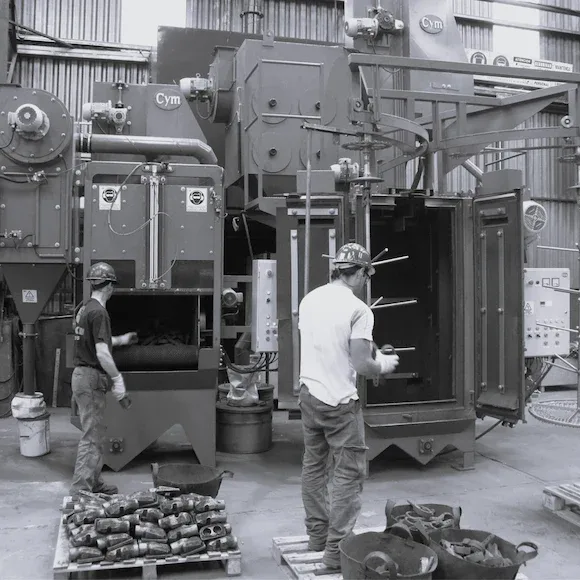
TECHNICAL ARTICLES
Spinner hanger, rotary table or tumble belt machine
How to choose the machine by the type of part
Read moreInstallations
Equipment in operation
Special Projects
Can't find the equipment you need?
CYM Materiales develops it.
Our Engineering and Sales team works alongside the client to design a custom solution, reducing operating costs and maximizing productivity. Every project starts with a detailed technical assessment and ends with a machine built and tested at our plant
REQUEST A CUSTOM PROJECTPublished: July 2026