
TECHNICAL ARTICLES
Spinner hanger, rotary table or tumble belt machine
WHEEL BLASTING
How to choose the machine by the type of part
Choosing a wheelblast machine does not start with the machine: it starts with the part. The three most common configurations —spinner hanger, rotary table and tumble belt— exist because there are three different ways to present the part to the shot stream. The right machine is not the biggest or the most expensive: it is the one that fits how the part is shaped and how it tolerates handling.
1. The question that settles everything: can the part be tumbled?
Before comparing machines, it is worth answering a single question: can the part take knocking against others? Robust, small parts that can be tumbled without damage allow bulk blasting by tumbling (tumble belt). Those that cannot be tumbled —because they are fragile, machined, large or of delicate geometry— must be processed fixed: hung (spinner hanger) or resting (rotary table). That first split defines almost everything else.
2. Tumble belt: small, bulk parts
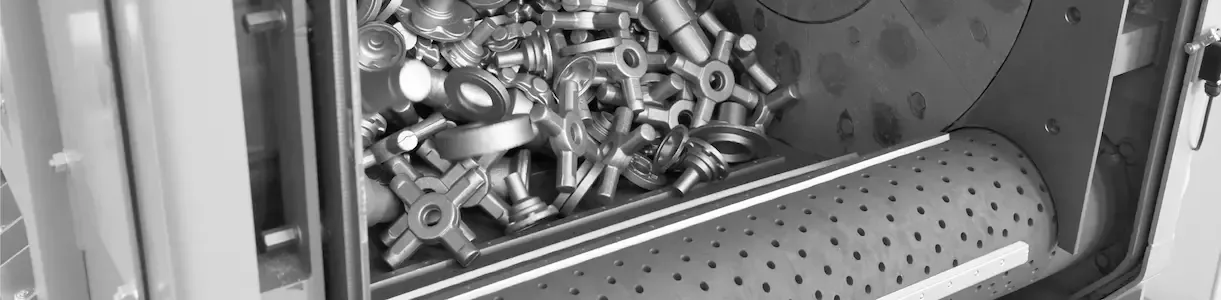
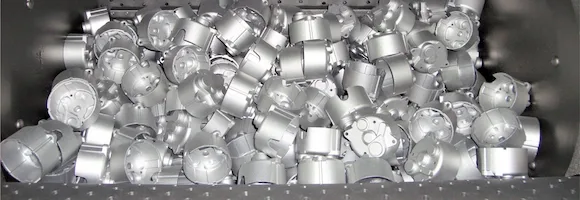
The tumble belt processes parts in bulk: they are loaded in a batch onto a belt that gently tumbles them while the blast wheels propel the shot. The tumbling exposes every face by movement, without handling each part, which makes it ideal for high volumes of small parts. Its limit is clear: the parts must tolerate tumbling and contact with each other, so it does not suit fragile parts, precision-machined parts or parts that tangle. For very high volumes there are double-turbine configurations, covered in the specific tumble belt article.
3. Spinner hanger: medium and large parts that are hung
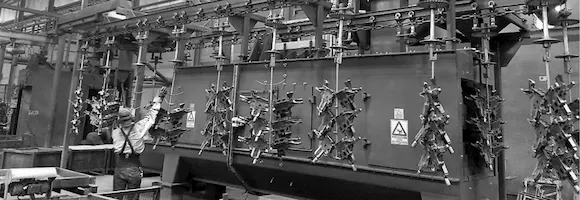
The spinner hanger processes parts hung on a hanger that rotates in front of the blast wheels. As they neither tumble nor touch each other, the part keeps its geometry intact and receives full coverage with no contact marks. It is the choice for medium and large —or delicate— parts that cannot go in bulk, and it works both in batches and in a continuous line on an overhead conveyor. It is the most versatile in terms of part shapes and sizes.
4. Rotary table: large or heavy parts that rest
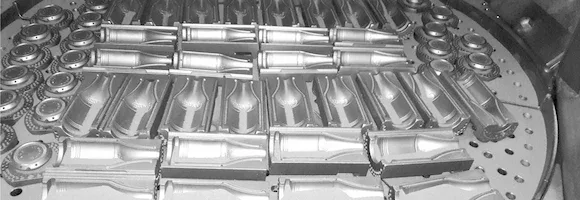
The rotary table machine handles parts that rest on a rotating table and turn in front of the wheel. It is the choice for large, heavy or complex parts that cannot be tumbled and are not suited to hanging. Its typical applications are glass blow molds, aluminum molds and parts, large castings, containers and fittings. Operation is simple —no need to handle each part during the cycle— and the table is offered in 600, 1000 and 1600 mm diameters depending on part size.
5. How to choose: the criteria together
None of the three is «better»: each solves a type of part. In practice, the choice comes from crossing four criteria —size and weight, fragility, geometry/coverage and production volume—:
| Selection criteria | TUMBLE BELT | SPINNER HANGER | ROTARY TABLE |
|---|---|---|---|
| Type of part | Small and robust, in bulk | Medium and large, delicate, non-tumblable | Large, heavy or complex that rest |
| How it is presented | Tumbled in bulk | Hung on the hanger, rotating | Resting on the table, rotating |
| Coverage | By movement of the batch | Full, no contact between parts | Of the resting part, face exposed to the wheel |
| Volume | High | Low to high (batch or continuous) | Low to medium |
| Typical application | Bolts, small/medium serial parts | Medium/large parts | Glass and aluminum molds, large parts |
A practical rule: if the part can be tumbled, tumble belt; if not and it hangs well, spinner hanger; if it is large or heavy and rests, rotary table. When in doubt, the CYM technical team assesses the part and recommends the configuration —or the combination of lines— that is most productive.
CONCLUSION
The part chooses the machine
There is no universal blast machine: there is the right one for each type of part. Spinner hanger, rotary table and tumble belt together cover the vast majority of wheelblast needs —a good example is the shot blasting of cast parts, where the size and shape of the part decide which one is used.
CYM Materiales builds all three configurations and adapts them to each application, so the recommendation does not come from a closed catalog but from the part that has to be processed.
Published: July 2026
Equipment lines
Select the equipment for your application
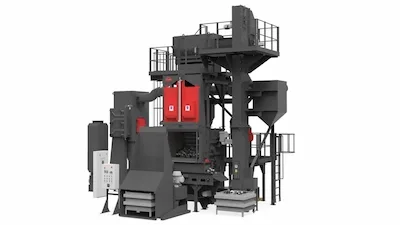
LT & LT-TAM LINE
Tumblast belt shot blast
Bulk parts: forgings, castings, auto parts. 1 or 2 blast wheels
Read more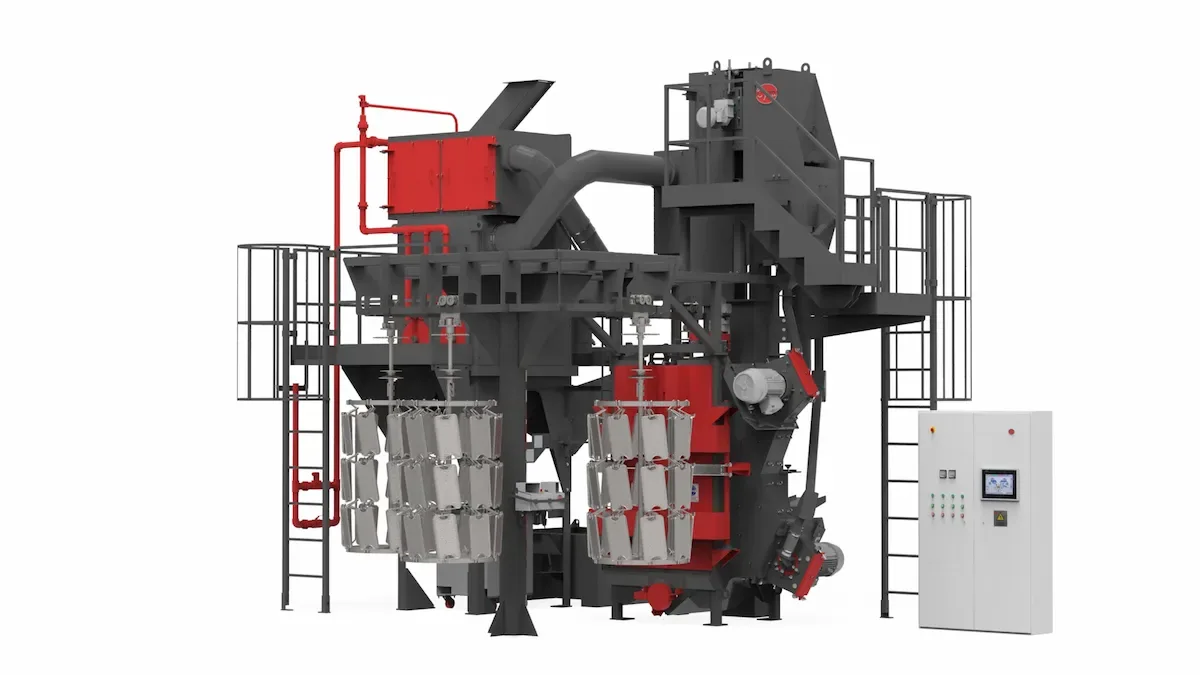
CAB, CAB-TUN & EST-TUN LINE
Spinner hanger
With fixed, moving, or oval hook for parts that cannot be bulk blasted.
Read more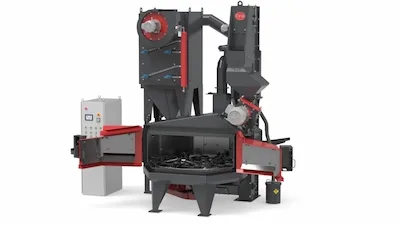
MAP & SAT LINE
Rotary table and satellites
For parts that cannot be bulk blasted or spinner hanger machine
Read moreKEEP EXPLORING
Related equipment and content
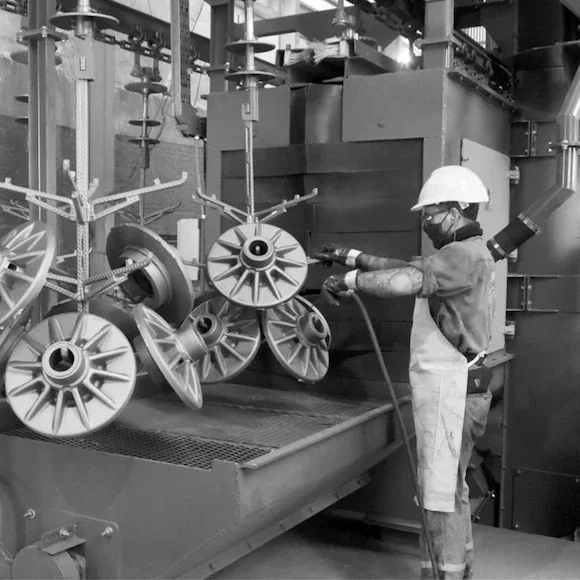
Technical article
Shot blasting of cast parts
Why it is a technical step and not just cosmetic
Read more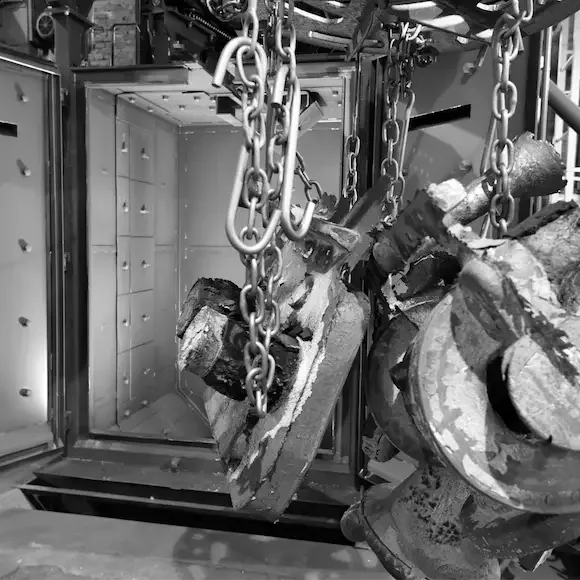
FAQ
What is shot blasting?
Industrial shot blasting — process, applications and equipment
Read more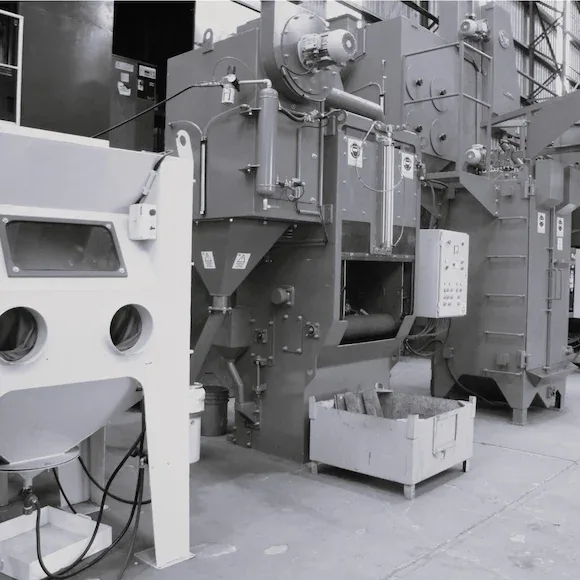
FAQ
Turbine or compressed air what is the difference?
How to choose the right system for your process?
Read moreInstallations
Equipment in operation
videos
Equipment in action
Special Projects
Can't find the equipment you need?
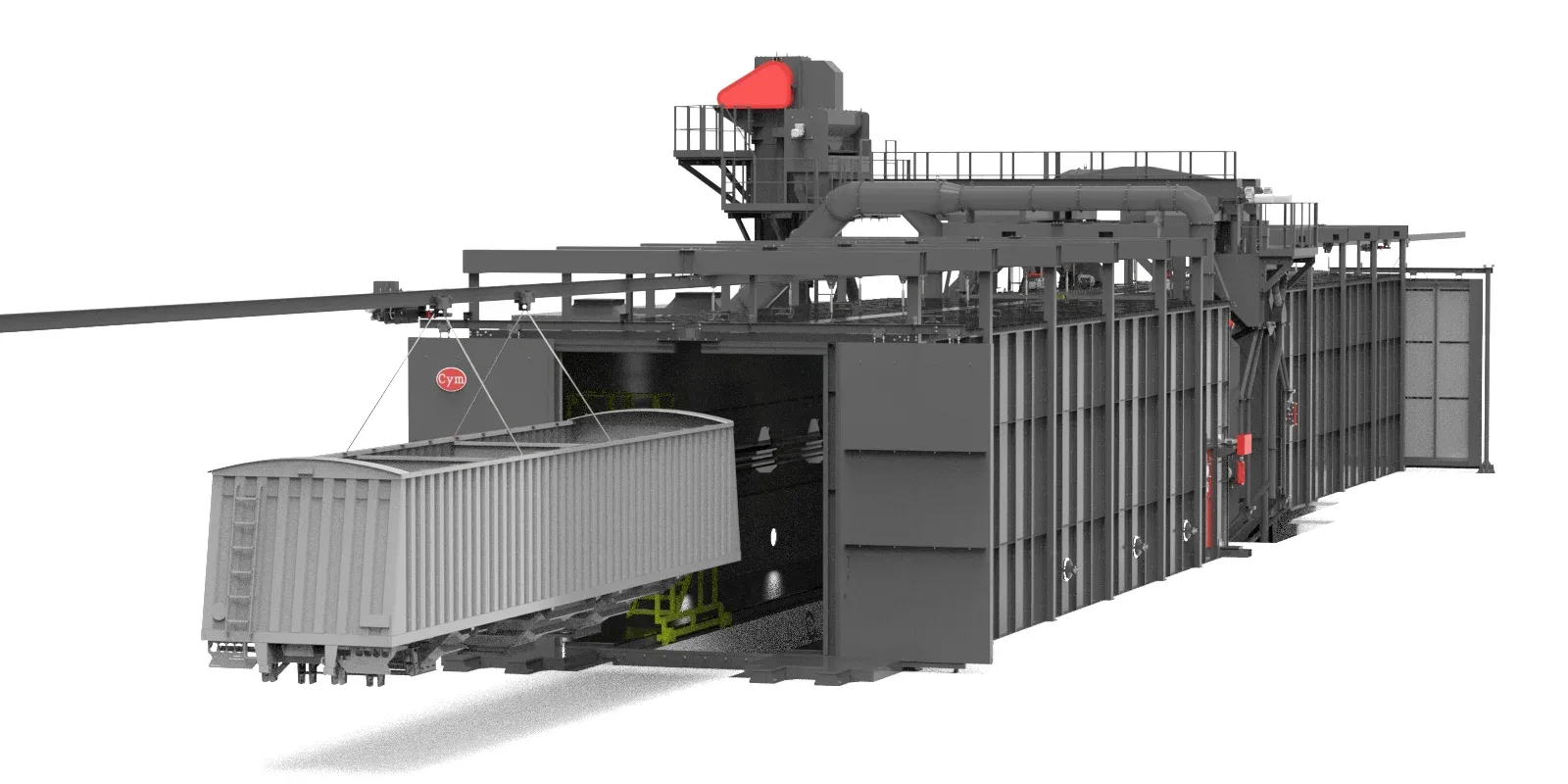
CYM Materiales develops it.
Our Engineering and Sales team works alongside the client to design a custom solution, reducing operating costs and maximizing productivity. Every project starts with a detailed technical assessment and ends with a machine built and tested at our plant
REQUEST A CUSTOM PROJECT