
Technical article
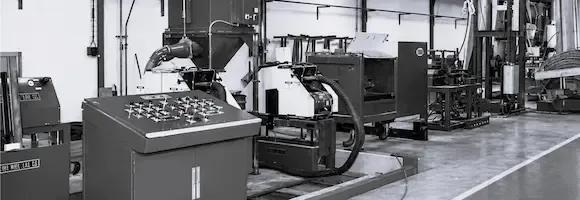
Wire rod mechanical descaling
Wilco reverse bending braeker
Principles and process requirements - Acid free
Mechanical descaling removes hot-rolling scale from steel wire rod by physical deformation — no acids, no effluents — and can be run inline with the wire drawing machine. It is the alternative to acid pickling for wire manufacturers looking to cut operating costs, eliminate acid waste and improve the surface quality of the finished product. CYM Materiales represents Wilco Wire Lab for Latin America.
Why it works: the mechanical principle
The process is based on a fundamental difference between the materials: steel wire is ductile while hot-rolling scale is brittle. By bending the wire rod in a controlled way, the scale cracks and detaches from the surface. The main method is reverse bending, though the elastic elongation of the steel also contributes to process efficiency. Excess plastic elongation, on the other hand, causes undesirable effects and must be avoided.
The critical parameter: deformation between 8 % and 10 %
The most important variable in the process is the deformation percentage of the wire rod:
• Below 8 % the scale does not break completely and parts remain adhered to the surface.
• Above 10 % no additional removal is achieved, and unwanted hardening of the steel occurs, with tension buildup that demands more pull force from the drawing block.
The optimal configuration, proven in production lines, uses three sheaves: the center one positioned at 90° to the inlet and outlet sheaves. This bends the wire rod surface in alternating planes, covering the entire circumference with a minimum wrap of 360° and a maximum of 400°. Using more than three sheaves replicates the effect of exceeding 10 % deformation — it unnecessarily hardens the steel without improving scale removal.
What the wire rod must have for a good process
Unlike acid pickling — which works best with little scale — the mechanical process requires specific conditions of the incoming material:
• Scale level: between 0.50 % and 0.75 % of wire rod weight. Below 0.50 % the scale does not reach the minimum thickness needed to break; above 0.75 % the excess can damage the steel. The wire rod manufacturer can control this parameter during rolling — the user must specify it.
• Secondary scale: minimal. A second, sooty dark layer formed during manufacturing can cause premature die wear, productivity issues and poor quality in the finished wire.
• Surface rust: tolerable on the surface depending on the final product requirements. Rust pitting is not completely removed by mechanical descaling — or by acid pickling either; processing heavily pitted rod should be avoided.
Mechanical descaling process parameters
| Parameter | Value / range | What happens outside the range |
|---|---|---|
| Wire-rod deformation | 8 % – 10 % | < 8%: scale does not fully break. > 10%: hardens the steel and demands more pulling force |
| Pulley configuration | 3 pulleys (center one at 90°) | More than 3 pulleys: same effect as exceeding 10% deformation |
| Wrap over circumference | 360° min – 400° max | — |
| Incoming scale level | 0.50% – 0.75% of weight | < 0.50%: not thick enough to break. > 0.75%: excess can affect the steel |
| Secondary scale | Minimal | Premature die wear, low productivity, poor quality |
| Surface oxide (pitting) | Avoid processing it | Not fully cleaned, not even by pickling |
Advantages over acid pickling
• No acids, no effluents and no chemical waste treatment plant.
• Inline process with the wire drawing machine: reduces material handling and cycle times.
• Applicable to low- and high-carbon wire grades.
• Switching to mechanical descaling requires reviewing all wire drawing process variables (lubrication, die geometry, speeds, cooling). A manufacturer that made this transition and reviewed each variable achieved a productivity increase of around 25 % within six months.
Compared with Chemical Pickling
| Aspect | Mechanical descaling |
|---|---|
| Acids and effluents | None; no chemical-waste treatment plant |
| Integration | In line with the drawing machine |
| Materials | Low- and high-carbon wire |
| Documented result | +25% productivity at 6 months (after reviewing all drawing variables) |
Types of wire it is applied to
The process covers virtually any wire production type: galvanized, for nails and staples, for barbed wire and fencing, for welding electrodes (CO₂), for mattress and seat springs, for threaded rod, for tire cord, for piano and music wire, for coat hangers and wire mesh, among others. The aggressiveness of the system is adjusted according to the surface quality requirements of the finished product.
Learn more about Wilco mechanical descalers
Wilco Wire Lab mechanical descaling systems available for Latin America — from basic units to complete lines with automatic brushing and pre-coating — are detailed on the product page.
Published: June 2026 - Updated: July 2026
KEEP EXPLORING
Related equipment and content
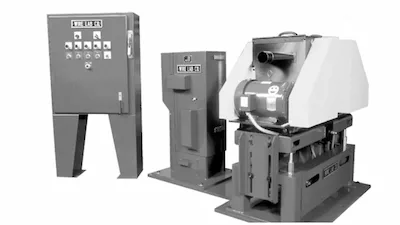
920 · 1030 · 1060 · 1250 · 1750 LINES
Wilco Mechanical wire descaling systems
For steel wire rod: from air jet cleaning to automatic brushing with precoating. No acid pickling. CYM Materiales.
Read more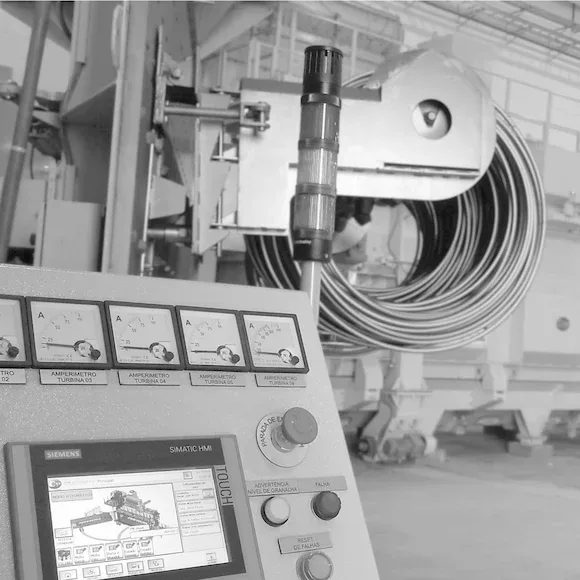
TECHNICAL ARTICLES
Mechanical descaling by shot blasting
Mechanical descaling by shot blasting of wire and bars
Read more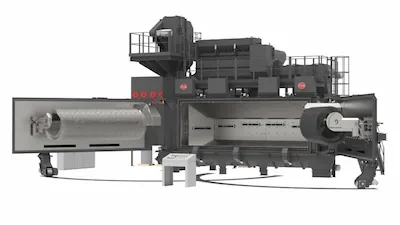
BAR & COIL lines
Bar and wire shot blasting machines
Solutions for the mechanical descaling of bars, wire and wire coils, covering both shot blasting and reverse bending descaling processes.
Read moreInstallations
Equipment in operation
Special Projects
Can't find the equipment you need?
CYM Materiales develops it.
Our Engineering and Sales team works alongside the client to design a custom solution, reducing operating costs and maximizing productivity. Every project starts with a detailed technical assessment and ends with a machine built and tested at our plant
REQUEST A CUSTOM PROJECT