

Technical article
Operator protection in abrasive blasting
OPERATOR SAFETY
Positive pressure helmet, breathable air and dust control
In compressed-air sandblasting and shot blasting, operator protection is not an accessory: it is an essential part of the process. Safety equipment is designed to withstand the demands of these tasks and protects both the blast operator and the support staff working in the area.
The operator is exposed to risks inherent to the task —the abrasive jet, its rebound off the workpiece and the high dust levels— and to others common to any industrial site, such as noise and impacts. Choosing the right protective equipment starts with understanding the work zones and the risks of each, which is what we cover below.
The three work zones
The level of protection required depends on where each person stands relative to the abrasive jet. It is therefore useful to define three zones:
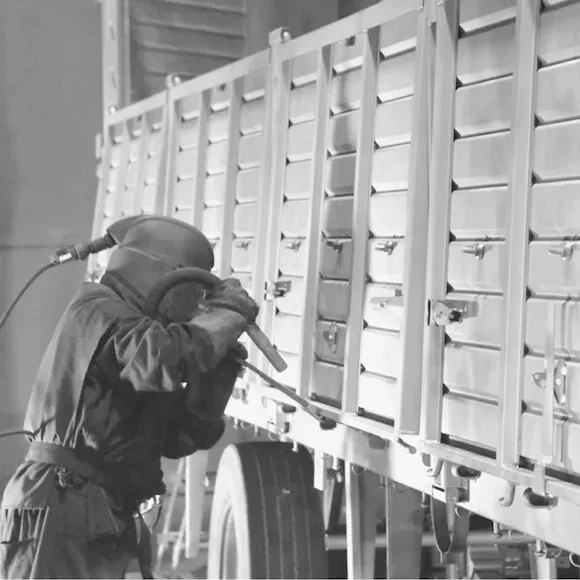
• Primary zone: the closest to the surface being treated; in direct contact with the jet and abrasive rebound, with very high dust levels. All work inside a blast room is always considered primary zone.
• Secondary zone: surrounds the primary one. High dust, but low risk of abrasive rebound.
• Tertiary zone: acceptable dust levels and no risk of contact with the projected abrasive.
Each zone calls for different protective equipment: the primary zone requires protection against both the jet and the dust; the secondary, only against dust; the tertiary, the lowest requirement.
The operator's risks
In sandblasting and shot blasting the operator faces three main risks, and each is worth quantifying:
• Abrasive jet: particles are projected at over 300 km/h (185 mph). The impact risk is obvious and demands direct physical protection in the primary zone.
• Respirable dust: the most serious risk, since breathing dust is never advisable. With sand, free silica can be inhaled, the cause of silicosis, an irreversible lung disease. In addition, dust from removed paint can be harmful or toxic —as with lead-based paints.
• Noise: the high sound levels of the process require hearing protection (covered in the requirements below).
That is why primary-zone equipment must provide two protections at once: against the jet and against the dust. Ordinary face masks do not work, because they meet neither requirement fully.
The positive-pressure helmet
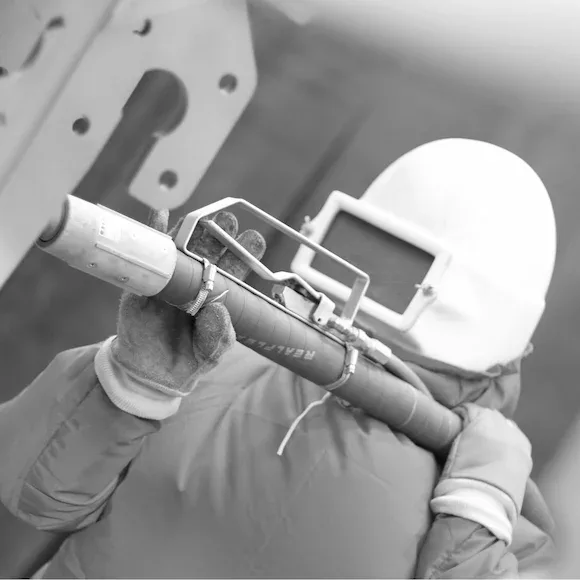
To work in the primary zone —both the blaster and the support staff— the appropriate equipment is the Type CE positive-pressure helmet, approved in the U.S. by OSHA (Occupational Safety and Health Administration) and MSHA (Mine Safety and Health Administration), and tested by NIOSH (National Institute for Occupational Safety and Health). Secondary-zone staff, by contrast, only need a Class C respirator against dust, with no jet protection.
Why positive pressure and not a mask
• The Type CE positive-pressure helmet has a NIOSH coefficient of 1,000: for every 1,000 particles outside, only 1 enters the helmet.
• On an ordinary face mask that figure is greater than 10 (1 in 10 enters). The risk of illness is inversely proportional to that coefficient.
• That is why, in sandblasting and shot blasting, face masks are inefficient: they do not meet the two required protections.
Visibility matters
• Between two helmets of equal efficiency, visibility is the deciding factor.
• A wide field of view helps the task and prevents accidents (impacts, falls) caused by insufficient vision.
• Visors and protective lenses must be fully transparent, with no distorted areas that invariably cause fatigue and dizziness.
Breathing air
The positive-pressure helmet runs on air delivered to the operator, and that air must be fit for human breathing: properly filtered, with a maximum of 10 ppm of carbon monoxide and a flow of about 0.5 m³/min (18 cfm). A lower flow can let dust in; a higher one irritates the eyes.
How the air is supplied (two systems)
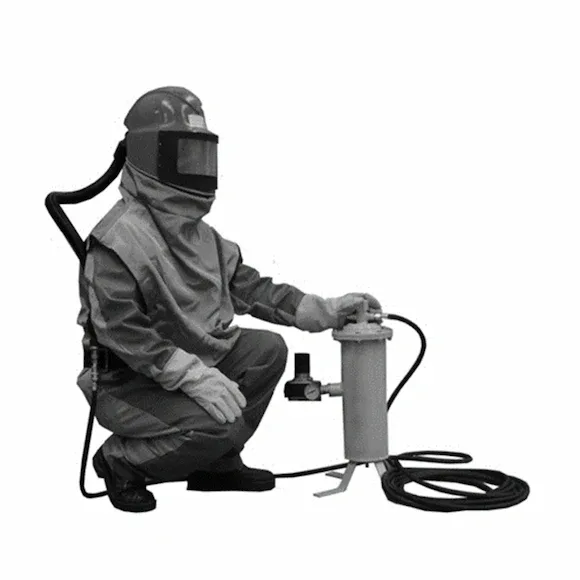
• Human-breathing filter: receives air from the compressor and delivers it to the helmet. It retains particles larger than 25 µ, oil and water aerosols, and deodorizes the air. It does not remove carbon monoxide, so a CO alarm on the line is advisable.
• Pump or blower: takes air from the atmosphere, filters it and drives it to the helmet. It is CO-free, but must be placed away from vehicle traffic: if a combustion engine runs nearby, its CO is drawn in and the filters do not remove it.
Watch the carbon monoxide
• The most common setup feeds the filter from the same compressor that drives the abrasive. Those compressors are usually lubricated and can emit CO from over-lubrication or overheating.
• In that case, a CO alarm on the breathing-air line is essential. Ideally, a small oil-free compressor should feed the filter.
Requirements for human breathing air:
In addition, the operator must work below 80 dB for an 8-hour average shift, which makes hearing protection mandatory at all times, for both the blaster and the support staff.
| Parameter | Acceptable value |
|---|---|
| Oxygen | 19,5 % – 23,5 % |
| Condensed oil | máx. 5 µg/m³ |
| Carbon monoxide (CO) | máx. 10 ppm |
| Carbon dioxide (CO₂) | máx. 1.000 ppm |
The operator's complete equipment
Bringing the above together, a basic protective outfit for sandblasting or shot blasting consists of:
• Type CE positive-pressure helmet, in abrasion-resistant, easily replaceable materials, with internal air circulation (protective cape and sealed double lens).
• Anti-choke air supply tube with noise attenuator.
• Belt with regulating valve.
• Supply hose between the regulating belt and the operator filter.
• Human-breathing filter with disposable cartridge, three filtration stages and activated-carbon deodorizing, with limiting and pressure-regulating valve.
• Protective gloves.
• Protective suit with leather front.
• Safety boots.
Other recommended safety items: CO level meter, safety locks for hose couplings, and an air conditioner for operator comfort.
KEEP EXPLORING
Related equipment and content
Installations
Equipment in operation
videos
Equipment in action
Special Projects
Can't find the equipment you need?
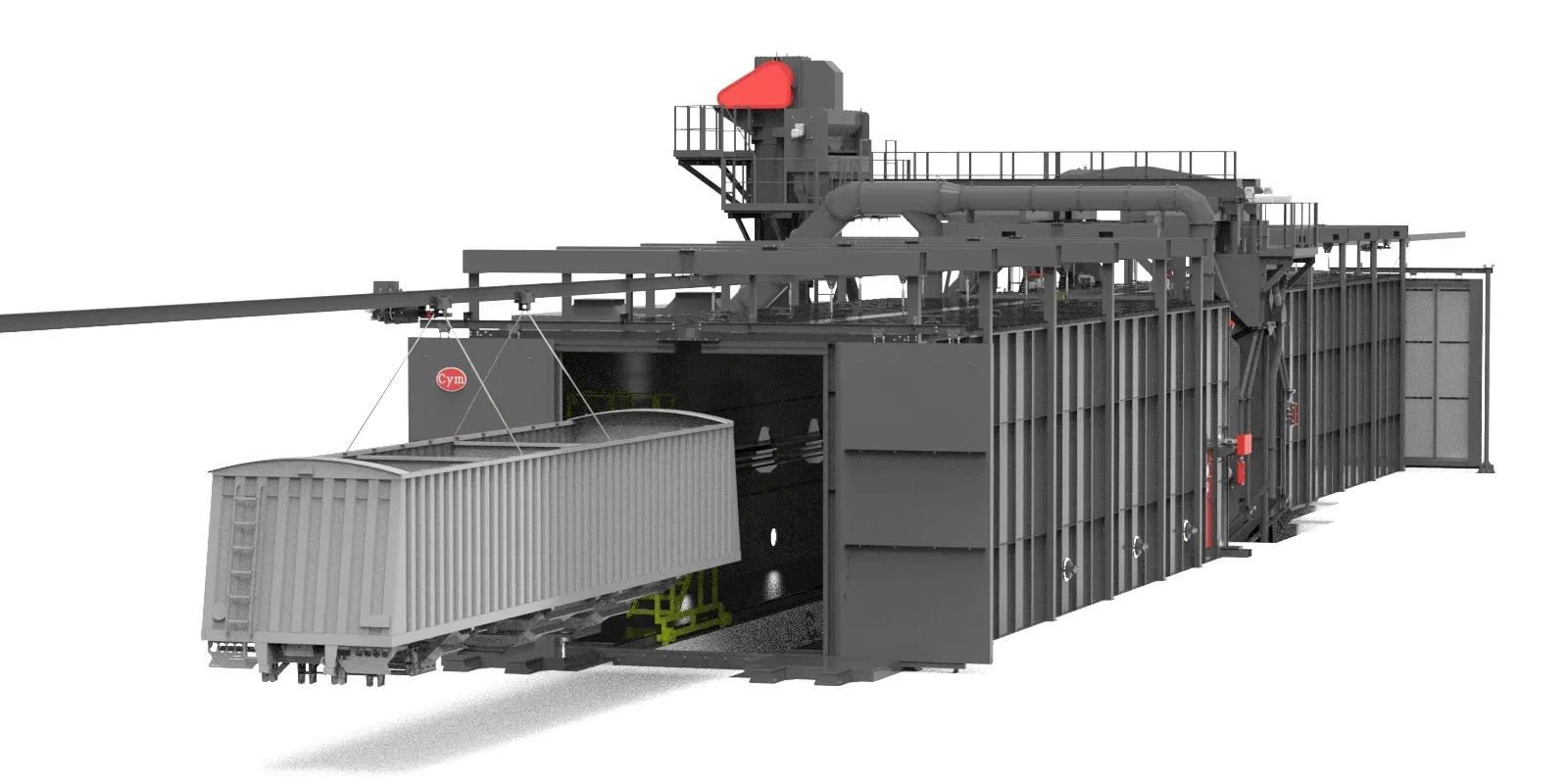
CYM Materiales develops it.
Our Engineering and Sales team works alongside the client to design a custom solution, reducing operating costs and maximizing productivity. Every project starts with a detailed technical assessment and ends with a machine built and tested at our plant
REQUEST A CUSTOM PROJECTPublished: June 2026