
TECHNICAL ARTICLE
SSPC and AMPP surface preparation standards
SSPC · NACE · AMPP
Complete guide to all grades
The SSPC standard was developed by the Society for Protective Coatings (Pittsburgh, USA) and is the most widely used reference in Latin America and the USA for specifying surface preparation before applying any protective coating. In 2021, SSPC merged with NACE International — specialising in corrosion prevention — to form AMPP (Association for Materials Protection and Performance), which now publishes and maintains these standards. The original SSPC designations (SP 1, SP 5, SP 10, etc.) remain valid in contracts and specifications worldwide. This guide covers all active grades, changes published since 2015 and the new standards added to the catalogue.
Complete table of all grades SP 1 to SP 18
The following table lists all published SSPC / AMPP standards with their grade name and current status. The original SSPC designations remain in contracts and specifications; since 2021 they are published by AMPP (Association for Materials Protection and Performance). For exact revision dates and current versions visit ampp.org.
| SSPC / AMPP Standard | Grade name | Status |
|---|---|---|
| SSPC-SP COM | General comments on surface preparation for steel and other substrates | Active |
| SSPC-SP 1 | Solvent Cleaning | Active |
| SSPC-SP 2 | Hand Tool Cleaning | Active |
| SSPC-SP 3 | Power Tool Cleaning | Active |
| SSPC-SP 4 | Flame Cleaning of New Steel | Discontinued |
| SSPC-SP 5 / NACE N°1 | White Metal Blast Cleaning | Active |
| SSPC-SP 6 / NACE N°3 | Commercial Blast Cleaning | Active |
| SSPC-SP 7 / NACE N°4 | Brush-Off Blast Cleaning | Active |
| SSPC-SP 8 | Pickling | Active |
| SSPC-SP 9 | Weathering followed by Blast Cleaning | Discontinued |
| SSPC-SP 10 / NACE N°2 | Near-White Metal Blast Cleaning | Active |
| SSPC-SP 11 | Power Tool Cleaning to Bare Metal — 3 levels (updated Dec. 2020) | Active — upd 2020 |
| SSPC-SP 12 / NACE N°5 | High-Pressure Water Jetting (replaced by SP WJ-1/2/3/4 since 2014) | Legacy |
| SSPC-SP 13 / NACE N°6 | Surface Preparation of Concrete (rev. 2024) | Active — upd 2024 |
| SSPC-SP 14 / NACE N°8 | Industrial Blast Cleaning | Active |
| SSPC-SP 15 | Commercial Grade Power Tool Cleaning — min. 25 µm profile | Active |
| SSPC-SP 16 | Brush-Off Blast Cleaning of Non-Ferrous Metals (galvanized, stainless, copper, aluminium, brass) | Active |
| SSPC-SP 17 | Thorough Abrasive Blast Cleaning of Non-Ferrous Metals | New 2019 |
| SSPC-SP 18 | Thorough Spot and Sweep Blast Cleaning for Industrial Coating Maintenance | New 2020 |
| SSPC-SP WJ-1 / NACE WJ-1 | Waterjetting to Bare Metal (replaces SP 12 level 1) | Active since 2014 |
| SSPC-SP WJ-2 / NACE WJ-2 | Very Thorough Waterjetting (replaces SP 12 level 2) | Active since 2014 |
| SSPC-SP WJ-3 / NACE WJ-3 | Thorough Waterjetting (replaces SP 12 level 3) | Active since 2014 |
| SSPC-SP WJ-4 / NACE WJ-4 | Light Waterjetting (replaces SP 12 level 4) | Active since 2014 |
Blast cleaning grades — abrasive blasting
• SP 5 / NACE No.1 — White metal: the surface must be completely free of oil, grease, dust, rust, mill scale and paint residues without exception. The most demanding grade. Specified for extremely severe conditions: acids, salts in solution, marine or aggressive industrial environments.
• SP 10 / NACE No.2 — Near-white metal: up to 5% of contaminant residues are acceptable, appearing only as different colouration per unit area. The most widely used grade industrially — balances preparation quality and work speed. Recommended for moderate to severe conditions and high-performance coating systems.
• SP 6 / NACE No.3 — Commercial: mill scale residues must not exceed 33% per unit area, visible only as different colouration. Specified in lightly loaded zones without corrosive environments.
• SP 7 / NACE No.4 — Brush-off: removes loose mill scale, loose rust and flaking paint. Tightly adherent mill scale may remain. Only for very mild conditions or as a pre-treatment.
• SP 14 / NACE No.8 — Industrial: allows up to 10% tightly adherent mill scale, rust and coating residues, uniformly distributed. Specified for maintenance of heavily pitted steel where complete removal from pits is impractical.
• SP 18 (new 2020): Thorough spot and sweep blast cleaning for maintenance: covers localised treatment of deteriorated areas combined with sweep blast cleaning of the surrounding intact coating. This is the typical situation when repainting structures in service, where the whole surface is not blasted, only the failed areas.
Hand tool, power tool and chemical cleaning methods
• SP 1 — Solvent cleaning: removes oil, grease, dust and soluble salts using solvents, steam, alkaline solutions or detergents. Does not remove rust or mill scale. Mandatory pre-treatment before all other methods.
• SP 2 — Hand tool cleaning: wire brushes, sandpaper and scraping to remove loose rust, aged paint and weld residues. Does not remove tightly adherent contaminants.
• SP 3 — Power tool cleaning: more effective than SP 2 but applicable only in localised areas. Does not guarantee complete removal of adherent mill scale.
• SP 8 — Pickling: chemical or electrolytic reaction cleaning. Acceptable results but high-risk method: hydrogen embrittlement risk on high-strength steels and generation of toxic waste.
• SP 11 — Power tool cleaning to bare metal (updated Dec. 2020): produces bare metal with minimum 25 µm roughness profile. The 2020 revision added two additional cleaning levels and expanded the permitted methods for profile measurement (replica tape, drag stylus). Suitable where abrasive blasting is not feasible.
• SP 15 — Commercial grade power tool cleaning: produces surface with minimum 25 µm roughness profile. Allows random staining up to 33% of the area. Equivalent to SP 6 without projected abrasive.
Waterjetting and special applications
The four SP WJ standards replaced SP 12 from 2014 and define four levels of high-pressure water jet cleaning:
• SP WJ-1: bare metal — equivalent in cleanliness to SP 5 by water jetting.
• SP WJ-2: very thorough cleaning.
• SP WJ-3: thorough cleaning.
• SP WJ-4: light cleaning.
Waterjetting does not generate a roughness profile; it generally requires prior or subsequent blast cleaning to create the mechanical anchor for the coating.
• SP 13 / NACE No.6 (revised 2024): surface preparation of concrete, cement, slabs and masonry. The surface must be free of laitance, weakly bonded concrete and contaminants.
• SP 16: light brush-off blast cleaning of non-ferrous metals — galvanised, stainless steel, copper, aluminium and brass. Minimum roughness: 19 µm (0.75 mil).
• SP 17 (new 2019): Thorough abrasive blast cleaning of non-ferrous metals: stainless steel, aluminium, copper and alloys. It does not replace SP 16, it complements it: on the same substrates, SP 16 defines the brush-off grade and SP 17 the thorough grade, in the same way that SP 7 and SP 10 define two grades of one method on carbon steel.
Published: June 2026 - Updated: August 2026
Installations
Equipment in operation
KEEP EXPLORING
Related equipment and content
Technical article
Surface preparation standards
Fundamentals of the process - Blast cleaning grades
Read more
FAQ
What surface preparation grade do I need?
How to choose the grade by coating and environment
Read more
TECHNICAL ARTICLE
Corrosion in steel and the role of shot blasting
How surface preparation extends the service life of steel
Read morevideos
Equipment in action
Special Projects
Can't find the equipment you need?
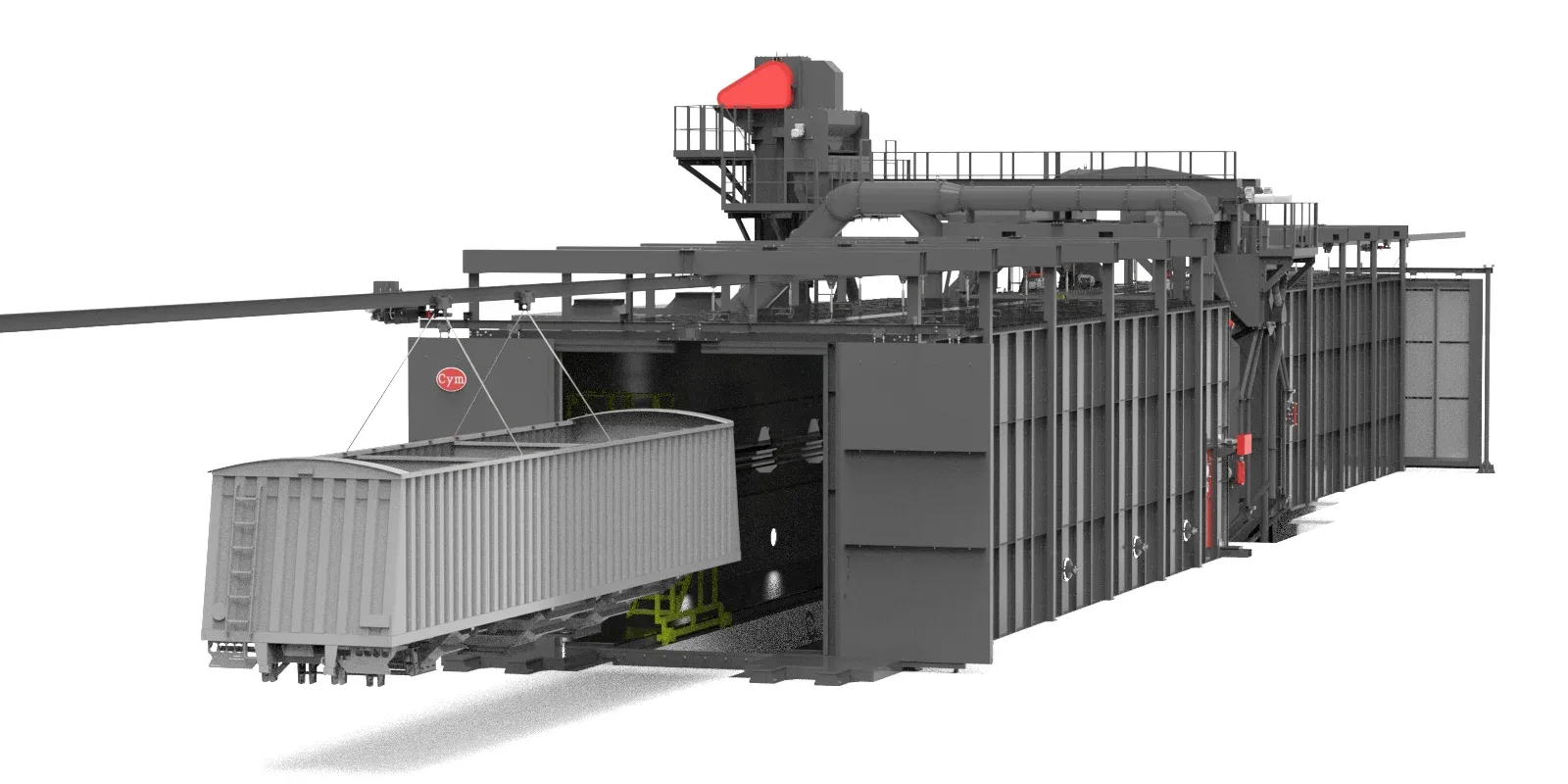
CYM Materiales develops it.
Our Engineering and Sales team works alongside the client to design a custom solution, reducing operating costs and maximizing productivity. Every project starts with a detailed technical assessment and ends with a machine built and tested at our plant
REQUEST A CUSTOM PROJECT