
TECHNICAL ARTICLE
When to specify stress peening
RESIDUAL STRESSES
Why peening under load raises effective compression and which components justify
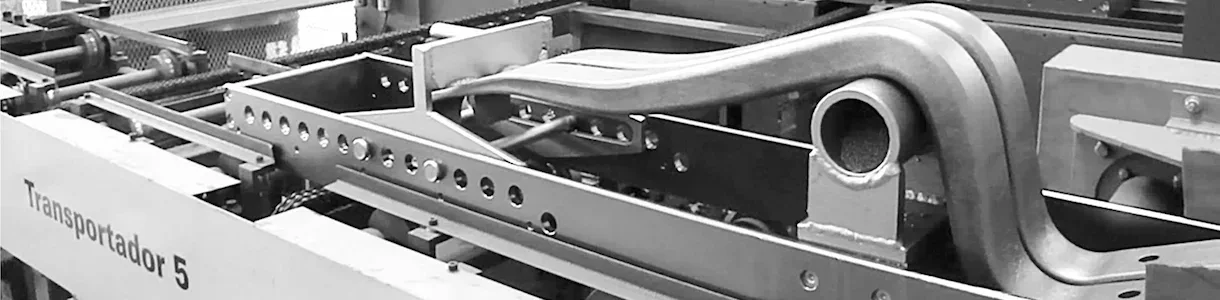
Stress peening is not “another type of shot peening”: it is peening applied while the part is held under an elastic load that reproduces the direction of the service stress. It is reserved for components where fatigue failure is not acceptable and where conventional peening no longer delivers the required margin. **The logic is simple: if the part will work under bending, it is best to peen it under bending.
** For the fundamentals, please refer to the introduction to the shot peening process; here we develop the criteria, the mechanism and the control.
What it is and why it works
The part is mounted on tensioning devices and subjected to a load —usually hydraulic— while it is peened, reproducing service conditions. When the load is released, the applied stress adds to the compression induced by the impacts, and the result is a greater and deeper net residual compression on the face that will work in tension, which is where fatigue cracks initiate.
The pre-stressed condition amplifies the magnitude and the depth of the residual compression compared with the same peening performed at rest.
When it is justified (and when it is not)
Stress peening pays off in components with a dominant load direction and a critical fatigue cycle: leaf springs and parabolic springs —the historical application, through bending—, torsion bars and heavily loaded suspension springs, in both automotive and railway applications. The condition is that the load applied during peening reproduces the direction of the actual service stress. CYM builds stress peening machines with tensioning devices for this type of part.
It also has an optimum point: there is an ideal preload, neither so low that it barely exceeds conventional peening, nor so high that in coil springs the coils shadow one another and degrade the effect. In parts without a dominant load direction, or of low demand, tensioning adds complexity without proportional benefit; ordinary coil springs are usually well served by conventional shot peening.
How the process is controlled
The specification of stress peening adds, to Almen intensity and coverage, the direction and magnitude of the load applied during the process. Two levels of control should be distinguished. As the machine manufacturer, CYM ensures and repeats what the process does control: intensity and coverage, verified by Almen test, plus the applied tensioning load. Peening acts on the surface; final fatigue performance also depends on the previous history of the part —material, chemical composition, heat treatment—, equally decisive and beyond the scope of the machine.
The effective residual stress in a given component is verified by X-ray diffraction, a well-known method used by many companies to characterise their process. It is a measurement of the result on that particular part —not a parameter the machine controls— and in stress peening it is especially illustrative, because the contribution of tensioning is not reflected in the Almen strip, which is peened without load.
Note: The only control method known to date in shot peening processes is the measurement of intensity and coverage (Almen test). Residual stress, in contrast, is directly related to the type of part, the material, the heat treatment and the peening (shot type, hardness, impact velocity, etc.); if any of these variables changes, it will directly affect the resulting residual stress.
For process development, the recommended practice is to run fatigue tests on parts from the same batch with and without the treatment, in order to quantify the improvement on the actual component. Reference standards (SAE J442/J443/J2277, AMS) are cited for guidance only.
Stress peening within the enhanced peening family
Stress peening shares its objective with other variants used in the spring industry, but it operates on its own axis —the load applied during peening— and is therefore combinable with them. Double shot peening, which CYM also performs, acts on the outermost layer and the surface finish through a second pass with finer media. Warm peening, an industry process carried out at elevated temperature, seeks a residual compression that is more stable against relaxation, through strain aging. In highly demanding leaf springs these approaches may be applied to the same part; in other cases, warm and stress peening are even alternative routes to the same end.
Warm peening does not require a different machine: it is carried out on a shot peening machine into which the part enters preheated (typically 150–350 °C), with components prepared to sustain that temperature throughout the cycle.
CYM performs stress peening under load and double shot peening, both cold processes; warm peening is cited here as a reference of the state of the art and, upon request, its development can be evaluated on this same machine basis.
FOR YOUR DECISION
Compression where the component needs it
Stress peening pays off when the part has a dominant load direction and a critical fatigue cycle that conventional peening does not cover: peening under the service load leaves the maximum residual compression exactly on the face loaded in tension.
At CYM we design and build stress peening machines with tensioning devices that reproduce the service conditions of the component and ensure repeatable intensity and coverage results.
KEEP EXPLORING
Related equipment and content
Technical article
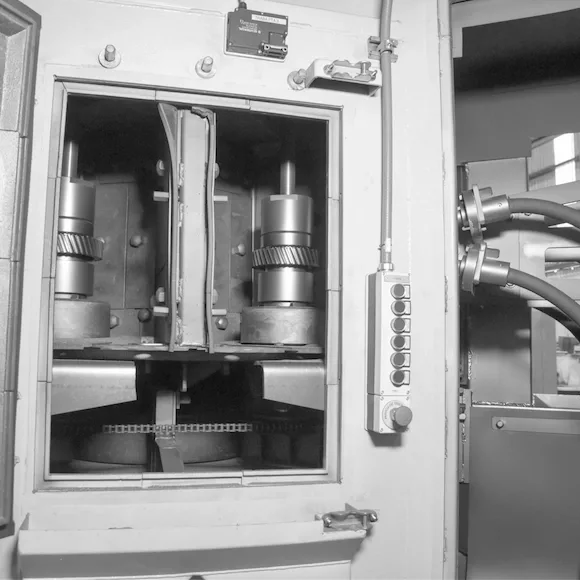
Introduction to the shot peening process
Introduction to
the shot peening process
TECHNICAL ARTICLE
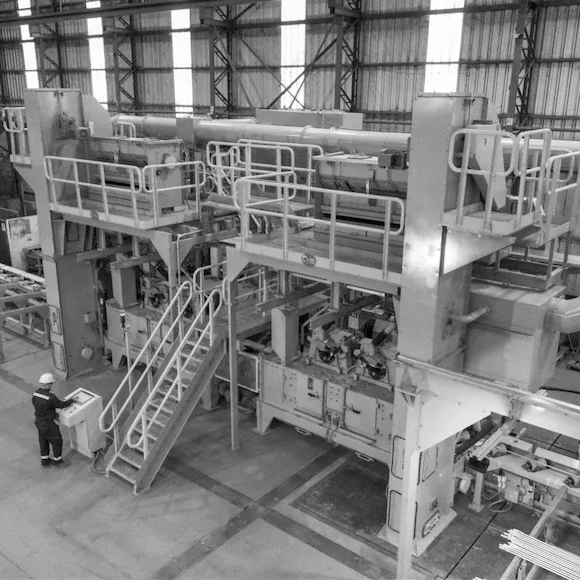
When to specify double shot peening
Selection criteria, the two treatment stages and how the process is controlled
Read more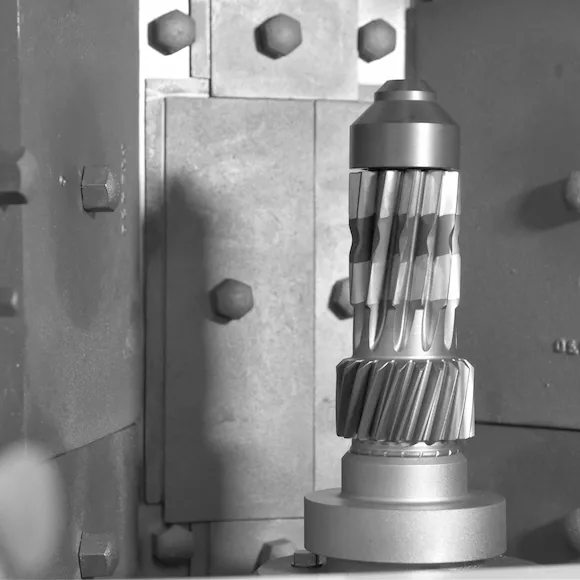
Productos
Shot Peening machines
Equipment to increase fatigue resistance
Read moreInstallations
Equipment in operation
videos
Equipment in action
Special Projects
Can't find the equipment you need?
CYM Materiales develops it.
Our Engineering and Sales team works alongside the client to design a custom solution, reducing operating costs and maximizing productivity. Every project starts with a detailed technical assessment and ends with a machine built and tested at our plant
REQUEST A CUSTOM PROJECTPublished: July 2026