
TECHNICAL ARTICLES
When to use a wet scrubber?
DUST COLLECTION SAFETY
Explosive, sticky or spark-prone dust — when dry filtration is not enough
A wet scrubber is the solution when the dust cannot be filtered dry safely. It becomes necessary in three situations: when the dust is explosive or a combustible metal, when it generates sparks, or when it is so sticky or moist that it blinds any dry medium. In those cases water acts as the capture medium: it traps the particle, removes the ignition risk and prevents combustible dust from building up. Outside those cases, dry filtration remains the best option.
The main case: combustible metal or explosive dust
The most common reason to choose a wet scrubber is safety against explosions. Combustible metal dusts —aluminum, magnesium, titanium, zirconium and others— are the highest-risk ones, especially in their finest fractions. By capturing the particle inside water, the wet scrubber keeps the dust from contacting oxygen and suppresses the ignition risk, something a dry collector can only offset with additional protection equipment. How severe an eventual explosion would be is measured by the Kst index; how it occurs and the values for each material are developed in the dust explosion risk article, and the aluminum case —the most critical, due to its high explosivity and the thermite reaction— in the specific aluminum dust article.
Sticky or moist dust
The second case has nothing to do with explosions, but with the physical nature of the dust. Sticky, oily or moist dust saturates and cakes any dry filter medium —cartridge or bag—, which blinds quickly and drops the airflow. The wet scrubber does not rely on a porous medium that can clog: it drags the particle with water, so it handles adhesive dust, oil mist or materials that already come moist from the process without trouble. It is the logical option when the problem is not explosivity, but simply that the dust will not filter dry
Regulatory framework: when it stops being optional
In many cases wet collection is not a preference but a requirement. The international reference standards —NFPA 652, which requires a Dust Hazard Analysis (DHA) to determine whether a dust is combustible, and NFPA 484, specific to combustible metals— steer the capture of those dusts toward wet solutions or toward dry systems with reinforced protection. These are United States standards: each country must check its local regulation, but the underlying criterion is universal —first determine, through a hazard analysis, whether the dust is combustible or reactive, and only then choose the capture technology.
When a wet scrubber is not needed
Wet collection is neither the default nor the cheaper option. For the vast majority of dry, fine, non-explosive dust, dry filtration is more efficient and has a lower operating cost: it needs no water, no sludge treatment and none of the associated maintenance. Dust from machining, cutting or shot blasting with inert abrasives is better handled with a cartridge or bag collector; that choice between the two dry technologies is developed in the cartridge or bag filter article. Wet collection is reserved for when safety —not convenience— requires it.
CONCLUSION
First the hazard analysis, then the technology
Choosing between dry and wet is, first of all, a safety decision. The starting point is not the equipment but the dust: you must determine whether it is combustible, reactive or sticky before defining how to capture it. If the hazard analysis shows the dust is explosive or a combustible metal, the wet scrubber stops being an option and becomes a requirement; if it is not, dry filtration is almost always the best answer.
KEEP EXPLORING
Equipos y contenido relacionado
FH line
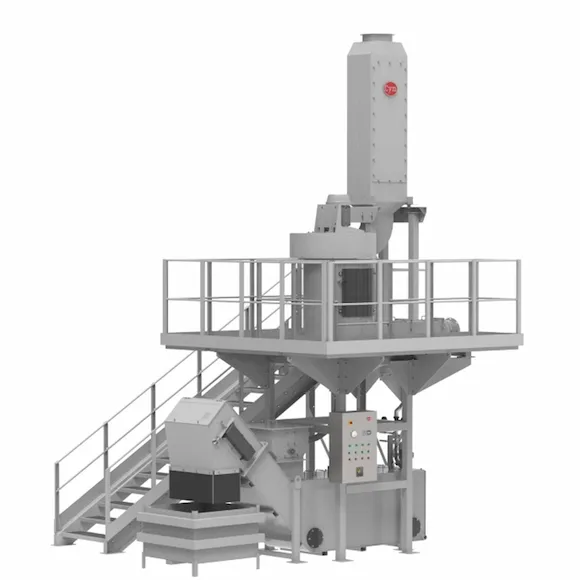
Wet scrubbers
The solution when dry filtration is not viable. Explosive, flammable, sticky dust and mixed emissions.
Read more
FAQ
Why choose a good dust collection system
Dust — Why it is a process decision, not an accessory
Read more
TECHNICAL ARTICLES
Airflow and filtration velocity
What determines the size of a dust collection system
Read moreInstallations
Equipment in operation
Special Projects
Can't find the equipment you need?
CYM Materiales develops it.
Our Engineering and Sales team works alongside the client to design a custom solution, reducing operating costs and maximizing productivity. Every project starts with a detailed technical assessment and ends with a machine built and tested at our plant
REQUEST A CUSTOM PROJECTPublished: July 2026