
TECHNICAL ARTICLES
Welding fume extraction
INDUSTRIAL HYGIENE
Capture at the source to protect the operator
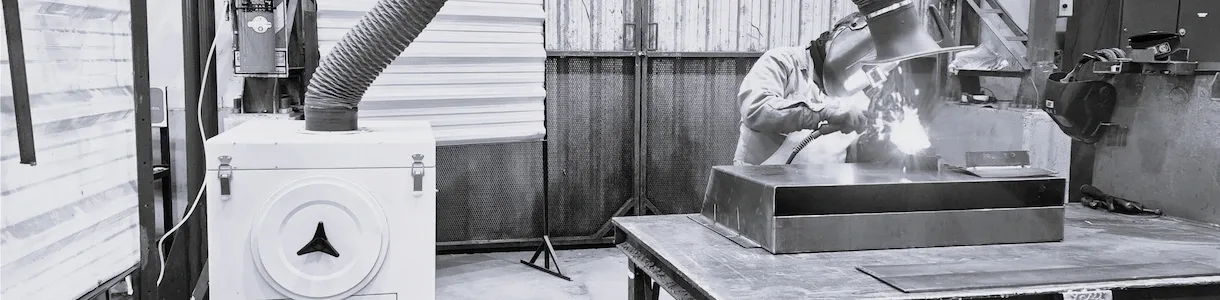
Welding fume is not just “smoke”: it is a cloud of very fine metallic particles and gases that the operator breathes directly in the work zone. The way to control it is not to ventilate the building, but to capture it at the source —as close to the arc as possible— before it reaches the airways. The equipment that does this can be portable or fixed depending on how the shop works, but the principle is always the same: extract the fume where it is generated.
What welding fume contains and why it matters
Welding fume contains very fine metallic oxides —mostly below 1 micron— that penetrate deep into the lung. Almost all steel welding releases manganese, and welding stainless steel or chromium alloys produces hexavalent chromium (Cr VI), classified as carcinogenic; depending on the material there is also nickel and, on aluminum, ozone. The exposure limits for these contaminants are extremely low: a barely visible fume cloud can exceed them several times over. That is why the issue is not “nuisance” but occupational health, and it justifies a designed capture system, not an improvised one.
The golden rule: capture at the source
The recommended control is local extraction as close to the arc as possible, because the farther you try to capture the fume, the more air you must move and the less you catch. The usual source-capture methods are the extraction arm, the downdraft table and the welding booth. Ambient or general capture —cleaning the air of the whole room— is always a secondary complement, never the main system, because it lets the fume pass through the breathing zone before treating it.
Moving more air has a price. Capturing over the arc works with small, concentrated flows; cleaning the air of an entire building means renewing a volume many times larger, with the fan, the filter and the installed power that this demands. The difference does not show up only in the initial investment: it is paid every month in electricity, and in conditioned buildings, also in the air that goes out and has to be treated again.
CAPTURE AT THE SOURCE
Capture at the source, seen in a test
The video is a test with a smoke generator, not real welding: the smoke is produced on purpose so that you can see what the glare of the arc normally hides. The articulated arm sits over the work point and the hood draws the plume away before it reaches the operator's breathing zone. That is the whole principle — what you capture at the source is not something you have to pull back out of the entire shop afterwards.
Portable or fixed: how to choose
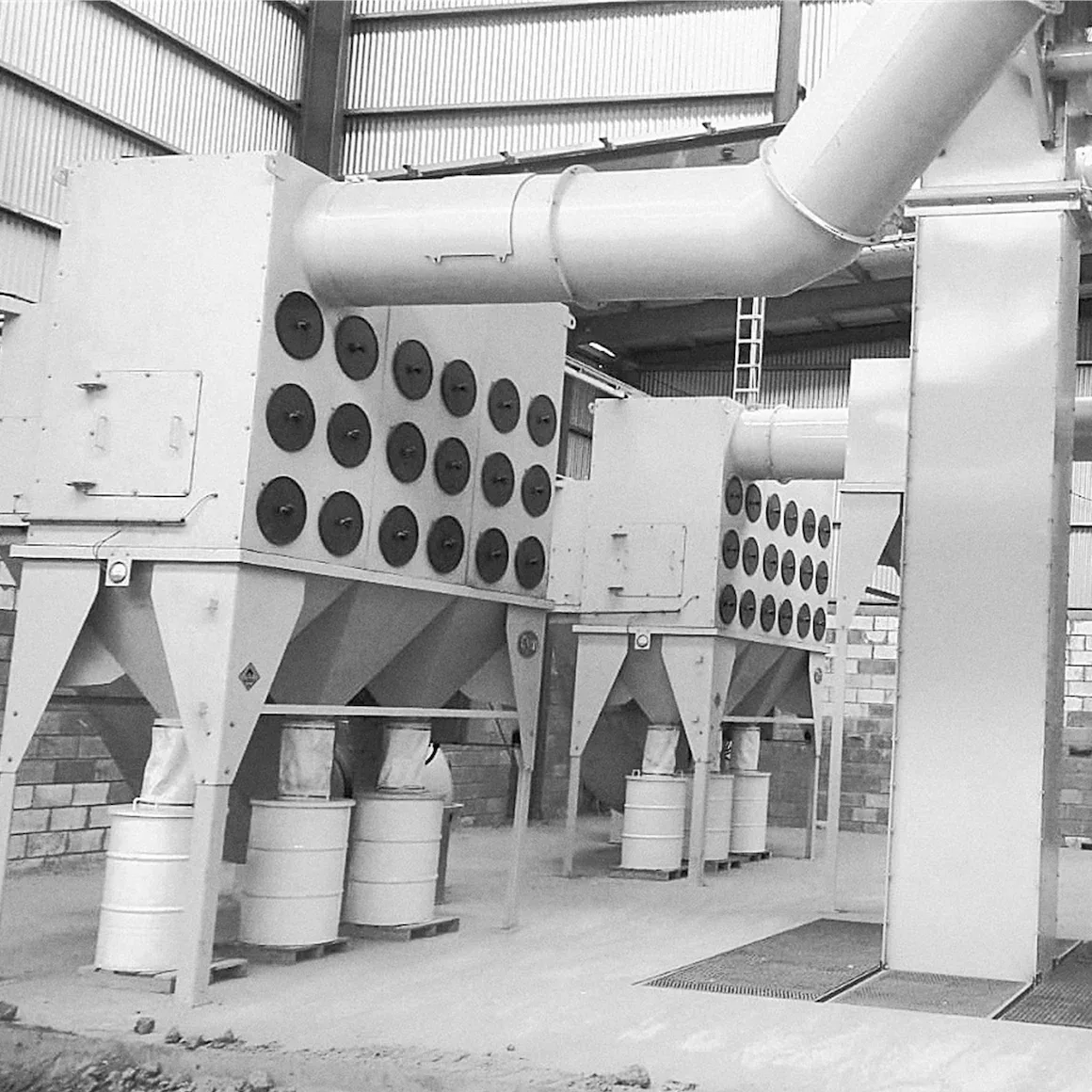
The choice between portable and fixed/centralized equipment depends on the work pattern, not on which is “better”. A portable extractor suits itinerant welding, a single station at a time, or repair and assembly in different locations: it is brought to the point, with no construction or ducting. A fixed or centralized system suits several simultaneous stations and continuous production: better cost per cubic meter at scale and less operator intervention. Many shops combine both: fixed at permanent stations, portable for tasks that move.
Filtration and recirculation: two cautions
Because the particle is very fine, filtration must be high-efficiency —a fine-media cartridge able to retain the finest fraction—. And there is a key regulatory point: in several jurisdictions air with hexavalent chromium or galvanized fumes may not be recirculated indoors and must be exhausted outside. In addition, filtration and ventilation are engineering controls, but compliance is confirmed with an exposure assessment (air sampling). In all cases the local regulation must be verified.
CONCLUSION
First protect the operator, then choose the format
Welding fume extraction is solved on two levels. First the non-negotiable principle: capture at the source, close to the arc, with fine filtration; that is where the welder is truly protected. Second, the equipment format —portable or fixed— chosen according to how and where the welding is done. Defining the material being welded (and therefore which contaminants it releases) is the starting point to size the capture and verify compliance.
Published: July 2026 - Updated: September 2026
Installations
Equipment in operation
Special Projects
Can't find the equipment you need?
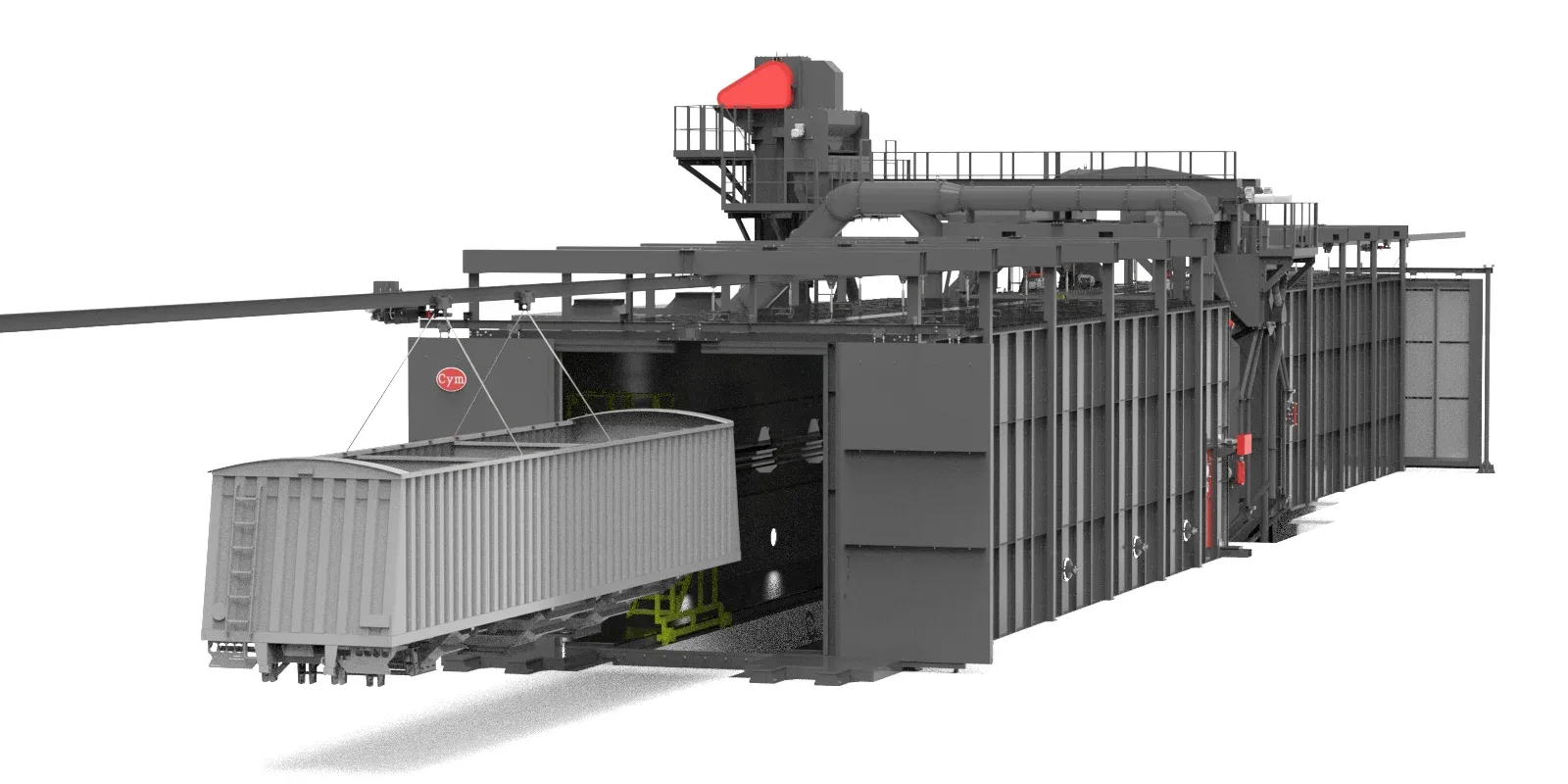
CYM Materiales develops it.
Our Engineering and Sales team works alongside the client to design a custom solution, reducing operating costs and maximizing productivity. Every project starts with a detailed technical assessment and ends with a machine built and tested at our plant
REQUEST A CUSTOM PROJECT