
Technical article
Shot blasting airport runways
GPP Line
Friction and microtexture - Safety and Braking Performance
Runway safety depends on its braking capacity, especially when the runway is wet. That capacity degrades with use: rubber left by aircraft tires builds up and the pavement microtexture wears down, lowering the friction coefficient. Portable shot blasting with centrifugal wheels restores both in a single operation. Below we explain the problem, what shot blasting does, and why it is the right method for a runway in service.
The problem: why runway grip drops
With use, rubber from aircraft tires builds up in the touchdown zone and, together with the wear of the pavement microtexture, reduces the friction coefficient. The effect worsens on a wet runway, where less grip translates directly into longer braking distance. Recovering that coefficient is a matter of operational safety.
What shot blasting does: two processes in one
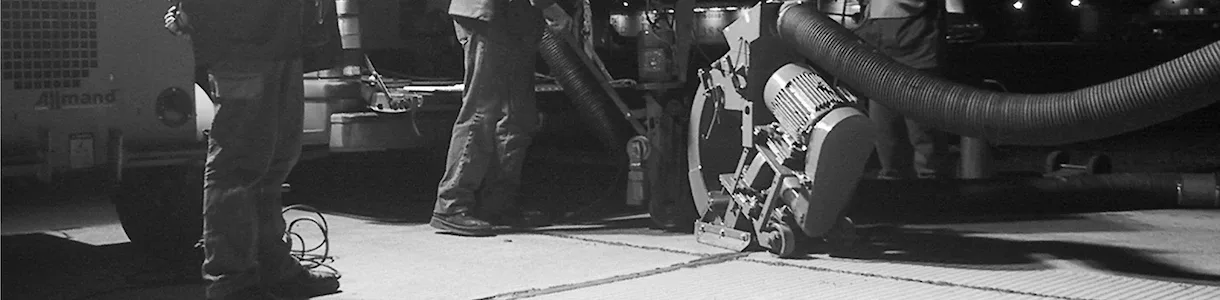
Shot blasting of concrete or asphalt floors with centrifugal blast wheels performs two tasks simultaneously:
• Cleans: the kinetic energy of the shot removes built-up rubber, along with old paint and coatings.
• Restores microtexture: it brings back the roughness profile in the areas where the friction coefficient has dropped.
The shot impact speed is precisely controlled according to the type and hardness of the pavement; the final roughness depends on the chosen abrasive and the hardness of the runway.
Why it suits an airport: closed circuit
After impact, the shot bounces back and is recovered into the hopper; an air stream carries the dust generated to the filtering system, separating the reusable abrasive. This forms a closed recirculation circuit. For a runway in service this is key: there is no environmental contamination, no debris left on the runway (FOD), and work can be done even in enclosed areas, with low abrasive consumption (on the order of 50 to 100 g/m²).
Measurable results
The result can be measured. In texture-restoration work, the friction coefficient went from values around 0.45 to readings above 0.60, and the improvement held when measured again a year later. It is an economical, fast and simple-to-operate process.
To define the equipment for the required output —runway cleaning only or texture restoration— our team can advise you.
KEEP EXPLORING
Related equipment and content
FAQ
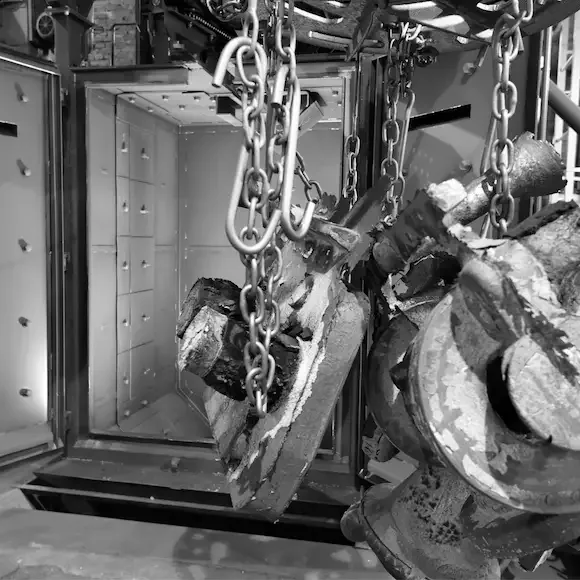
What is shot blasting?
Industrial shot blasting — process, applications and equipment
Read more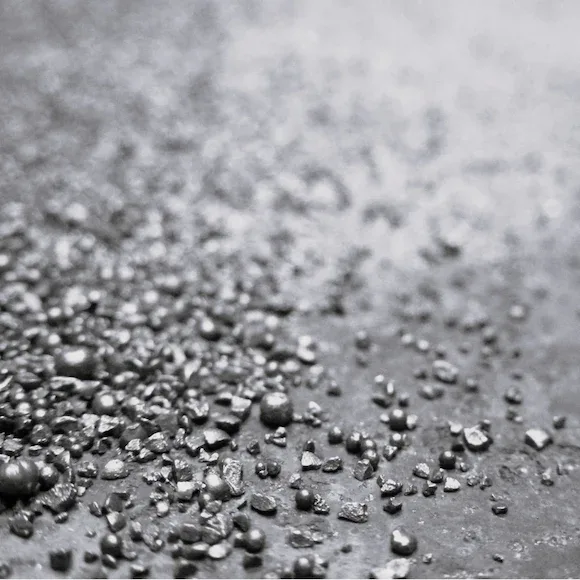
FAQ
What is shot blasting abrasive?
Shot blasting abrasive — the material that defines process quality
Read more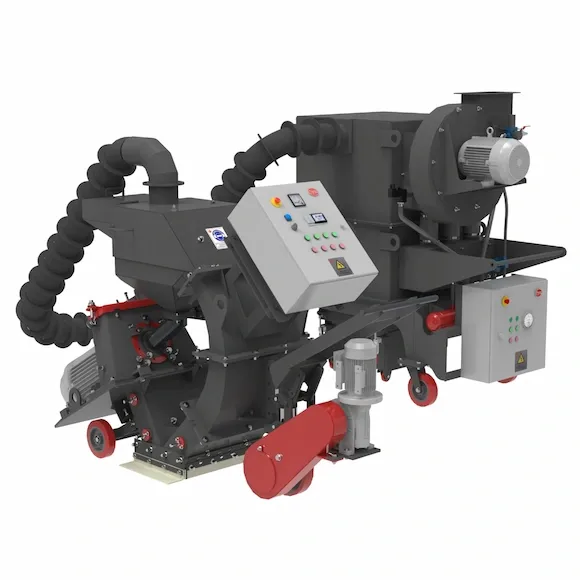
products
Portable turbine blast machines
Large-surface treatment on site, with no fixed installation
Read moreInstallations
Equipment in operation
Special Projects
Can't find the equipment you need?
CYM Materiales develops it.
Our Engineering and Sales team works alongside the client to design a custom solution, reducing operating costs and maximizing productivity. Every project starts with a detailed technical assessment and ends with a machine built and tested at our plant
REQUEST A CUSTOM PROJECTPublished: June 2026