

Technical article
Shot blasting mobile equipment for painting
SURFACE PREPARATION
How to remove mill scale and prepare the surface before coating
Mobile equipment —agricultural, road, mining, railway, trucks— works in extreme conditions, and the paint that protects it must hold up. That durability depends less on the paint system than on how the surface was prepared before applying it. Shot blasting is the method that ensures, in a single operation, the cleanliness and adhesion profile this equipment needs. Below we explain the problem, what shot blasting solves, and the sectors where it is applied.
The enemy on mobile equipment: mill scale
Hot-rolled steel carries an adhered layer of rolling oxide known as mill scale. It is hard and well bonded, but also brittle and with a thermal expansion coefficient different from steel. Any impact or thermal change cracks it; through that crack oxidizing agents enter and a corrosion process begins —often galvanic— that ends up detaching the mill scale and, with it, the paint. The effect is especially severe on parts subject to torsion and movement, such as those of mobile equipment. That is why removing mill scale before painting is not optional.
What shot blasting solves on this equipment
Shot blasting bombards the surface with abrasive at high speed, removing contaminants and creating a controlled roughness profile. On mobile equipment it performs four basic functions:
• New units: removes the mill scale carried by hot-rolled sheet and profiles.
• Used units: removes old paint, filler and rust, leaving the areas to be repaired clean and ready to repaint.
• Homogenizes surfaces with welds, burrs and grinding marks.
• Leaves an even roughness profile, suited to the coating to be applied, for proper adhesion.
The cleanliness grade and final roughness are governed by international standards; that detail is developed in our report on surface preparation standards.
Shot blasting, or shot blasting and phosphating
In most cases, good shot blasting is enough. In highly demanding paint applications —for example, equipment exposed to agrochemicals— some manufacturers shot blast and then phosphate: shot blasting removes the mill scale and provides the anchor profile, and phosphating adds a chemical barrier under the paint. When each path is appropriate and when they are combined is covered in detail in our report on shot blasting and phosphating.
How to choose the blasting system
The choice depends on the size, shape and quantity of parts, and on the required output. There are two systems —manual air blasting and automatic blast wheel— which are often combined: the blast wheel does the bulk of the work and manual blasting handles touch-ups in areas the wheel cannot reach.
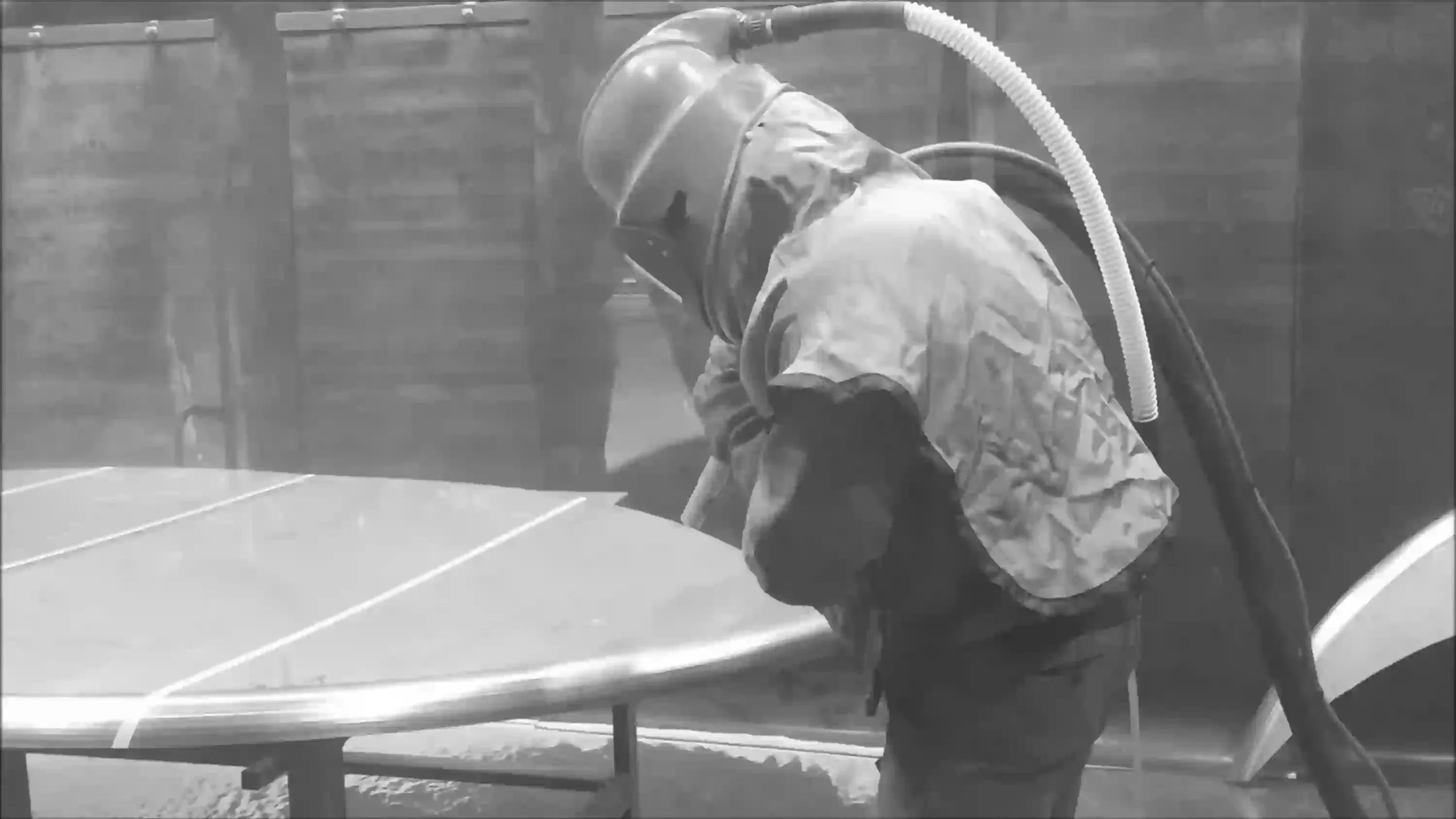
Manual air blasting (blast room)
- Ideal for large, heavy or complex-shaped parts.
- Reaches areas the blast wheel cannot (touch-ups and corners).
- Sealed enclosure with extraction and filtering; good visibility.
- Lower output than the blast wheel.
- Requires trained, protected labor (positive pressure).
- Flexible: simpler installation, adaptable to each shop.
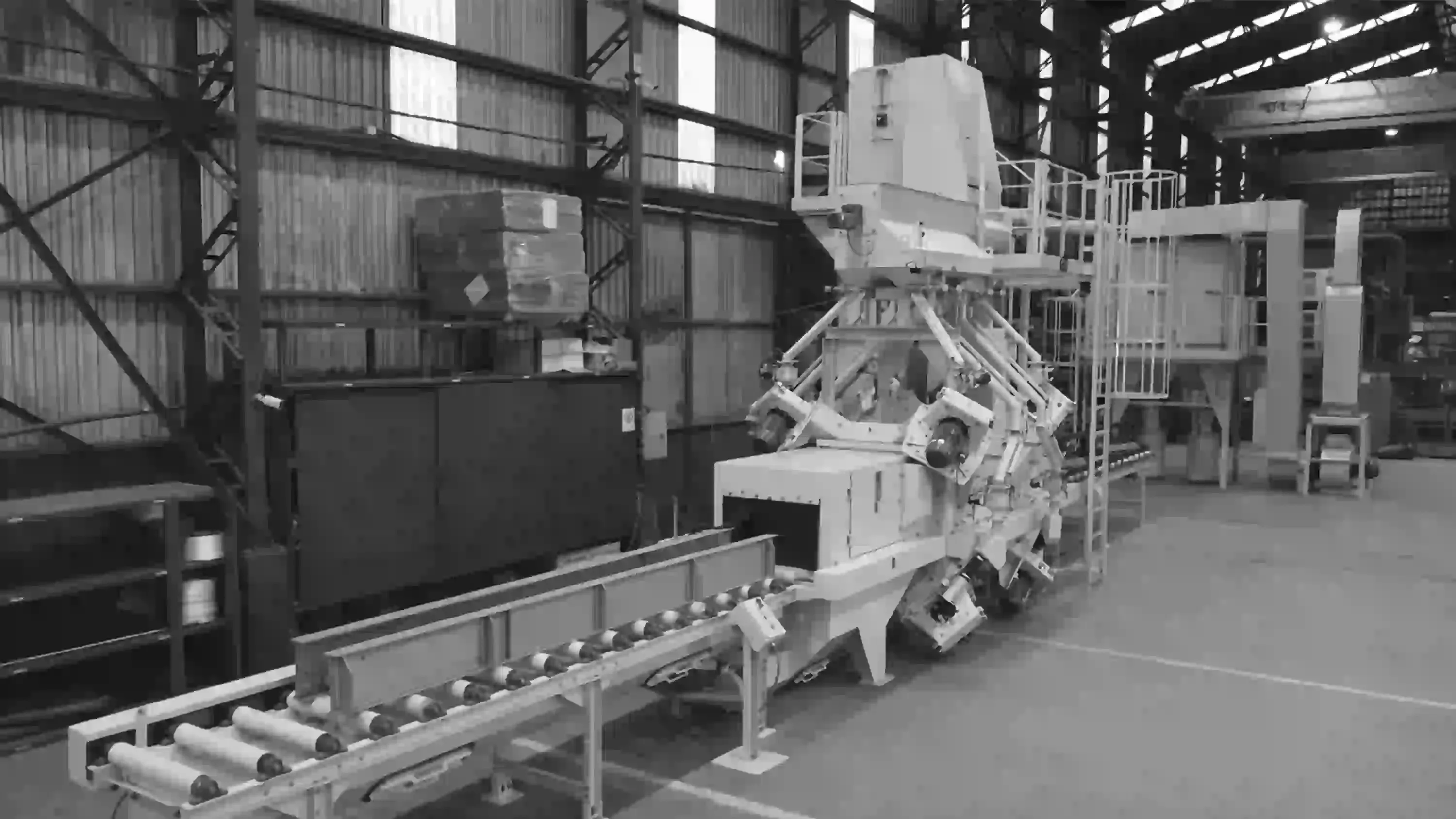
Automatic blast wheel
- High output and low operating cost per part.
- Greater uniformity of preparation across the whole surface.
- No specialized labor required.
- Can be installed inline with the painting process.
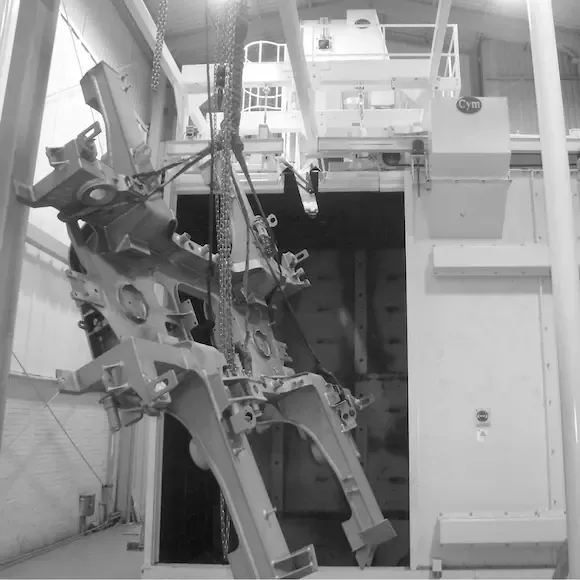
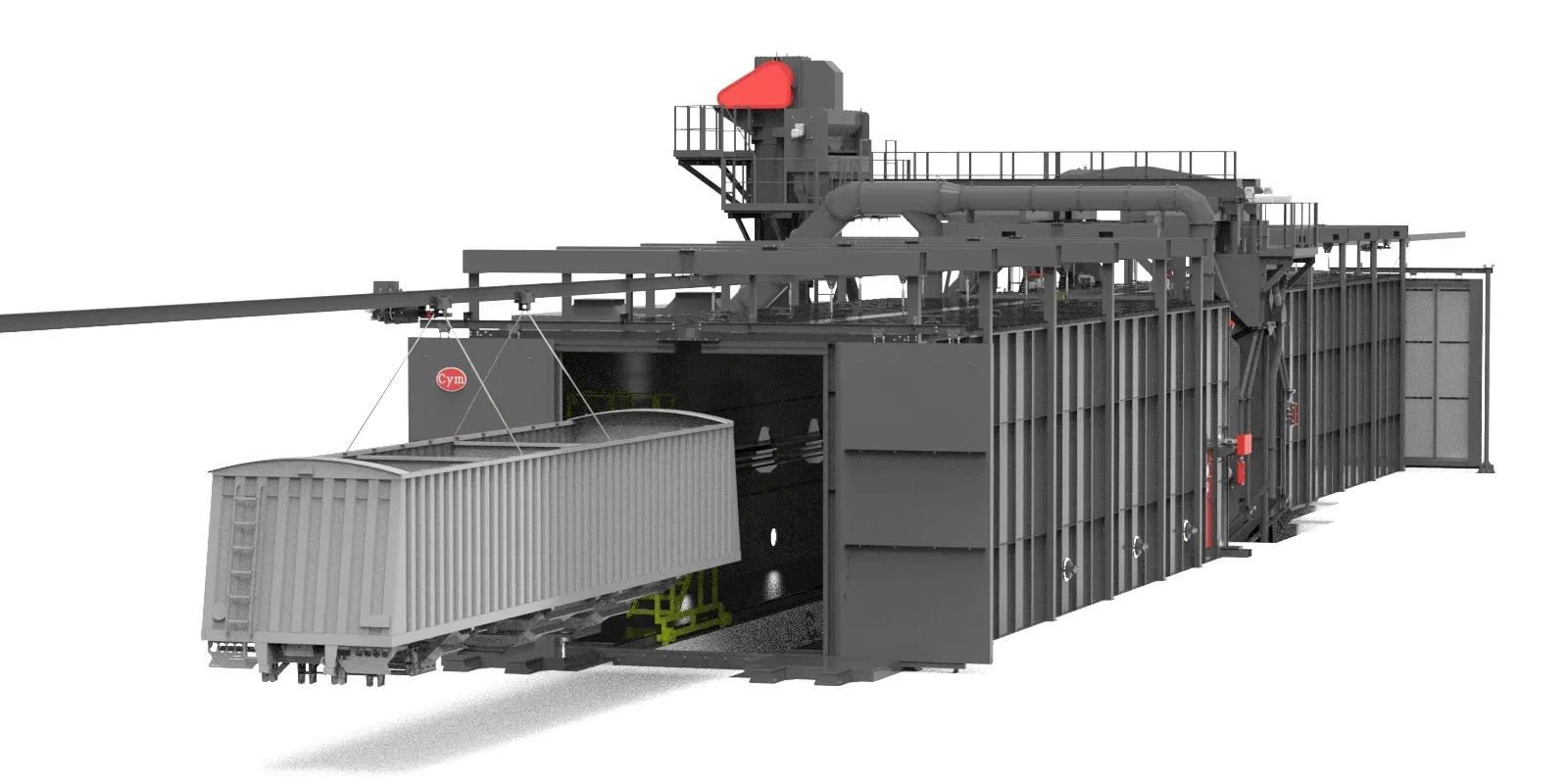
- Processes from small auto-parts to truck chassis or rail wagons.
- Batch or continuous pass-through versions according to the part.
Sectors and applications
Shot blasting is applied across the mobile-equipment industries:
• Agribusiness: chassis and components of combines, seeders, sprayers, grain hoppers, tractors and implements; plow discs, silo parts and scales.
• Railway: trains, wagons and locomotives; bogies, axles and wheels.
• Road and mining: mechanical shovels, graders, excavators, dump trucks, cranes and hydraulic cranes, platforms.
• Bodywork (trucks and trailers): truck chassis and bodies, semi-trailers, tank trucks, dump and mining hoppers.
• Shipyards: plates and profiles for shipbuilding; portable units for hull maintenance.
Published: June 2026
Equipment lines
Select the equipment for your application
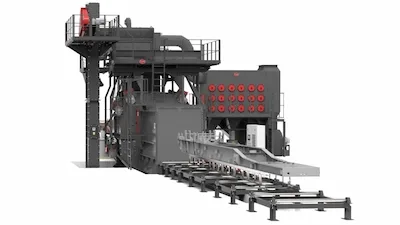
PER, EST & CH LINES
Shot blast machine for profiles and welded structures
Automatic shot blasting machines for profiles, tubes, spools and welded structures.
Read more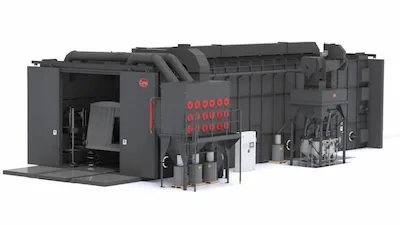
Blast room
For manual operation or automatic robot/nozzle manipulator blasting.
Read more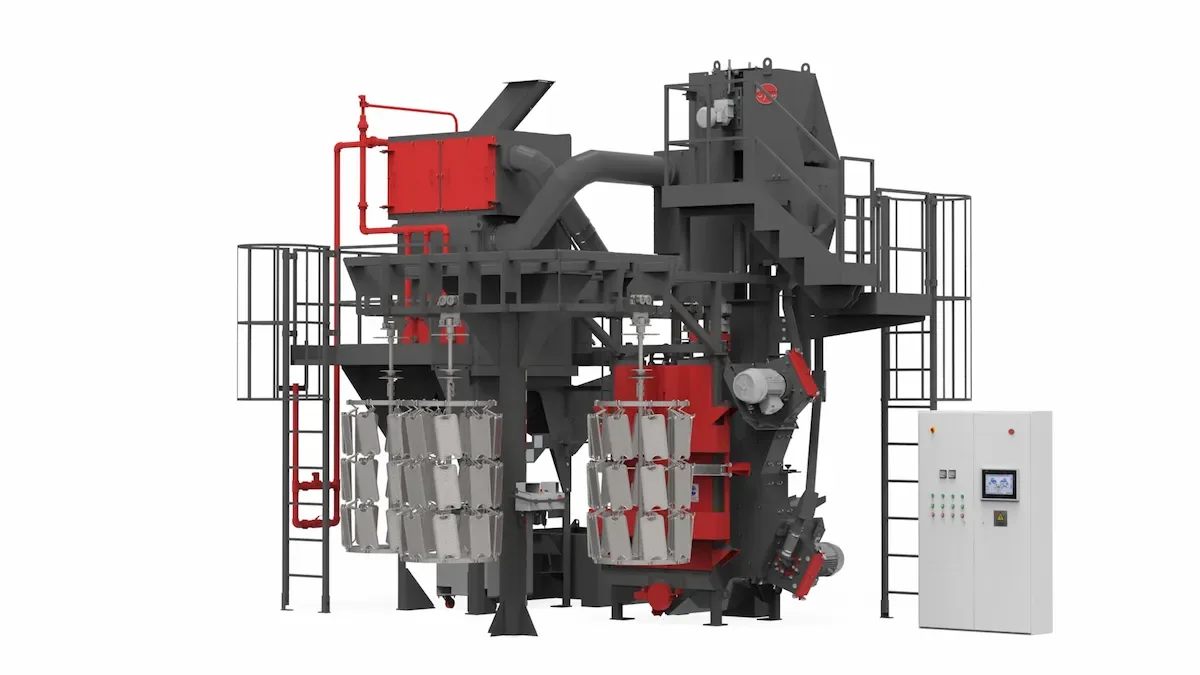
CAB, CAB-TUN & EST-TUN LINE
Spinner hanger
With fixed, moving, or oval hook for parts that cannot be bulk blasted.
Read moreKEEP EXPLORING
Related equipment and content
TECHNICAL ARTICLE
Surface preparation before coating
How to do it right for each coating
Read more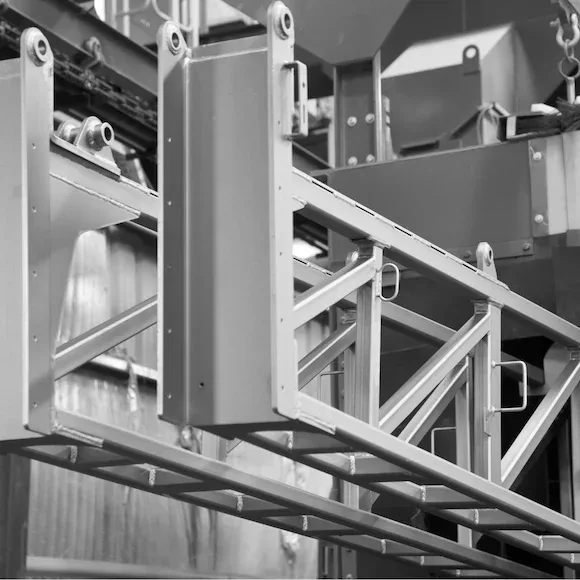
Technical article
Surface preparation standards
Fundamentals of the process - Blast cleaning grades
Read more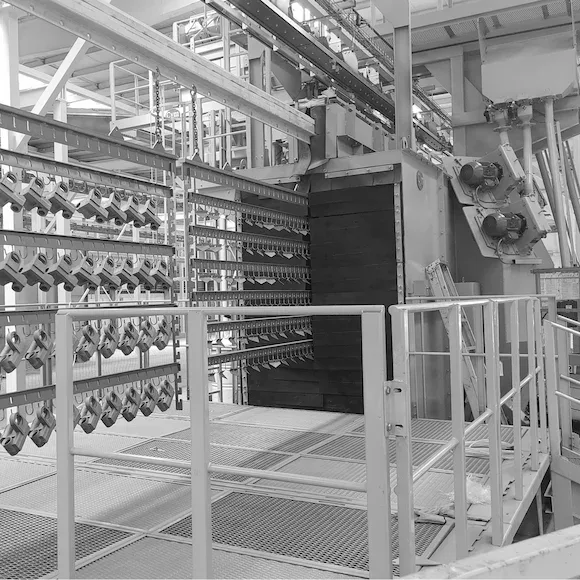
Technical article
Shot blasting and phosphating: when they compete and when to combine them
Mechanical anchor profile or chemical barrier: what each case needs
Read moreInstallations
Equipment in operation
videos
Equipment in action
Special Projects
Can't find the equipment you need?
CYM Materiales develops it.
Our Engineering and Sales team works alongside the client to design a custom solution, reducing operating costs and maximizing productivity. Every project starts with a detailed technical assessment and ends with a machine built and tested at our plant
REQUEST A CUSTOM PROJECT