
Technical article
Steel shot vs. garnet
ABRASIVE COMPARISON
Which suits you by abrasive recovery and cost per cycle
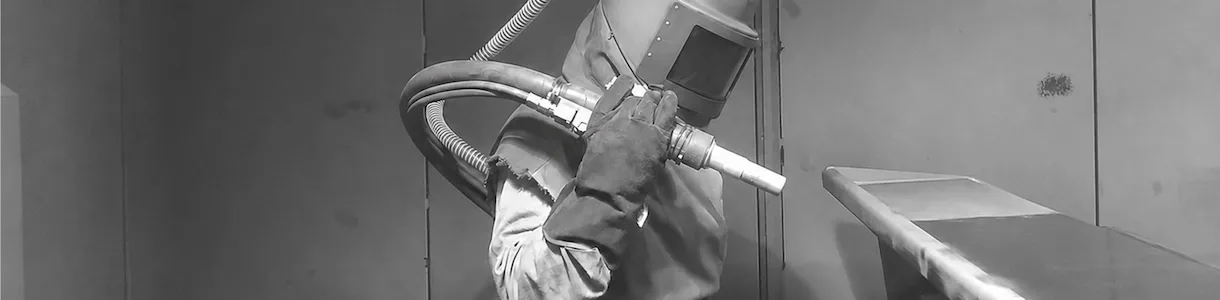
When shot blasting or sandblasting is carried out in enclosed spaces —blast rooms, tanks, ship holds— with compressed-air equipment, the choice of abrasive determines the cost, productivity and cleanliness of the process. This equipment works with any abrasive, so a single installation can use whichever suits each job best.
Here we compare steel abrasive with garnet —a natural mineral abrasive widely used in abrasive blasting— using the same equipment and the same finish grade. (Centrifugal blast wheel equipment is not included, since it cannot run on garnet, sand, aluminum oxide or slag.)
Garnet as an abrasive
Garnet is a group of natural silicate minerals used as a blasting abrasive. The type used is called almandine: a natural product, chemically inert, with no toxic components and no quartz.
That absence of quartz is its great advantage: unlike silica sand, garnet releases no free silica, so it carries no silicosis risk. Its hardness and angular shape make it an aggressive, good-cutting abrasive. On the downside, it is a single-origin mineral and can be recycled only about 5 times, far fewer than steel abrasive.
Steel abrasive
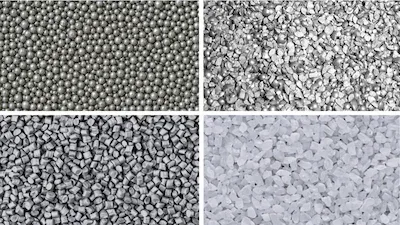
Steel abrasive is produced by melting, with controlled chemical composition. The process yields rounded particles —steel shot— which, when the larger diameters fracture, give rise to steel grit.
In jobs where it replaces garnet, sand or aluminum oxide, steel grit is used almost exclusively, sometimes with a small percentage of shot: the angular particle has edges and points and, on
Performance comparison table
On the same job —descaling grade-B steel plate to SA 2½ with a 10 mm long Venturi nozzle— the performance of both abrasives is:
| Performance | Steel abrasive | Garnet |
|---|---|---|
| Abrasive size | 0,3 – 0,8 mm | 0,3 – 0,8 mm |
| Bulk density | 3,5 g/cm³ | 2,4 g/cm³ |
| Flow rate | 1.000 kg/h/nozzle | 690 kg/h/nozzle |
| Cleaning efficiency | 20 m²/h/nozzle | 16 m²/h/nozzle |
| Abrasive consumption | 5 kg | 230 kg |
| Dust generation | Low | High |
Comparison performed descaling grade-B steel plate to SA 2½ blast quality, with a 10 mm long Venturi nozzle.
The starkest contrast is in consumption
For the same job, garnet consumes 230 kg versus 5 kg of steel abrasive —about 46 times more— because steel is recycled hundreds of times and garnet only a few. Add to that roughly 25% higher cleaning efficiency (20 vs. 16 m²/h) and far less dust.
Conclusion
Used with the right equipment and conditions, steel abrasive is more advantageous than garnet for blasting in enclosed spaces. The reasons:
• Higher productivity (~25% more efficiency), with lower labor and energy cost.
• Far lower abrasive consumption (5 vs. 230 kg in the test) and lower process cost per m² cleaned.
• Less waste and dust generation, cutting waste-disposal cost by up to ~98%.
• Lower investment in dust-collection systems and less wear on nozzles, hoses and equipment.
• Better work quality (consistency, roughness and cleanliness) and better conditions for the operator (improved visibility).
KEEP EXPLORING
Related equipment and content
FAQ
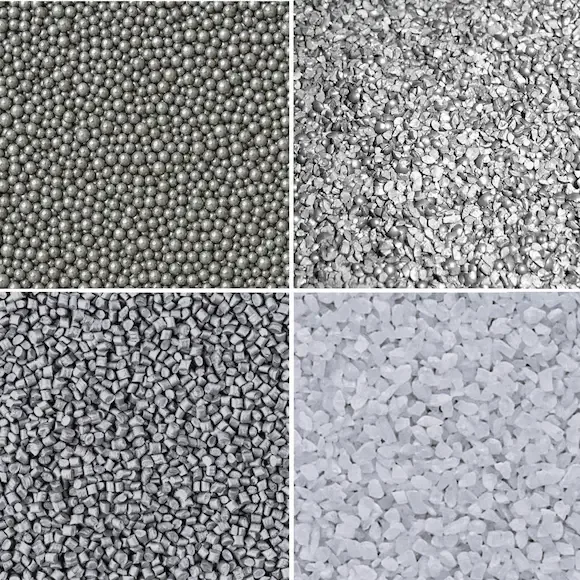
How to choose the best blasting abrasive
Which abrasive to use by material and process
Read more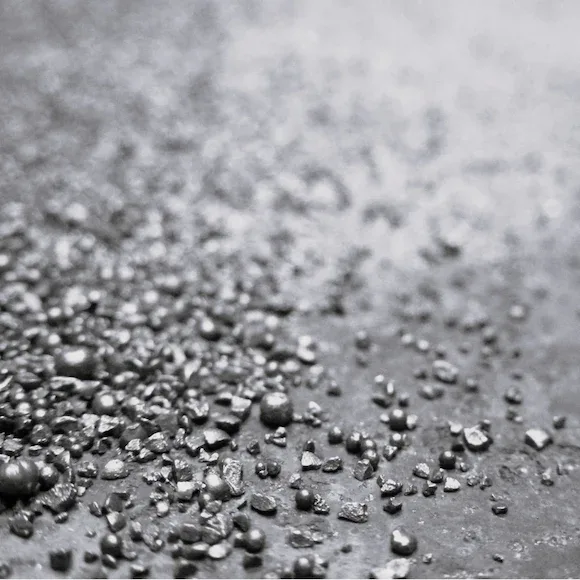
FAQ
What is shot blasting abrasive?
Shot blasting abrasive — the material that defines process quality
Read more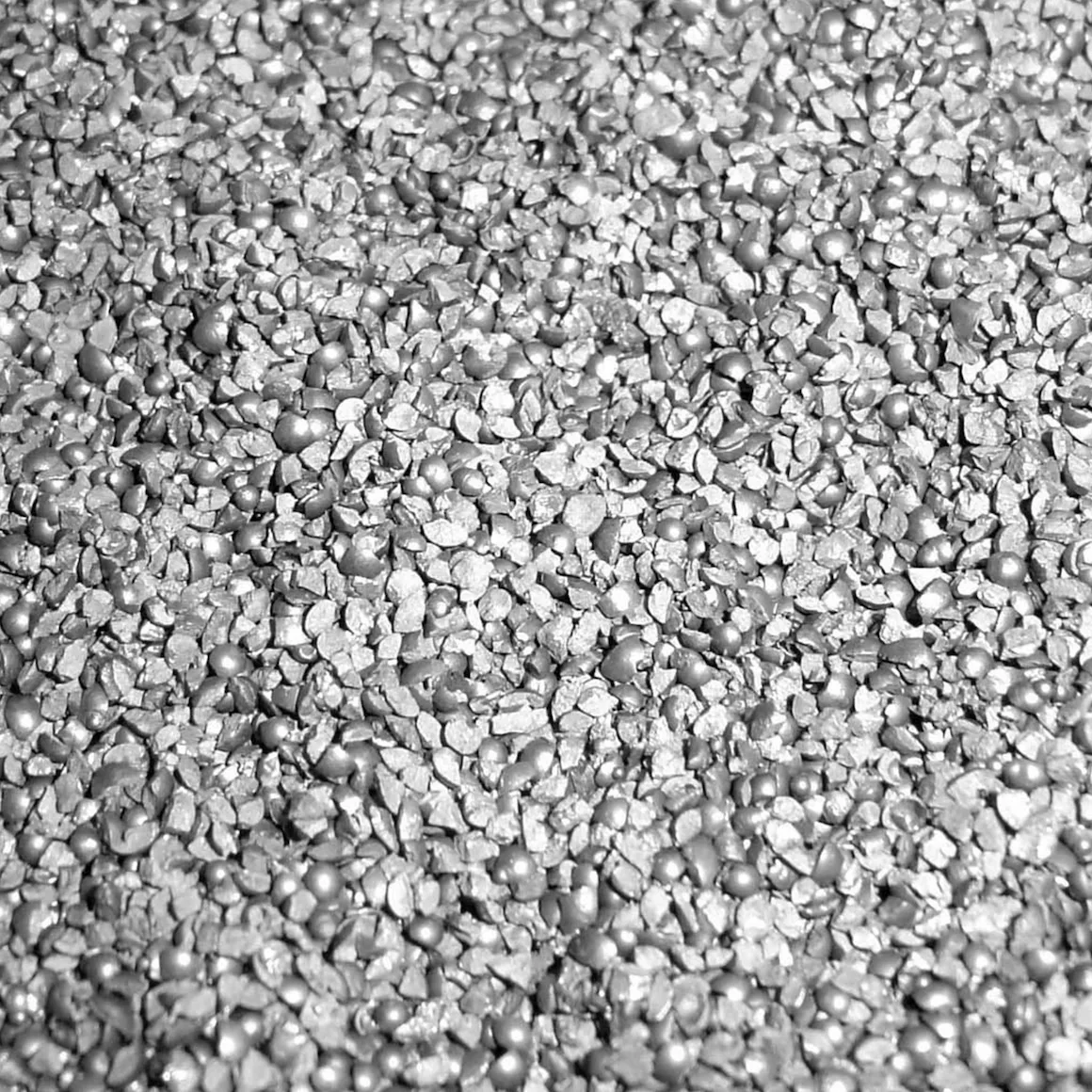
Blasting abrasives
Carbon steel grit
Compliant with SAE J-444 standard, G12 to G120, hardness 48 to 61 HRC. High anchoring profile for painting
Read moreABRASIVE SELECTION
Not sure which abrasive your process needs?
CYM Materiales helps you define it
Our technical team reviews the part material, the available equipment, the finish you are after and the applicable standard, and recommends the right type, size and hardness. Get in touch, with no obligation.
REQUEST ADVICEPublished: June 2026